
Doug Boles, the President of IndyCar and the Indianapolis Motor Speedway, provided more clarity on the new independent officiating system that will be in place beginning in 2026.
Last Thursday, IndyCar announced a three-member Independent Officiating Board (IBO), which will govern INDYCAR Officiating Inc. – a recently created non-for-profit – and elect a Managing Director of Officiating (MDO) to oversee the competition side of the sport. Chartered team owners chose two members via a vote, selecting motorsports legend Ray Evernham and automotive veteran Raj Nair. The other member, Ronan Morgan, was appointed by the FIA.
On the latest episode of Off Track with Hinch & Rossi, a podcast co-hosted by James Hinchcliffe and Alexander Rossi, Boles dove into the evolution of the creation and the process moving forward.
Boles reflected back to May as the point of origin when the decision was made and discussed ideas of structure with the teams over the summer, which is also when things picked up with the FIA.
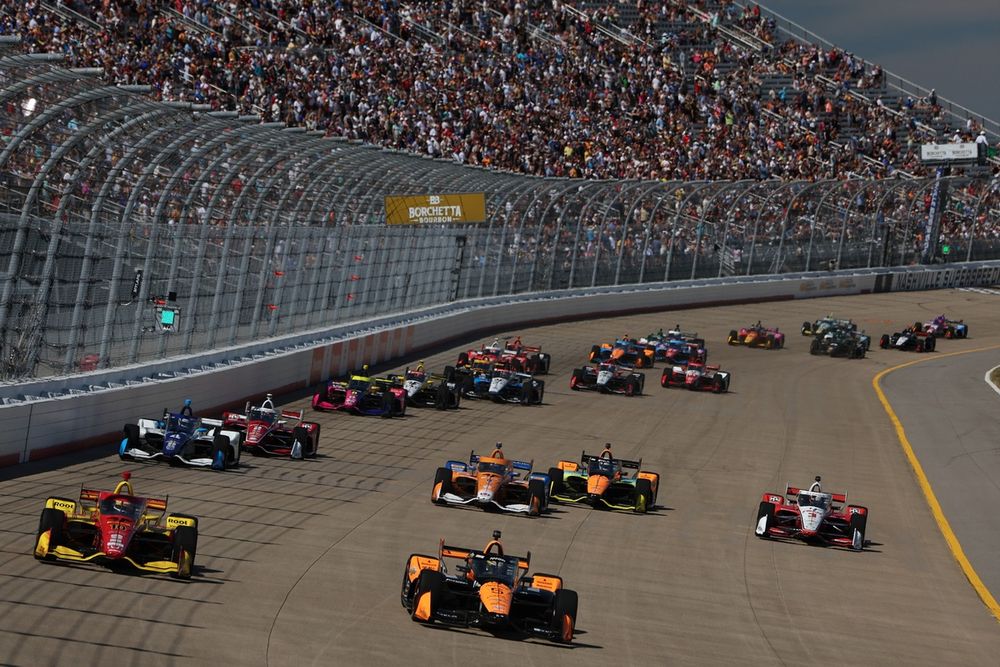
“The FIA came and visited us at the Milwaukee race to see how things were going there,” Boles said. “Interestingly, the FIA’s response to us after they were here was that the system isn’t broken. In fact, there’s some things we do much much better than the FIA does, but what we needed was that firewall between the series ownership and the decision-making. Taking a look at all three of those, we ultimately settled on this three-person board – Independent Officiating Board – and we originally were trying to figure out how you populate it.
“We talked to the owners at an owners meeting, and we agreed that the best way to populate it was to allow the owners to nominate people to serve on this independent officiating board. Then we were going to allow the FIA to make a nomination as well. So, you’d have two that were nominated by all of the teams, and then one that was appointed by the FIA. When we got those nominations, basically what happened is those nominations went through a vetting process.”
Owners were able to nominate various people, which consisted of members within motorsports but also some that were “pure business people,” according to Boles. From there, it came down to finding out if the nominees had any interest, as well as if there were any conflicts such as working with a race team or a series in the past 12 months.
“And then once we got to that point, we didn’t eliminate anybody or add anybody, we let the team owners do that,” Boles said. “Then the team owners voted from the original pool and voted it down to a smaller pool, and then last week – Monday through Wednesday – they voted on who, ultimately, the two that were selected by the owners.”
While all of the elected members of the IOB knew of each other, they had never met before last week’s phone meeting. Although Boles and IndyCar have helped navigate the process to this point, the next responsibility falls on the likes of Evernham, Nair and Morgan.
Patricio O’ward, Arrow McLaren
Photo by: Penske Entertainment
“We have a meeting coming up here shortly where the three of them will begin now the process of propping up this, it’s a separate, not-for-profit organization (that) has nothing to do with IndyCar – it will be completely separate from us – and their job really is to hire the Managing Director of Officiating,” Boles said.
“That person then will be the person who ultimately decides the implementation of the rules, who sits in what spot, how it works, and that person will report to this board. But, this board’s only job really is to say the MDO is doing a great job or we need to remove the MDO and bring somebody else in. So, they’re not an appeal board. I think a lot of people thought these are the three guys that are going to come to every race. That’s not the case.
“Once we get that up and going, the other thing that that independent officiating board will do is we’ll agree upon a budget, they will be given the budget, and then they’ll be responsible for hiring and implementation of that. It’s not anything that we (Penske Entertainment) can control. We can’t hire the people. We can’t fire the people. We can’t influence the people. All of it is going to be really run through the MDO and the IOB. A lot of pieces still to work out before we get to March, but we’re excited about moving this forward and I think it’ll work pretty well.”
Boles reiterated the MDO will be in charge of IndyCar competition, meaning anything that has to do with implementing rules, including technical and race inspections. IndyCar will continue to write the rulebook. INDYCAR Officiating Inc. is allowed to make suggestions for changes to the rulebook, with IndyCar then having an obligation to look at those with consideration.
In a situation of a team being penalized and wanting to appeal, the way the process will work would be written out of the rulebook but managed by the MDO, then the IOB would go through the process. IndyCar will have no part of the appeals process.
The only thing IndyCar will remain involved in is off-track situations in issues that would be detrimental to the sport.
“Unlike where the FIA is with F1, the FIA writes it and they have the authority to do that,” Boles said. “We didn’t want to completely turn our product over to an independent board, so that’s why, in that sense, they would have to come to us and then together we would decide whether we implement that rule now, maybe we do it next year, maybe we don’t do it at all for whatever the reason is.”
As far as the structure, the MDO will have to establish the annual budget for it. The Race Director, the leader of the technical inspection process and stewards, will all be under the MDO and separate from IndyCar.
There is also freedom in the template with personnel, according to Boles. For example, if the MDO would like to appoint an assistant race director or additional stewards, that could happen.
“I think you have to give them some of the freedom to do that,” Boles said. “The way we’ve looked at it right now is basically said, ‘Here’s what we have today. We think it operates generally pretty well today, but that doesn’t mean that you might not want to make tweaks or changes to it.
“So, the Managing Director Officiating will have to decide what he or she wants to do as it relates to those pieces. Even if they said, ‘Look, I want to adopt what we’ve done in the past from a structure standpoint,’ as they dive in, they may say, ‘Okay, I think these two or three things could work better and want to make those changes.’ And the way it’s set up, they’re free to make those changes as they move forward. At the end of the day, it should just make us better now.”
We want your opinion!
What would you like to see on Motorsport.com?
– The Motorsport.com Team
Disclaimer : This story is auto aggregated by a computer programme and has not been created or edited by DOWNTHENEWS. Publisher: motorsport.com






