By Nathan Smith
BIOGRAPHY
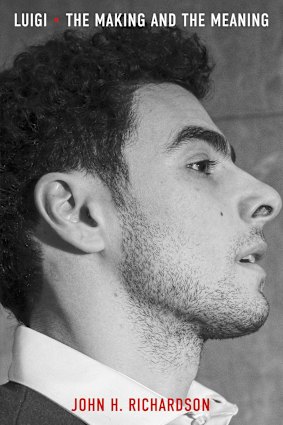
Luigi: The Making and the Meaning
John H. Richardson
Simon & Schuster, $59.99
Like many young people, Luigi Mangione reviewed books on Goodreads. There, the alleged assassin of American health insurance chief executive Brian Thompson, assessed many books, leaving brief but often thoughtful ratings of each. Favourites included the self-help title The 4-Hour Workweek and the novel Brave New World. One of the more influential texts listed was not a book but rather a manifesto: the Unabomber Manifesto.
Mangione’s digital reading list, along with his Instagram photos and Reddit comments, is what journalist John H. Richardson uses to parse insight and explanation in Luigi: The Making and the Meaning. The book is a combination of cultural analysis and past reporting on terrorism, attempting to situate Mangione’s alleged crime within a recent history: young American men becoming disenchanted with society and planning disruption, chaos and violence after reading this infamous manifesto.
Biography then proves mostly absent in Luigi. No family, friends or even acquaintances were interviewed, so only brief personal titbits are offered – like Mangione’s history of “brain fog” from Lyme disease – in favour of speculation about the man gleaned from his enigmatic internet persona.
What gives Richardson some licence, however, is the journalist’s own history corresponding with the Unabomber himself, Ted Kaczynski. Letters sent over several years reveal what Kaczynski – the mathematician turned recluse who murdered three people and maimed many others with pipe bombs – still believed as late as 2018 about technological ruin, a cause that also deeply resonated with the 27-year-old Mangione.
It was in a book club, of all places, that Mangione first encountered Kaczynski’s Industrial Society and Its Future, a 35,000-word screed on technology’s dark power and humanity’s ever-increasing dependency on it. (Mangione awarded it four stars on Goodreads.)
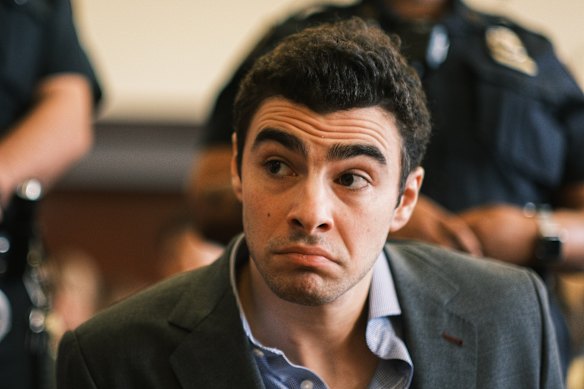
Luigi Mangione in court in Manhattan earlier this month.Credit: AP
Recent developments in AI, in its omnipotence and weaponisation, would prove some of Kaczynski’s points. United Health Care, the company Mangione targeted, has now leveraged the tool to help dismiss health insurance claims as well as predict which dismissals would be appealed by its customers.
Some have wondered if the manifesto calcified Mangione’s anger at corporate greed, fuelling a desire to enact a violent “takedown” and highlight the profiteering of healthcare. But to Richardson, “pinning down Luigi’s motive misses the point”; he prefers to return – again and again – to Kaczynski and the hold the Unabomber has had convincing others to abandon society.
Motive aside, the shooting has seen the issues of costly healthcare and weaponised technology become a major flashpoint, spotlighting how companies seek maximum profit while patients become saddled with unpayable debt. However, why Mangione’s crime so roused large parts of America for this reason, seeing outpourings of support and even celebration, is strangely left unexamined.
Taking an impressionistic approach to this apparent assassin through his own online self-representations, Luigi sidesteps the more compelling and urgent questions. Why did such a crime of cold calculus so animate America? What do these two sides of an algorithm – the deification of Mangione on one side, the mass denial of health insurance coverage on the other – say about technology and society today?
Instead, the book offers a kaleidoscopic portrait, one undisciplined and haphazard, of a young man suffering under physical pain with growing disillusionment of the world. Richardson relies too heavily on the surface of the man – his Instagram images, Goodreads reviews, Reddit comments – to produce a meaningful exegesis, binding his project then to a facile analysis of Mangione.
Since the criminal trial is only starting, there is much more to learn about Mangione and his apparent motive. But with no new evidence or reporting, Luigi’s attempt at unmasking the man and his alleged crime through a digital persona proves a mostly vain conquest. It reveals, in a final irony, much more about the Ted Kaczynski of recent years than anything durable about Luigi Mangione.
Most Viewed in Culture
Disclaimer : This story is auto aggregated by a computer programme and has not been created or edited by DOWNTHENEWS. Publisher: www.smh.com.au