Public transport strikes in place across the country, a former Bundestag president is remembered, Germany seeks energy cooperation with Saudi Arabia and more news on Monday, February 2nd.
Monday’s top story: Nationwide public transport warning strike has begun
A nationwide public transport warning strike by the Verdi trade union began at 3am on Monday, bringing significant restrictions across Germany.
Buses, trams and subways are parked in the depots of many municipal transport companies. Almost all 16 federal states are affected, Verdi has announced.
Only Lower Saxony is exempt.
Deutsche Bahn’s regional and S-Bahn trains, however, are running without restrictions.
“The S-Bahn trains in Berlin, Hamburg, Munich, Stuttgart, Cologne, Nuremberg, Rhine-Main and DB’s regional and long-distance services are not represented by Verdi, and are therefore not affected by the strike,” Deustche Bahn announced.
As a general rule, employees are responsible for arriving at work on time, regardless of transport disruptions. This applies to strikes as well as to snow and icy conditions.
On top of strikes, there is freezing weather: In some regions, according to the forecasts of the German Weather Service (DWD), there is a threat of freezing rain and icy roads. Particularly across the northwest and higher altitudes in the west and southwest.
READ ALSO: Will the ice ever melt in Germany this winter?
Former Bundestag President Rita Süssmuth has passed
Former Bundestag President Rita Süssmuth has passed away.
The CDU politician died at the age of 88, just two weeks before her 89th birthday.
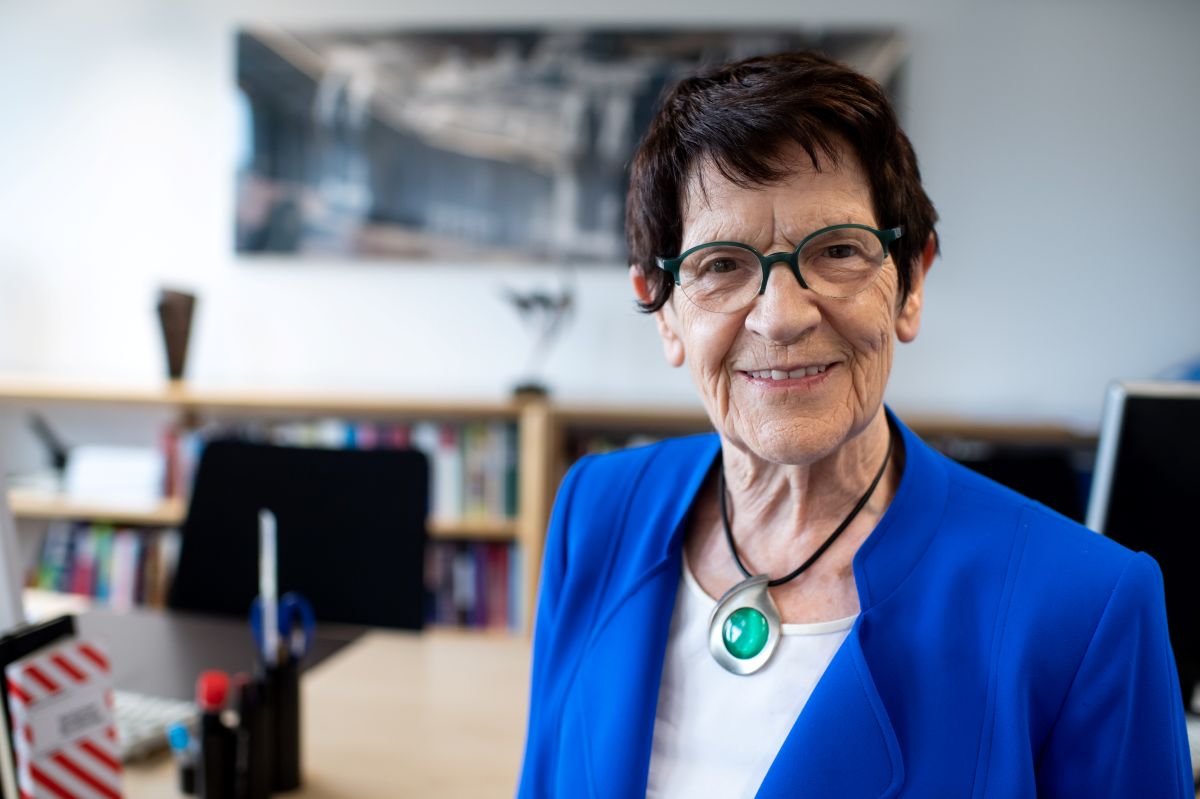
Rita Süssmuth (CDU), former President of the Bundestag, stands in her office in the German Bundestag in 2020. Photo: picture alliance/dpa | Bernd von Jutrczenka
Süssmuth was a member of the German Bundestag from 1987 to 2002 and was its president from 1988 to 1998. She had campaigned above all for the equal participation of women in politics, work and society.
Across all parties, Süssmuth was praised as a great politician.
Chancellor Friedrich Merz (CDU) called her a “guiding star for our democratic community”, Bundestag President Julia Klöckner a “political exception”. SPD leader Lars Klingbeil said, “She was a role model, across all party lines.”
Süssmuth was born on February 17th, 1937 in Wuppertal. She studied Romance languages and history and became a professor of educational science in Bochum and later at the University of Dortmund.
Under her leadership, the Bundestag grew to represent all of Germany (east and west) after reunification and completed the move from Bonn to Berlin.
She also resolutely campaigned for a women’s quota in the CDU, which is dominated by older men.
103-year-old Holocaust survivor reclaims German citizenship
A survivor of the Holocaust aged 103, Ruth Gruenthal, has reclaimed her German citizenship.
Previously the Nazi regime had stripped citizenship from her because she was Jewish. German law maintains that those who had their citizenship taken by the National Socialists way may reclaim it, and the same goes for their children or grandchildren.
EXPLAINED: The different routes to obtaining a German passport
After surviving Nazi persecution and rebuilding her life in the United States, Ruth had become a psychotherapist and raised a family which has spanned four generations. Many of her children and grandchildren have now also reclaimed German citizenship.
Ruther was born in Hamburg in 1922. She was later imprisoned in France, and forced to flee Nazi persecution as a teenager.
She had built a new life for herself in the US and lived there for decades. But recent political developments, rising antisemitism, and fears of an increasingly authoritarian government in the US have shaken her sense of security.
Germany to bolster energy cooperation with Saudi Arabia
Germany and Saudi Arabia are set to increase cooperation on energy between the countries, German Economy Minister Katherina Reiche has said.
While visiting Riyadh, Reiche signed ten letters of intent for German companies to expand their cooperation with Saudi counterparts.
According to Reiche, the agreements cover “key areas for the future,” including energy, artificial intelligence, hydrogen, and industrial innovation and value creation.
The agreement also includes strengthening cooperation between the two countries’ public and private sectors.
This comes as Germany and Saudi Arabia are both seeking to position themselves more broadly. Germany needs new energy suppliers in addition to the US, for example. Whereas the leadership in Riyadh, needs income beyond oil sales.
Leaders from the two countries suggest that Germany could become a buyer of hydrogen fuel from Saudi Arabia as well.
Saudi Arabia, along with the United States, is one of the largest exporters of crude oil in the world and has the second-largest reserves after Venezuela.
READ ALSO: France, Germany and Nordic countries back North Sea wind power at summit
With reporting by DPA.
Disclaimer : This story is auto aggregated by a computer programme and has not been created or edited by DOWNTHENEWS. Publisher: thelocal.de