WorkSafe WA is making ‘initial enquiries’ into the hotel that hired out a kayak and inflatable paddleboards to a family who was washed out to sea and later rescued.
The Appelbee family was on holiday in Quindalup, 200km (125 miles) south of Perth, when strong winds pushed their vessels offshore from Geographe Bay on Friday afternoon.
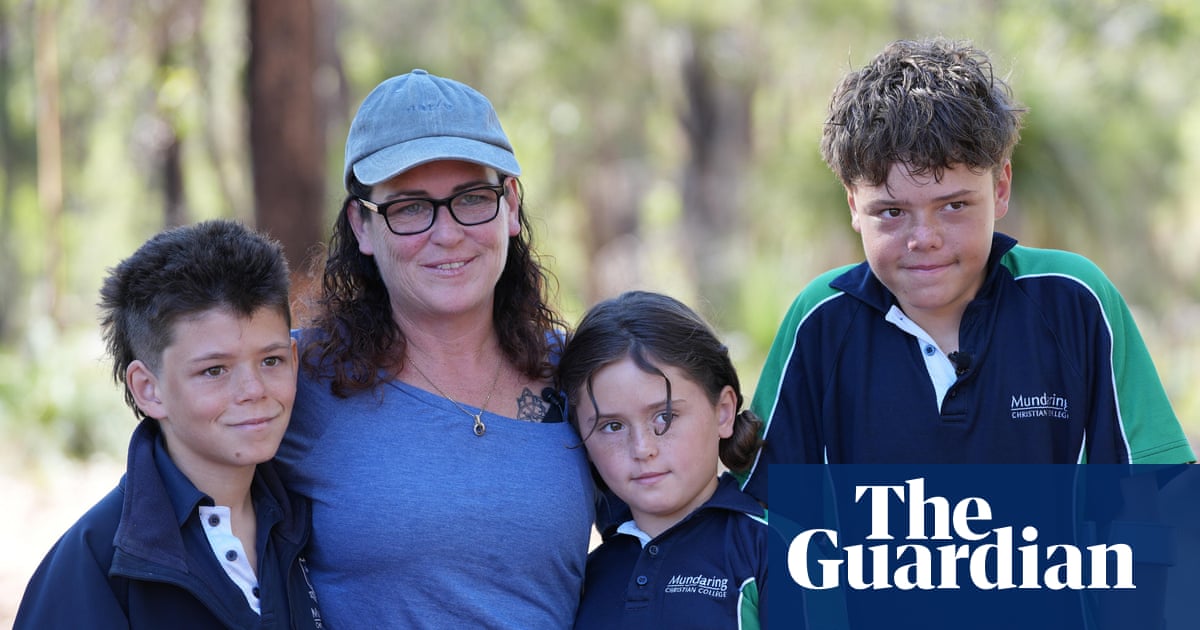
Joanne Appelbee, the children’s mother, made “one of the hardest decisions” to send her 13-year-old son, Austin, to swim four hours through tumultuous waters to raise the alarm.
After the boy made it safely to shore and alerted emergency services, his mother, brother Beau, 12, and sister Grace, eight, were found at about 8.30pm, drifting in the ocean and clinging to a paddleboard about 14km (9 miles) offshore.
On Thursday a WorkSafe WA spokesperson said the group was aware of the incident although they had not been “formally notified” and were “currently making initial enquiries”.
A spokesperson for the Australian Maritime Safety Authority (Amsa) said in a statement on Thursday that it had been alerted to the incident and was making inquiries.
Club Wyndham Resort, where the family was staying, denied any wrongdoing in a statement to media on Wednesday evening.
“As our guests are free to use resort equipment on a complimentary basis until late in the day, our staff had no reason to be alarmed,” a spokesperson said.
Sign up: AU Breaking News email
“Guests are aware that the beach is outside the resort grounds, is unpatrolled, and that there is no direct view of the beach from the resort.”
“However, as a matter of course, the resort is conducting a safety review to minimise the risk of any similar incident occurring in the future.”
The resort has not responded to Guardian Australia’s request for further comment.
Prof Rob Brander at the UNSW beach safety research group said people often assume it’s safe to go into the ocean when it is calm and there are no breaking waves.
He said that is a problematic assumption, considering one of the main reasons why water close to the coastline is calm is from strong offshore winds.
“It’s literally blowing the ocean surface flat and creating small waves that are moving offshore,” he said. “This can create a surface drift that can take you a long way offshore.”
Surf Life Saving (SLS) WA general manager Chris Peck agreed and said “you don’t need waves, swell and rips for it to be a hazardous situation”.
He said he felt “positive” to be having a conversation about a family “still alive and together” – but emphasised the importance of beach safety.
He encouraged beachgoers to consider finding out where their nearest patrolled beach is and to stay between the red and yellow flags, but acknowledged it can be difficult.
“If you’re in doubt, don’t go out,” he stressed.
Brander also said beachgoers should be wary that inflatable watercraft are dangerous for use in the ocean.
“It’s like putting up a sail,” he said. “The problem is inflatables stick above the surface of the water, and the wind just grabs that, especially if you’re standing or kneeling, you’re the sail.”
He suggested taking a few minutes “just thinking about beach safety” before you enter the water, considering what you would do if something went wrong and who you would contact.
Peck agreed and said when people buy inflatables they should consider the difference between using them in a pool versus the ocean.
“The ocean is the most dynamic environment you can enter, because it changes every second,” he said. “Just because it’s flat and it looks clear in the water and the sun’s out, doesn’t mean that the wind’s not blowing offshore and you won’t get pushed out.”
Disclaimer : This story is auto aggregated by a computer programme and has not been created or edited by DOWNTHENEWS. Publisher: theguardian.com