
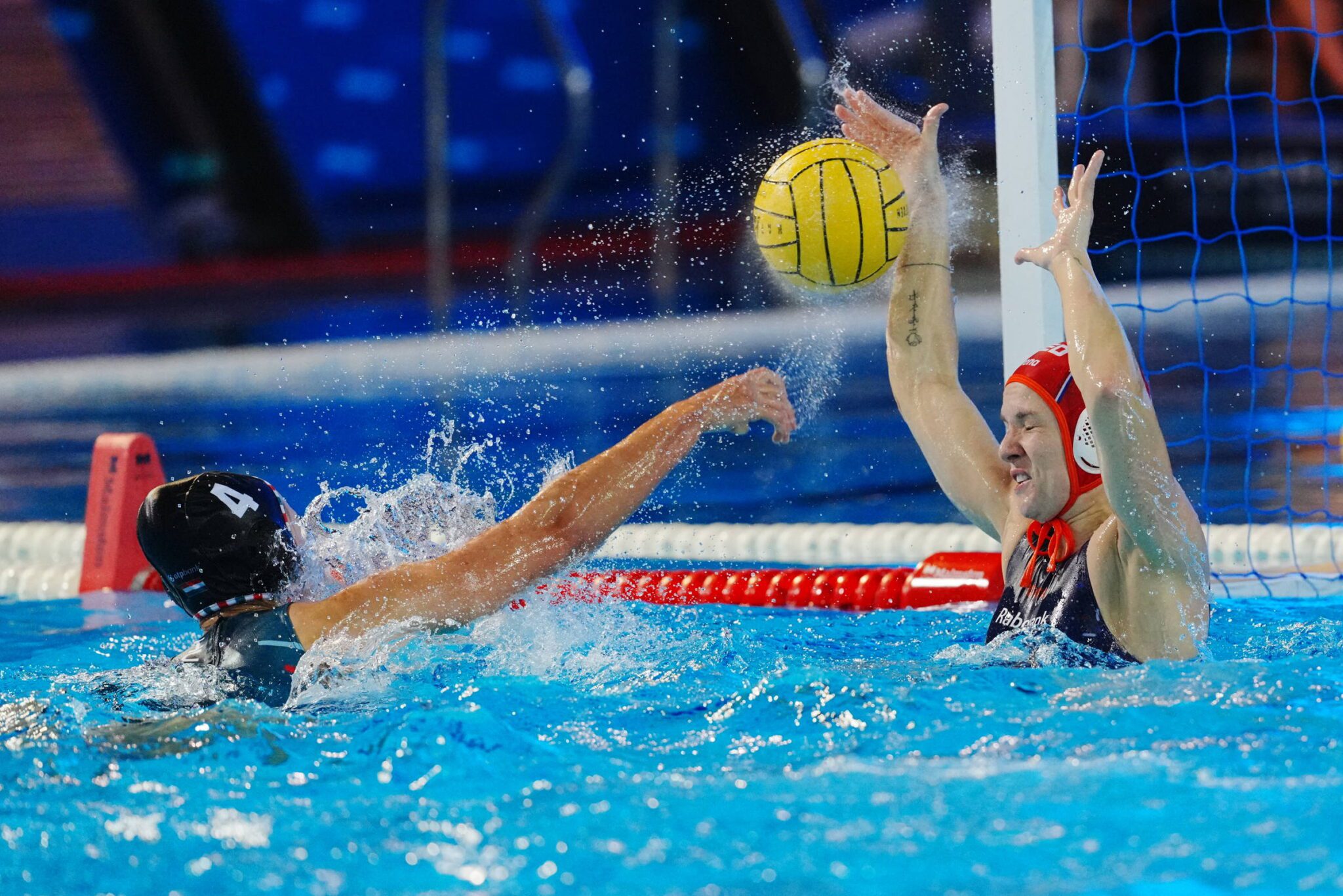
The Netherlands successfully defended the title of the European champion for ladies.
The Dutch defeated Hungary 15:13 after a penalty shootout (10:10 in regular time) in the final of the 2026 European Championships in Funchal. It won its 7th European crown and its 14th medal at the continental championships in total (7 gold, 4 silver, 3 bronze).
By winning silver, Hungary added the 15th medal to its collection (3,6,6).
The bronze-medal match wasn’t as exciting as the final, as Greece convincingly beat Italy, 15:8.
Final standings
The final standings of the top 6 teams in Funchal is almost the same as at the European Men’s Championships. The only difference is the gold-medal winner. Serbia returned to the throne at the men’s tournament.
Final standings: 1. Netherlands, 2. Hungary, 3. Greece, 4. Italy, 5. Spain, 6. Croatia, 7. Israel, 8. France, 9. Great Britain, 10. Serbia, 11. Germany, 12. Portugal, 13. Turkiye, 14. Switzerland, 15. Slovakia, 16. Romania.
2026 European Women’s Championships, Funchal
Final
The final featured several twists and turns, but Hungary only took the lead once after the middle break (6:5 midway through the third quarter).
This match was the second encounter between these two great teams in Funchal. The Netherlands had previously narrowly defeated Hungary, 5:4, in Group Phase II.
The final started with a flurry of action, as both teams combined to score nine goals in the first 16 minutes.
Hungary opened the game strongly with a 2:0 lead and was ahead 3:1 at the first break. However, the Dutch took control in the second period. Neither team excelled at power-play conversions. The Netherlands began their comeback with several long-range goals, taking the lead at 4:3 midway through the second quarter. In the 15th minute, Simone van de Kraats converted a penalty shot, extending the Dutch advantage to 5:3. In the following possession, Varro scored during a 6-on-5 situation, ending Hungary’s nine-minute scoring drought. This was the first goal scored with an extra player in the game.
Valyi converted another man-up to open the second half with an equalizer for 5:5. Keszthelyi put Hungary in front. But the finish of the quarter belonged to the Dutch. They regained a lead at 7:6 with goals from Lieke Rogge and Fleurein Bosveld.
Goalkeeper Laura Aarts contributed significantly to the sucess of the Netherlands Photo by Aniko Kovacs/European Aquatics
In the opening minutes of the final quarter, the teams traded goals, with Hungary leveling at 8:8 and 9:9. The Dutch finally started converting their woman-up opportunities. Keuning gave them an 8:7 and a 9:8 lead with power-play goals.
Shortly after the Dutch’s ninth goal, Valyi leveled at 9:9 from a counterattack. However, the Netherlands maintained its momentum in 6-on-5 situations. They converted their third extra player in the fourth period – Joustra made it 10:9.

Photo: European Aquatics
A minute and a half before the end, Tiba scored another equalizer. After that, the Netherlands forced the fourth exclusion in the fourth period, but, unlike the previous three occasions, it didn’t score from a woman up. Hungary lost the ball in its final possession with 26 seconds left on the clock. The Dutch head coach, Evangelos Doudisis, called two timeouts in the remaining time, but his team didn’t secure gold in regular time. Hungary’s goalkeeper Neszmely saved a shot from Moolhuijzen in the dying seconds.
The top scorer in regular time was Simone van de Kraats, who netted three goals for the Netherlands, and Keuning and Bosveld added two each. Valyi, Varro, Keszthely and Garda scored two goals apiece for Hungary.
Before the final, both teams had played one game with a penalty shootout. The Netherlands lost to Spain in Group Phase II, but one point was enough to keep the Dutch in first place in the group. Hungary defeated Greece in the semifinals after the shots from the 5m line.
This evening, one save in the shootout decided everything. Laura Aarts, one of the heroes of the Dutch triumph, saved a shot from Rita Keszthelyi in the second round (it was her 12th save in the final). All other shooters made no mistake, and the Netherlands celebrated the title.
Bronze-medal game
World champion Greece left Italy with no chance in the bronze-medal game. After two early goals by the Greeks, Roberta Bianconi halved Italy’s deficit to 1:2. However, the Greeks responded strongly, with a 4:0 run. Patra opened the second quarter with a penalty shot goal to make it 6:1. At halftime, Greece had a 6-goal advantage (10:4).

Photo by Aniko Kovacs/European Aquatics
Everything was determined after 24 minutes, as Greece entered the final quarter with a 15-6 lead. The Greeks didn’t add any more goals, while Italy managed to score the last two goals of the match in the final two and a half minutes, but it was merely a small consolation.
Vasiliki Plevritou and Foteini Tricha were the winning team’s top scorers, each with three goals. Dafne Bettini scored half of the goals for Italy.
5th-place match
Spain didn’t arrive in Funchal to play for 5th place. However, the Olympic champions played at a high level until the end of the tournament and convincingly beat Croatia, with five goals from Bea Ortiz.
Despite the big loss in their last game of the tournament, the Croats aren’t disappointed. They came close to the powerhouses and achieved their best-ever placement in the history of the Championships. Until now, they had never been ranked better than 8th place.
7th-place match
Israel controlled the 7th-place match from the early stages. The Israelis built a 7:3 lead in the first quarter and doubled the advantage until the end.
All medal winners
1985, Oslo: 1. Netherlands, 2. Hungary, 3. West Germany
1987, Strasbourg: 1. Netherlands, 2. Hungary, 3. France
1989, Bonn: 1. Netherlands, 2. Hungary, 3. France
1991, Athens: 1. Hungary, 2. Netherlands, 3. Italy
1993, Leeds: 1. Netherlands, 2. Russia, 3. Hungary
1995, Vienna: 1. Italy, 2. Hungary, 3. Netherlands
1997, Sevilla: 1. Italy, 2. Russia, 3. Netherlands
1999, Prato: 1. Italy, 2. Netherlands, 3. Russia
2001, Budapest: 1. Hungary, 2. Italy, 3. Russia
2003, Ljubljana: 1. Italy, 2. Hungary, 3. Russia.
2006, Belgrade: 1. Russia, 2. Italy, 3. Hungary.
2008, Malaga: 1. Russia, 2. Spain, 3. Hungary
2010, Zagreb: 1. Russia, 2. Greece, 3. Netherlands
2012, Eindhoven: 1. Italy, 2. Greece, 3. Hungary
2014, Budapest: 1. Spain, 2. Netherlands, 3. Hungary.
2016, Belgrade: 1. Hungary, 2. Netherlands, 3. Italy.
2018, Barcelona: 1. Netherlands, 2. Greece, 3. Spain.
2020, Budapest: 1. Spain, 2. Russia, 3. Hungary.
2022, Split: 1. Spain, 2. Greece, 3. Italy.
2024, Eindhoven: 1. Netherlands, 2. Spain, 3. Greece.
2026, Funchal: 1. Netherlands, 2. Hungary, 3. Greece
Visit Total Waterpolo Arena for all the scores and statistics
More articles about the European Championships






Disclaimer : This story is auto aggregated by a computer programme and has not been created or edited by DOWNTHENEWS. Publisher: total-waterpolo.com



