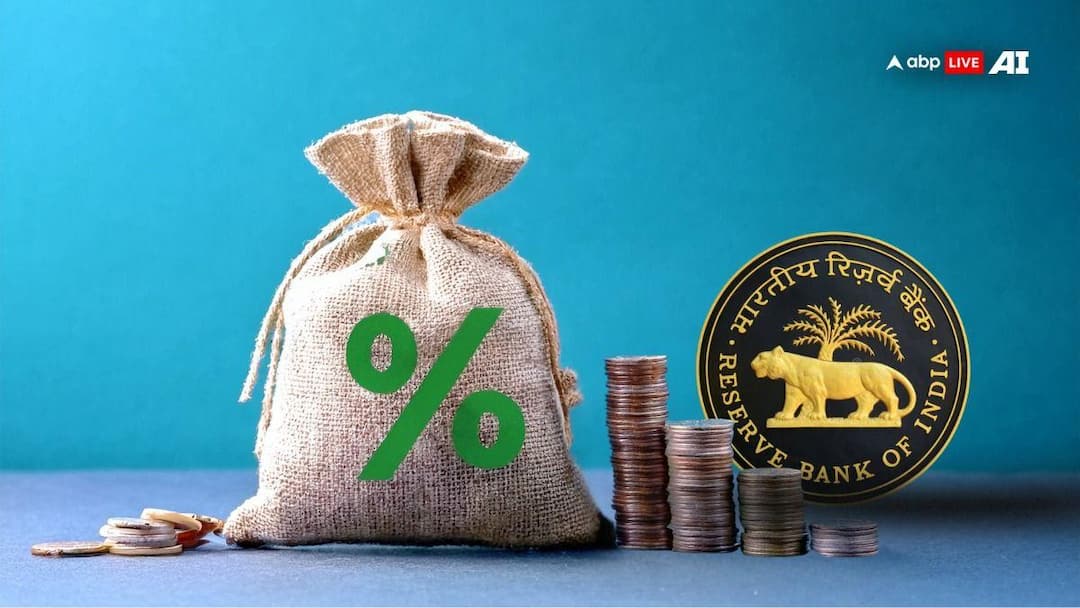
RBI MPC February 2026 LIVE Updates: In just a few hours, the Reserve Bank of India (RBI) will deliver the last fiscal policy call for the current 2025-26 financial year (FY26). Governor Sanjay Malhotra is set to announce the outcome of the Monetary Policy Committee’s (MPC) February meeting at 10 AM today, and the verdict on the repo rate will ripple across home loans, corporate borrowing, market sentiment and liquidity conditions.
For homebuyers, investors, businesses and depositors, this is more than a routine announcement. It is a moment that could influence EMIs, bond yields, property demand and even stock market mood heading into the next quarter.
When And Where To Track The Decision
The MPC’s final policy meeting of FY26 began on February 4 and concludes on February 6. The previous review was held between December 3 and 5. After the announcement at 10 AM, Governor Malhotra will hold a detailed press conference around noon, where he is expected to explain the committee’s reasoning, inflation outlook, liquidity stance and broader economic assessment.
The announcement will be streamed live on the RBI’s official website, YouTube channel and X account. ABP Live will also provide real-time updates, analysis and expert reactions as the decision unfolds.
What Happened In The December Review?
To understand what is at stake, it is useful to revisit December’s policy move.
In its last meeting, the MPC unanimously reduced the repo rate by 25 basis points, bringing it down to 5.25 per cent from 5.5 per cent. That cut came after a pause in the two meetings preceding it.
Prior to December, the committee had already delivered three consecutive rate cuts since February, trimming the repo rate by 100 basis points and taking it from 6.5 per cent in February to 5.5 per cent in June. Cumulatively, the easing cycle has totalled 125 basis points over the past year.
The central bank retained a ‘neutral’ stance. The standing deposit facility (SDF) rate was aligned at 5.00 per cent, while the marginal standing facility (MSF) rate and bank rate were fixed at 5.50 per cent.
For borrowers, these changes translated into gradually softer lending rates, particularly in housing finance and corporate credit.
Why This Meeting Matters More
The February review comes against a layered backdrop. The Union Budget has just been presented, outlining fiscal priorities and capital expenditure plans. At the same time, developments around the India–US trade agreement have added a fresh external dimension to policy calculations.
Market participants will not only be watching whether the repo rate moves again, but also scanning every word of the policy statement for clues about inflation, growth momentum, currency stability and liquidity management.
Bond markets, equities and the rupee are all expected to react quickly to the tone adopted by the Governor.
What The Repo Rate Means For You
The repo rate, the rate at which the RBI lends to commercial banks, serves as the anchor for borrowing costs in the economy.
When the rate is reduced, banks typically lower loan rates over time, easing EMIs for homebuyers and reducing funding costs for businesses. When it rises, borrowing becomes more expensive.
The 125 basis points of cumulative easing since February have already improved affordability across housing, infrastructure and select consumption segments. The key question now is whether the MPC believes the economy requires further support or whether it will opt for stability.
Real Estate Industry Watches Closely
The housing sector, which is highly sensitive to interest rates, is particularly alert ahead of Friday’s announcement.
Aman Sharma, Founder and Managing Director of Aarize Group, indicated that buyers today are guided by long-term financial comfort rather than short-term promotional incentives. He suggested that maintaining the repo rate at current levels would offer predictability and stability to the housing market. In his view, steady rates encourage end-users to proceed with planned purchases and support sustained sectoral momentum.
Similarly, Ashish Agarwal, Director at AU Real Estate, expects policy continuity to reinforce buyer confidence. He believes that stable borrowing costs, combined with the government’s ongoing capital expenditure push, create a favourable environment for asset creation and wealth preservation. According to him, alignment between fiscal intent and monetary conditions is critical as the property market matures and transitions towards more disciplined capital deployment.
Investment Funds And Liquidity Dynamics
The easing cycle has also influenced alternative investment flows.
Ankur Jalan, CEO of Golden Growth Fund (GGF), a Category II real estate-focused AIF, observed that the 125 basis points reduction since February 2025, alongside gradual moderation in deposit rates, has made the investment climate more supportive for structured real estate capital. In a phase where traditional financing channels remain selective, he pointed out that AIFs are stepping in to provide long-term funding to projects. He expects the MPC to retain a supportive stance to ensure adequate liquidity and smoother transmission of policy benefits.
Debt Markets And The Broader Macro Picture
From a fixed-income perspective, the domestic macro environment appears supportive of policy stability.
Deepak Agrawal, Chief Investment Officer, Debt at Kotak Mahindra AMC, noted that the policy review follows the Union Budget at a time when inflation remains below the central bank’s target band, growth momentum is intact and system liquidity is in surplus. He highlighted that fiscal consolidation has been reaffirmed and foreign exchange reserves are at record levels, giving policymakers room for manoeuvre.
According to his assessment, while global uncertainties persist, India’s relatively strong growth trajectory and improving external position allow the MPC to maintain the repo rate at 5.25 per cent. He expects forward guidance to retain a mildly accommodative tone, keeping the door open for recalibration if growth or inflation dynamics shift.
Countdown To 10 AM
As markets open on Friday morning, anticipation will be palpable. Traders, homebuyers, developers and fund managers alike will parse not just the headline rate decision but the nuance in language, the inflation projections and the liquidity signals.
Disclaimer : This story is auto aggregated by a computer programme and has not been created or edited by DOWNTHENEWS. Publisher: abplive.com