
Iran-US Nuclear Deal: Iran’s top diplomat touched down in Oman on Friday morning with a clear brief: Nuclear talks, and only nuclear talks. Abbas Araghchi arrived in Muscat leading a delegation that included senior political, legal and media figures from Tehran’s foreign policy establishment. Iranian media identified Deputy Foreign Minister for Political Affairs Majid Takht Ravanchi, Deputy Foreign Minister for Legal and International Affairs Kazem Gharibabadi, and Foreign Ministry spokesperson Esmaeil Baghaei as part of the team.
A member of the Iranian negotiating side made it clear that the discussions with US representatives would be tightly focused. No regional politics. No side issues. Just the nuclear file.
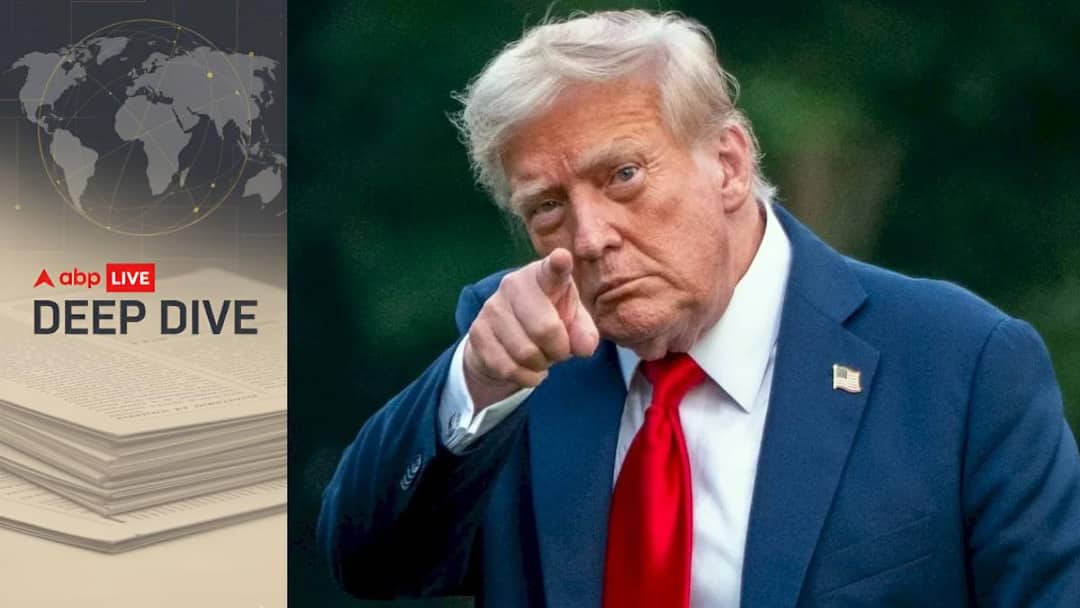
Across the ocean, the tone from Washington was notably sharper. White House Press Secretary Karoline Leavitt confirmed that President Donald Trump’s envoy Steve Witkoff and Trump’s son-in-law Jared Kushner would be present at the Muscat meeting. She described diplomacy as Trump’s “first option” but warned Tehran not to ignore the “many options” available to the American commander in chief. Leavitt also underlined Washington’s position that Iran must achieve “zero nuclear capability” and called the Muscat engagement a test of whether a deal is still possible.
Venue Politics Reveal The Mistrust Beneath Diplomacy
The meeting almost did not happen here.
The talks were initially expected to take place in Istanbul. Tehran later pushed for a shift to Oman, arguing that Muscat offered a more politically reliable setting. The change reportedly frustrated Washington and briefly fueled speculation that the talks might collapse before they began.
That uncertainty sent ripples across the Middle East. Regional capitals quietly pressed the United States to stay engaged. Washington eventually agreed to the Omani venue.
Israeli media reported that several Arab and Islamic nations are also encouraging both sides to consider signing a non-aggression agreement during the Muscat discussions. The Times of Israel, citing two Middle Eastern diplomats, said Saudi Arabia, Qatar, Egypt, Oman, the United Arab Emirates and Pakistan may be involved in pushing such a framework. The idea is simple in theory. Iran and the United States would pledge not to attack each other and extend the understanding to regional allies. In practice, analysts say bringing Israel into such a structure would be extremely difficult.
Old Fault Lines Resurface As Talks Resume
The Muscat talks revive a diplomatic channel that has repeatedly stalled. Several indirect rounds were held in 2025 under Omani mediation, but the core disagreements remained untouched.
Washington’s demands revolve around three pillars. A complete halt to uranium enrichment. Restrictions on Iran’s ballistic missile range. An end to Iranian support for what the US calls regional proxy forces.
These were the very gaps cited by the Trump administration when it withdrew from the 2015 nuclear agreement. The argument from Washington was that the deal placed only temporary limits on Iran’s nuclear work and did not permanently block a weapons pathway. It also left out Iran’s missile program and its regional footprint, which US allies such as Israel and several Gulf states have long viewed as destabilising omissions.
Earlier this week, US Secretary of State Marco Rubio said any “meaningful” negotiation must also address Iran’s missile capability, regional influence and domestic governance.
Tehran’s position has not shifted. Iran maintains that it is not pursuing nuclear weapons and calls its right to peaceful nuclear energy “inalienable.” It also insists that its missile program is a core part of national defence and is not open for negotiation.
Experts warn that Washington’s attempt to secure a “stricter and more comprehensive” agreement through sustained pressure risks underestimating Iran’s security calculus and could further unsettle an already tense region.
Military Signals Grow Louder As Diplomacy Resumes
The diplomatic choreography in Muscat is unfolding alongside visible military signalling.
The United States has expanded its presence in the region in recent weeks. Naval and air assets, including the aircraft carrier USS Abraham Lincoln and multiple guided missile destroyers, have been deployed. US Central Command said on Tuesday that an American F-35C shot down an Iranian Shahed 139 drone over the Arabian Sea in “self defense.” Iran rejected that version, saying the drone had completed a surveillance mission in international waters.
On Wednesday, Iran’s Islamic Revolutionary Guard Corps showcased a new underground missile base and declared it had shifted its doctrine “from defensive to offensive” after last year’s war with Israel.
President Trump added to the pressure by warning that Supreme Leader Ali Khamenei should be “very worried” as Washington continues to build up forces.
The last time nuclear diplomacy faltered, it was followed by open conflict. Israel’s surprise strike on Iran last June triggered a 12 day war, during which the United States bombed Iranian nuclear facilities.
That memory looms large over Muscat.
What unfolds here is not just another round of talks. It is a test of whether two deeply distrustful adversaries can still find a diplomatic off ramp before military signals become something far more dangerous.
Related Video
Breaking News: Missing Children Crisis Raised in Rajya Sabha, AAP MP Flags Shocking Data
Disclaimer : This story is auto aggregated by a computer programme and has not been created or edited by DOWNTHENEWS. Publisher: abplive.com









