You should buy a dehumidifier. It will almost certainly improve your home environment. Pulling moisture from the air helps banish condensation and mold, making it cheaper and easier to regulate the temperature in your house or apartment. There’s a reason the chatter about dehumidifiers has grown so loud and sales are soaring; it’s because they work.
Whether you’ve seen a persuasive Reddit thread, a life hack on TikTok, or an expert guide to the best dehumidifiers, the hype is real. I live in Scotland, where it’s dark and damp for months every year. We even have a word for the weather: dreich (which means dreary and bleak). We also have a mix of poorly ventilated and poorly insulated homes that we heat twice a day. The result is windows soaked with condensation and black mold galore.
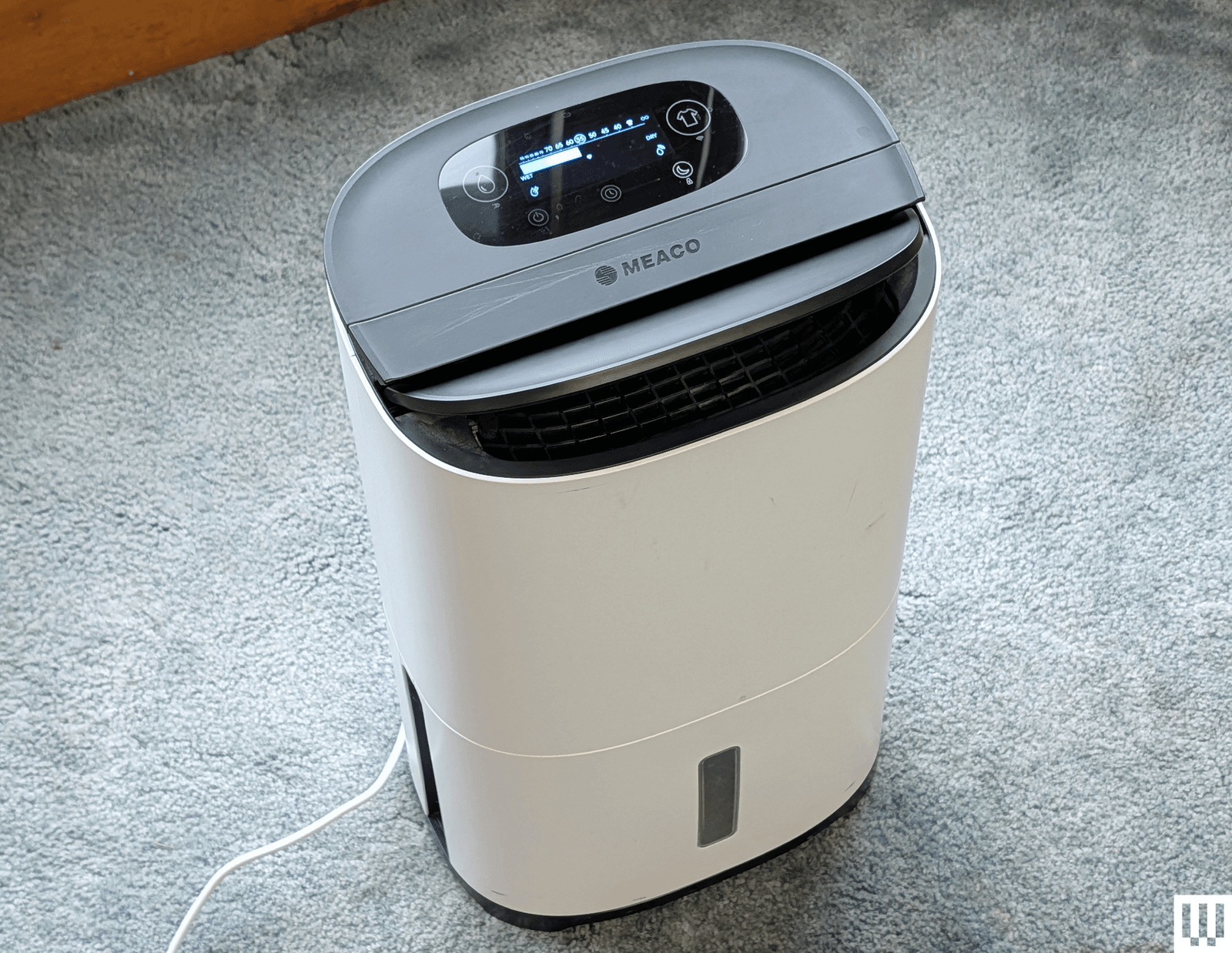
I’ve been using a dehumidifier for the last year, across two quite different homes, and it’s one of my favorite appliances. I’m never going back to the damp life. My Meaco dehumidifier might be the hardest-working device in my home. It’s not perfect—I’ll get to the downsides—but first, let me explain why I love it.
Depressing Damp
Most of the homes I lived in for the first 40 years of my life were damp. Many had single glazing, limited insulation, and solid stone or brick walls with no cavity. Combine that with gas central heating, which heats the home quickly but is used sparingly, usually twice a day, and you have temperatures that spike and rapidly fall, making the perfect breeding ground for condensation and mold. Cold and damp homes are a serious problem in the UK.
For a long time, I thought wet windows and black mold in corners were just normal. I’ll never forget when we moved out of our last flat in Edinburgh. When I pulled the double bed with the big headboard away from the wall, it was completely covered in black mold. I had been feeling ill for a while, and when I looked it up, I had all the symptoms of black mold exposure. I was completely ignorant about damp risks.
Our first real home as a married couple with young kids was a modern construction, with double glazing, proper insulation, and effective central heating, and it was the warmest home I’ve ever lived in. But, because there were no drafts, condensation appeared on the windows every morning. Cooking and drying laundry would make it worse, but opening windows during the winter made it too cold and expensive to reheat.
I read about the potential benefits of a dehumidifier and decided to try it. Immediately, the condensation was gone, but the other big benefit was drying clothes indoors.
Dry Laundry

I know you’re not supposed to do this, but I grew up putting clothes on the radiators to dry. Or we’d use a clothes airer in the hall. In some of the flats I lived in, it took days for a pair of jeans to get dry, and there was a constant musty smell. But there was no tumble dryer and often no or limited access to outside space for hanging clothes outdoors.
While line-dried clothes and sheets are the best, hanging laundry out in a Scottish winter is an invitation for rain. The weather report is rarely accurate. I also hate that whole “Is it wet or just cold?” guessing game. Bring it inside prematurely, and, naturally, it’s always wet.
A dehumidifier is a total game changer for drying clothes. I used the MeacoDry Arete, which has a special laundry drying setting, and a six-hour blast is often enough to dry a whole load. No need to go outside, no musty smell, just dry laundry. That alone is enough reason to snag a dehumidifier.
Comfy and Cozy
When we moved into an old Victorian house with historic damp problems, I upgraded to the MeacoDry Arete Two with a 25-liter capacity. Humidity levels in the house sat around 65 to 75 percent. The general wisdom is that it should be between 40 and 60 percent (we aim for 50 to 55). There was persistent condensation on several windows and damp patches on some walls. The dehumidifier went to work. It’s a fancy Wi-Fi-connected model with a touch display on top. While I like being able to switch it on or off and change the mode without leaving the bed, you don’t really need a Wi-Fi model.

After a few months, our dehumidifier started switching on less often, bolstered by other improvements, like better insulation, gutter clearing, and new windows. Dehumidifiers won’t cure a damp problem; they just help you treat the symptoms, so you should definitely investigate further if there’s a wall that won’t dry out or a stubborn mold patch in your home. You can also use water leak detectors to ensure you catch potential issues early.
A dehumidifier won’t heat your home either, but it will make it feel warmer, and potentially make your heating system more effective when it’s on. Less heat is required to make a dry house warm, and dehumidifying can also make a warm house feel cooler (so I’m told). You also don’t have to lose heat through ventilation without the risk of damp taking hold, and it generates a little heat when it’s working.
Weirdly, there isn’t a great deal of solid research around the effects of dehumidifiers. You’ll find the odd study about their impact on mold and condensation, but surprisingly little evidence that they can remove mold spores, dust, and allergens, despite frequent claims that they do from manufacturers. I would say, anecdotally, that I think my family gets ill less frequently since employing a dehumidifier, but it’s not a panacea, and it probably isn’t improving the air quality that much: You need a good air purifier for that.
The Catch
My MeacoDry is a compressor dehumidifier that condenses the humid air by running it through a refrigerant and extracting the water (you can also get desiccant dehumidifiers). There are three things I don’t like about it: It can get noisy, you have to empty it, and it’s heavy. Noise-wise, it actually makes a sound much like my fridge when the compressor kicks in, and after that, it’s a steady hum that hovers around 40 to 50 decibels (there is a nighttime mode that is slightly quieter).
Depending on how humid your home is, you’ll have to empty the tank every day or every few days. I’d advise emptying it before it fills to avoid sloshing water all over yourself. You’ll also need to move your dehumidifier around to get the best from it, and, even with a handle and wheels, this thing is heavy and awkward to shift. Ours usually lives in the downstairs hall, but I move it for laundry or to target specific rooms, and it works best if you place it out in the open (not against a wall).

The other obvious downside is the cost. If you want to get nerdy about it, you can work out the cost to run with this guide. But when you balance that with the cost of your heating and the potential health cost of damp, it’s usually well worth it. You likely know if you have a damp problem, but it’s best to check your humidity levels before you pull the trigger on a dehumidifier because drying the air out too much can also cause problems. I really like the Switchbot Hub 3 for tracking humidity and temperature, as well as acting as a Matter smart home controller, but there are plenty of cheaper options.
If you’re ready to dehumidify, and you’re in the UK or Europe, I can heartily recommend the MeacoDry Arete 2 (25L). For folks in the US, the Midea Cube 50 ($300) might be your best bet, but these are the top-end, biggest dehumidifiers, and both come in smaller sizes that are cheaper. You can find more options in our Best Dehumidifiers guide.
Disclaimer : This story is auto aggregated by a computer programme and has not been created or edited by DOWNTHENEWS. Publisher: wired.com