
When her mother moved into aged care, Mariette Balkejian helped sell her much-loved home. The western Sydney property achieved an unexpected price after a rarely used sales method was used.
As soon as the listing went up, the reserve price for the three-bedroom Wakeley home was advertised along with it. Buyer response was so good that early in the campaign there were strong offers, but Balkejian and her siblings decided to proceed with the auction as planned.
Mariette Balkejian and her siblings listed her mother’s home for sale with a reserve. They were happy with the eventual sale price.Credit: Janie Barrett
“We could have sold it within the first two weeks, but we thought, ‘you know what, let the process happen’,” she said.
It’s unusual for properties to be listed with a reserve, which is the lowest price a property can sell for. A reserve must be nominated by the seller prior to auction, and often on that day. As of Wednesday, under 10 agents nationally included a vendor reserve on their Domain listings. In some states, like Victoria, price guide disclosure is mandatory.
For Balkejian, who works in the car industry, sticking with the selling plan for her 84-year-old mother’s home was a bet that paid off.
The “whole front yard was full of people,” she said of the well-attended auction day in August. There were around 30 registered bidders and the property eventually sold for almost $500,000 over the $1 million listed reserve price.
“We were very surprised at the result at the end of it, so we were very happy,” Balkejian said.
Currently, there is no need for agents in NSW to publicly disclose a vendor’s reserve. However, authorities in Victoria have a plan to require agents to publish the owner’s reserve price at least seven days before auction day or fixed-date sale.
In NSW, the government announced plans to mandate price guide disclosure, but not reserve disclosure, after an investigation by this masthead into property price guides.
Graham Ball, senior sales consultant from LJ Hooker Edensor Park and Balkejian’s selling agent, often lists properties with a reserve. This is something he said works well for the vendor, but also assists the other side.
“Buyers love it because they know exactly where they stand,” he said. “So, to me, it’s every benefit having the reserve out there … we all know where we’re at.”
For Balkejian’s property, Ball said getting early offers increased confidence about the auction. Generally, he said the key was the vendors getting the reserve “in the right spot” and “positioned to attract genuine buyers.”
Ball said he auctions 90 per cent of the property that he puts on the market. For motivated and market-educated sellers, particularly those involved through the campaign, putting a reserve on a listing was a method, he said.
“It all comes down to … who I’m dealing with,” he said.
Ball, who has around 35 years of experience in the real estate industry, estimated some 60 per cent of his auction listings during 2025 had a public reserve.
Tim McKibbin, chief executive of the Real Estate Institute of New South Wales, said in the endeavour of getting the best price for a vendor, there may be good reasons why there may be desire to publish the reserve. There may also be good reasons for not.
“Each transaction is different in some way and people have to make decisions about how they are going to market the property, how they are going to sell the property,” he said.
“The whole purpose of the auction is to create that competitive tension around the room and to have people make their absolute best offer.”
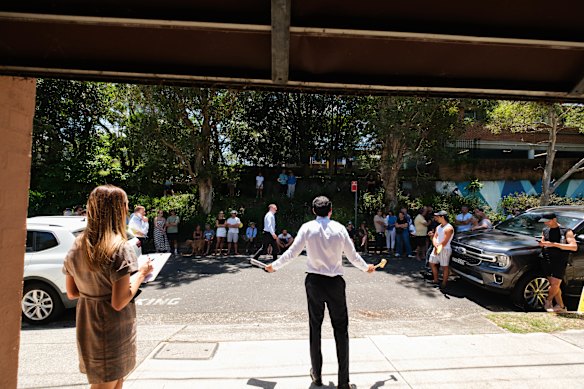
Industry watchers say each auction is different.Credit: Oscar Colman
Clarence White, auctioneer from Menck White Auctioneers, said an auction campaign’s success generally falls around competition from buyers setting the market price on auction day.
“The biggest thing is that forcing a seller to publish an asking price on an auction property, defeats competitive instincts,” he said.
“Competition on an auction is usually headed around the idea that this is a good house, I want to buy it, and that the market’s going to set the price, and that the owner is going to accept the market price.”
Chris Curtis, buyers’ agency Curtis Associates managing director, said any information provided by vendors may save buyers from spending on things like property or pest inspections for unsuitable properties.
But he said he didn’t think it was a “one-size-fits-all situation” when it comes disclosing reserves ahead of auction, whether it’s mandatory or not. It could prevent vendor flexibility to move a reserve up or down throughout a campaign and at auction, and “frustrate a sale.”
Balkejian, who buys and sells properties for herself, said she’s supportive of public reserves.
“You just want an indication of what sort of price they want,” she said of sellers. “It just makes a big difference, whether you’re going to pursue looking at that [property] or not.”
Most Viewed in Property
Disclaimer : This story is auto aggregated by a computer programme and has not been created or edited by DOWNTHENEWS. Publisher: www.smh.com.au