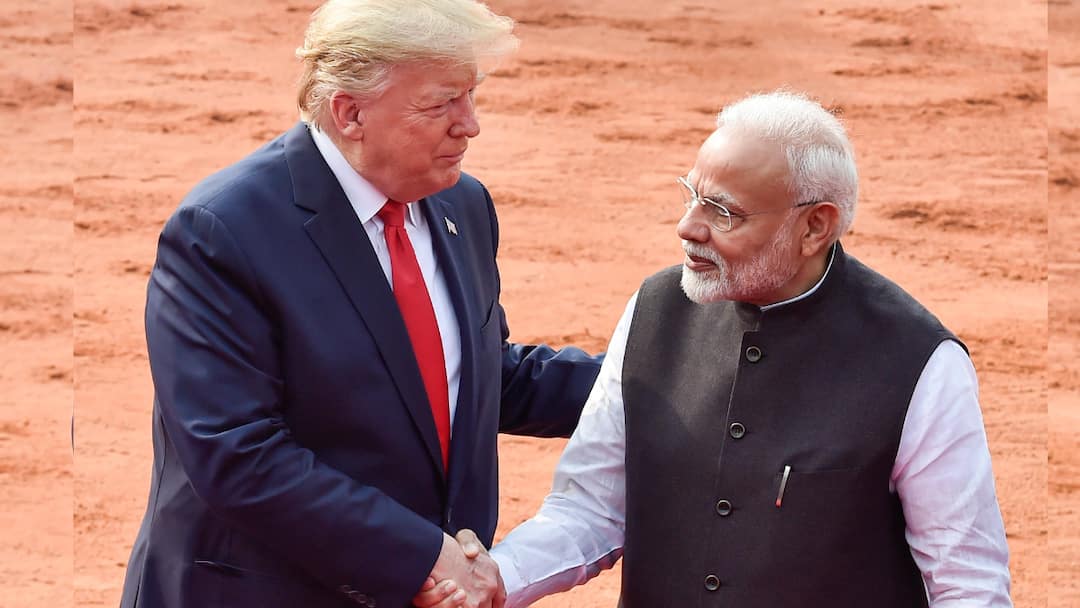
The United States and India on Friday unveiled a framework for an Interim Trade Agreement focused on reciprocal and mutually beneficial commerce, marking a notable advance in bilateral economic relations. The framework strengthens both sides’ commitment to the wider U.S.-India Bilateral Trade Agreement (BTA) talks initiated by President Donald J. Trump and Prime Minister Narendra Modi on February 13, 2025.
Officials described the proposed Interim Agreement as a landmark step designed to deliver measurable gains in market access, strengthen supply chains, and deepen cooperation on economic security between the two strategic partners.
Tariff Rebalancing Takes Centre Stage
At the heart of the framework lies a significant overhaul of tariff structures. India has agreed to eliminate or reduce duties on all U.S. industrial goods and a wide range of agricultural and food products. These include dried distillers’ grains, red sorghum used for animal feed, tree nuts, fresh and processed fruits, soybean oil, wine, spirits, and other items.
In exchange, the United States will apply a reciprocal tariff rate of 18 percent on Indian-origin goods under Executive Order 14257. The affected sectors include textiles and apparel, leather and footwear, plastics and rubber, organic chemicals, home décor, artisanal products, and certain categories of machinery. Washington also indicated that, once the Interim Agreement is successfully concluded, reciprocal tariffs will be lifted on several Indian exports such as generic pharmaceuticals, gems and diamonds, and aircraft parts.
Trump Connects Trade Deal To Global Politics
President Trump publicly linked the proposed tariff adjustment to India’s energy policy, announcing plans to reduce tariffs on Indian goods from 25 percent to 18 percent after Prime Minister Modi agreed to halt purchases of Russian oil. “This will help END THE WAR in Ukraine, which is taking place right now, with thousands of people dying each and every week!” the president wrote on Truth Social.
Prime Minister Modi responded by saying he looks forward to working with the United States and President Trump, signalling continuity in political engagement alongside growing economic cooperation.
Key Pointers Of India-US Joint Statement
1. India to ease import duties on US products
India has committed to lowering or eliminating tariffs on most US industrial goods, along with several agricultural and food products, including feed grains, edible oils, fruits, nuts, and alcoholic beverages.
2. US to impose reciprocal tariffs on Indian exports
Washington announced an 18% reciprocal tariff on Indian-origin goods under Executive Order 14257, impacting sectors such as garments, leather, footwear, plastics, chemicals, handicrafts, décor items, and machinery.
3. Tariff relief tied to agreement finalisation
The US said reciprocal duties may be withdrawn on Indian shipments of gems, diamonds, aircraft components, and generic medicines once the interim pact is concluded.
4. National security levies to be partially withdrawn
The US plans to remove tariffs on select Indian aircraft and components earlier imposed under security-related measures covering metals like steel, aluminium, and copper.
5. Special access for India in protected US sectors
India will be granted tariff-rate quotas for certain automobile parts, while pharmaceutical concessions will depend on the outcome of the Section 232 review.
6. Mutual market-opening commitments
Both countries have agreed to provide each other preferential and sustained access in priority sectors of strategic and commercial interest.
7. Origin rules to prevent third-country routing
The agreement will include strict rules of origin to ensure trade benefits flow mainly between India and the United States.
8. India to tackle non-tariff trade hurdles
New Delhi has agreed to address long-standing barriers affecting US medical devices, ICT imports, and farm products, including reviewing standards acceptance within six months.
9. Talks planned on regulatory harmonisation
The two sides will engage on aligning technical standards and conformity procedures to reduce compliance burdens for exporters.
10. Safeguard for future tariff revisions
Either country may recalibrate its commitments if agreed tariff levels are altered after implementation.
11. Closer coordination on security and technology
India and the US will deepen cooperation on supply chains, investment screening, export controls, and emerging technologies such as GPUs and data-centre infrastructure.
12. India outlines large-scale US import plans
India has indicated plans to buy $500 billion worth of US energy, aviation equipment, metals, technology products, and coking coal over the next five years.
Related Video
Tragic News: Kamal’s Homecoming Turns Into Fatal Accident
Disclaimer : This story is auto aggregated by a computer programme and has not been created or edited by DOWNTHENEWS. Publisher: abplive.com