
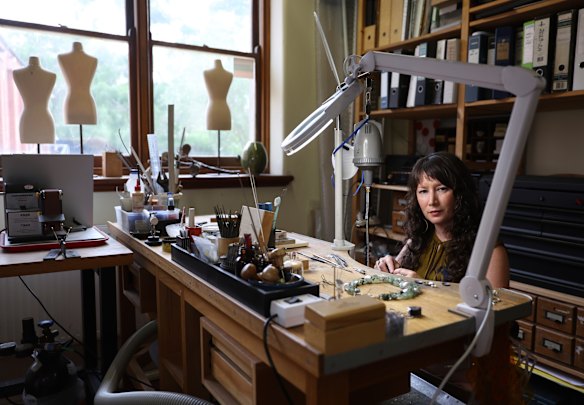
In the clutter of an artist’s studio, a jeweller lowers her voice to a hush. “You can see it in their eyes,” she says, talking about the women who return to this place, decades after they were sent here.
“Witnessing it feels like a sacred experience.”
Her wooden door is swung open to reveal the imposing labyrinth of the Abbotsford Convent grounds. Through an arched corridor, harsh concrete meets a rusted green gate, which hangs in place of another that used to separate those “serving penance” here from the schoolgirls and orphans.
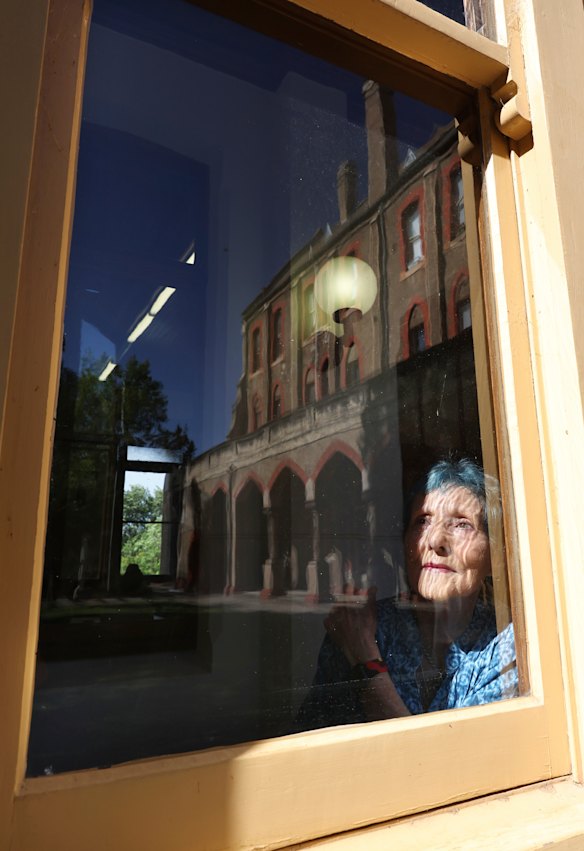
What once would have been the sounds of playful chatter, is today replaced by the piano keys twinkling at a music academy. But beneath the melody, there’s something else – a murmur, a mutter, something that makes the hairs on Patricia Sykes’ neck stand up.
Sykes – an 84-year-old woman whose hearty laugh radiates through her slight frame – was taken to the orphanage here at the age of 11, in the 1950s, alongside her three sisters after their mother died in childbirth.
Her father, a labourer, faced the dilemma of separating his daughters through adoption, or keeping them together at an orphanage. She remembers the clanging of a nun’s brass key on the architrave of her dormitory door, which served as the orphans’ wake-up call before they knelt for prayers, and made their beds.
“There were two days we used to get a treat,” says Sykes, who on this day brought a prepared lunch in her backpack. “It was biscuits, or bread and jam.”
As a little girl, Sykes was beaming in a patch dress in the convent’s church choir. She won sixpence from the mother superior while dancing for Queen Elizabeth’s 1954 visit to Australia, and discovered the pentameter (she’s now a poet) during her schooling here.
The fear came later, after they went home to live with their father – who began threatening to return them to the convent if they misbehaved.
“There were two occasions he made us pack our bags, and he drove us back here and pulled up out the front to scare the living daylights out of us.”
Different buildings on the Abbotsford Convent grounds housed different groups of girls, and they never mixed.
There were the paid boarders, local primary school children, orphans, and then, the girls and young women of the Sacred Heart building, who were put to work in the Magdalene laundries in what amounted to slave labour.
Some were sent by their families; others, by court order surrendering them to the “care and control” of the Good Shepherd Sisters (and for what could be the most trivial and dubious of reasons: one girl’s father sent her for walking on grass barefoot).
Each of the girls and women in the Sacred Heart building was given a new name – their personal histories, effectively erased – and they saw the world through metal window grilles, looking out over their barren concrete square.
The girls’ circumstances were accepted, if not ignored. Passersby would hear them yelling for help to get out, to no avail. It’s the reason some women who lived here now refuse to cross the convent’s threshold. Their experiences were so awful they cannot face it, Abbotsford Convent Foundation chief executive Justine Hyde says.
Others – like a group of former residents who meet at a cafe on its grounds once a month – are helped to heal through its revival as an arts and culture precinct.
The Good Shepherd nuns sold the convent to the state in 1975, after the Whitlam government put in $5.5 million to buy it.
Almost 30 years later, a community campaign stopped it from being sold off to private developers, before the state government gifted the site to the public. The non-religious, not-for-profit Abbotsford Convent Foundation was created to manage it.
Some nuns who live nearby still frequent the convent. Some say there’s one nun who walks anti-clockwise around the grounds, in violation of the old rules, which considered the direction unholy.
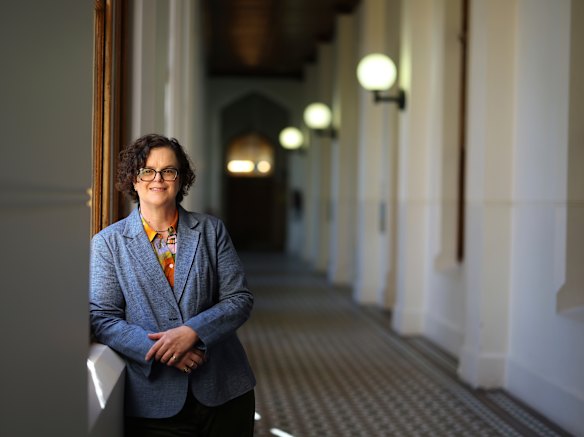
Good Shepherd nun Monica Walsh joined the order at the age of 18 in 1963, wanting to help disadvantaged girls.
In those days, nuns also did not leave the convent’s grounds.
Walsh worked in the Magdalene laundries’ counting section as a first-stage “postulant” nun, and then alongside the Sacred Heart girls in the laundries’ packing room as a second-year novice.
She says the nuns were taught they were preparing girls for work.
“For some, that would be helpful; for others it would have been probably just dreadful.”
Australia had eight Magdalene laundries – all at Sisters of the Good Shepherd convents – from the 1940s until the ’70s. There is no firm data on how many girls they held, but the figure is estimated to have been several thousand. The memory of hissing steam, wet heat, musty linen, pounding machines and boiling soap lingers.
The directors of Ink and Spindle, a hand-printed textiles studio operating out of the Sacred Heart building for almost a decade, love their deteriorating premises because it reminds them of the women who came before.
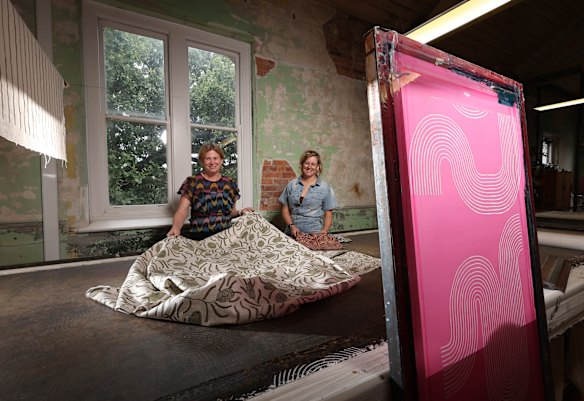
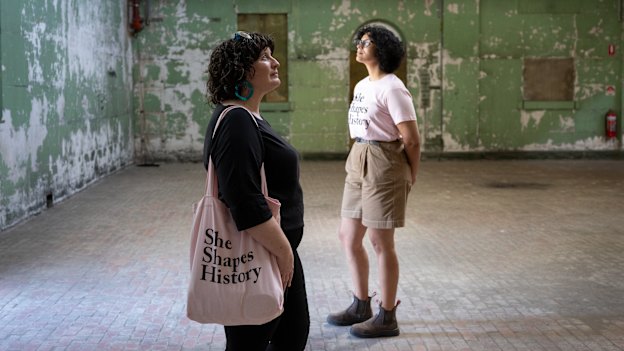
That same philosophy guides She Shapes History, a feminist social enterprise that has launched tours of the convent.
They are less interested in its architecture, and more in its human stories. Take, for instance, acclaimed Aboriginal activist Mollie Dyer: she attended boarding school here from age 10, and feared going out into the workforce before the nuns gently nudged her.
They told her the convent was a place of refuge, not somewhere to hide from the world.
“They suggested a transition: employment, but still living here for three months. She agreed,” tour guide Catherine Noone explains.
Dyer went on to reshape Australia’s foster care system, and campaigned tirelessly for Aboriginal children to be placed with their own kin for cultural connection.
Then there are the four women who set up the convent itself. In their late 20s, they left France on a bishop’s request, with promises of a house, land and money waiting for them when they arrived.
After a 127-day voyage, they found nothing of the sort.
“They have to go and hustle and find a location,” She Shapes History founder Sita Sargeant says. They stumbled upon the Abbotsford grounds, complete with a vast house draped with spiders, where possums used the windows and birds nested in the kitchen.
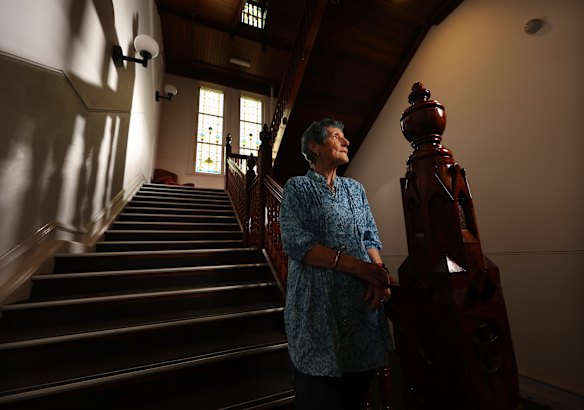
Sykes, the former resident, never imagined herself looking out over the convent gardens today, where cardoon flowers bloom violet, with the vibrancy of the blue confirmation cloaks children here once wore.
When she mustered up the courage to consider returning, intrigued by its artistic reinvention, she called upon the mother superior, who told her over the phone: “Oh, for god’s sake, come and visit – there’s nothing here but old women.”
But sitting in a nun’s former bedroom, where she took an artist’s residency and wrote a poetry collection in 2004, she realised there was something else: a confluence between art and religion. And one more thing that draws her back.
“There were whispers in the walls.”
She Shapes History public walking tours operate every Saturday and Sunday at Abbotsford Convent. Find out more at sheshapeshistory.com.
Start the day with a summary of the day’s most important and interesting stories, analysis and insights. Sign up for our Morning Edition newsletter.
Disclaimer : This story is auto aggregated by a computer programme and has not been created or edited by DOWNTHENEWS. Publisher: www.smh.com.au








