
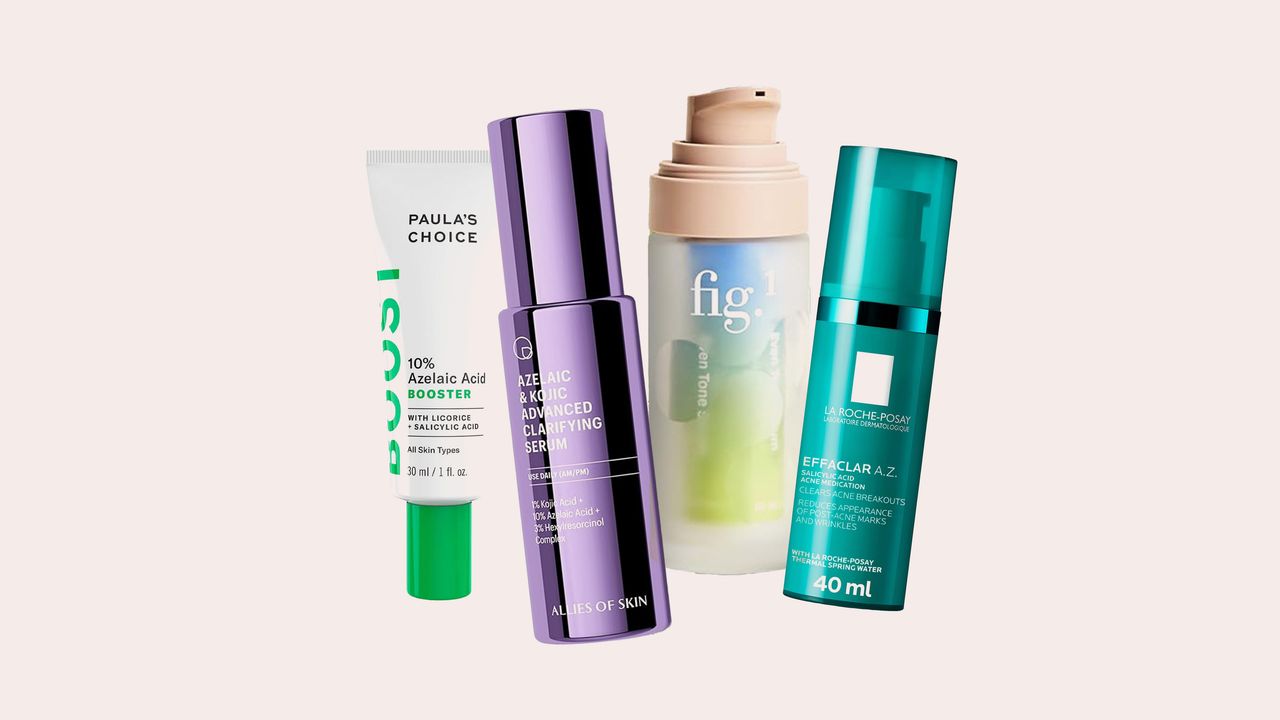
Frequently Asked Questions
What is azelaic acid?
When most people hear the word “acid,” they usually think of a harsh chemical, but actually, azelaic acid is a sensitive skin-friendly molecule (well, depending on its concentration, which we’ll dive more into) derived from barley, rye grains, and wheat. It’s part of the dicarboxylic acid family and has antibacterial, keratolytic, comedolytic, and antioxidant properties. Azadeh Shirazi, MD, a board-certified dermatologist based in La Jolla, California, tells Allure that azelaic acid works by inhibiting tyrosinase (a.k.a. the enzyme involved in pigment production) and, thereby, “reduces hyperpigmentation” and describes this buzzy acid as a “dermatologist favorite, jack-of-all-trades, and one of the most underrated skin-care ingredients.” Okay, we’re officially sold.
Dr. Green echoes Dr. Shirazi’s sentiments. Both professionals also note that the benefits of azelaic acid include antimicrobial and anti-inflammatory properties, excellent for treating skin conditions like acne and rosacea, as it kills breakout-causing bacteria and reduces inflammation. This versatile acid, also considered a gentle exfoliant, stimulates cell turnover as well. As such, Dr. Green says that azelaic acid “can help reduce the appearance of acne scars.”
Who can use azelaic acid?
The good news is that azelaic acid is safe for all skin types, but with that being said, Dr. Green advises those with sensitive skin to start using the ingredient “once a day, increasing the frequency to twice a day after several weeks.” And, if you experience any irritation, it’s best to consult your doctor before continuing.
You also need not worry too much about adjusting your entire skin-care routine to incorporate azelaic acid. Fortunately, Dr. Green and Dr. Shirazi agree that azelaic acid is generally gentle enough and safe to use with other ingredients like vitamin C, AHAs, BHAs, and retinoids. However, says Dr. Green, “If you have prescription-strength azelaic acid, Retin-A, or other topical creams, you should consult a dermatologist.”
Depending on your skin type and concerns, azelaic acid can be found in over-the-counter products in all sorts of strengths, from as low as 1% to as high as 15%, with the highest prescription-strength concentration coming in at 20%, per Dr. Shirazi. However, lower concentrations can be just as effective and “may help prevent skin irritation” for those with reactive, sensitive skin, says Dr. Green. “Skin-care products with a low concentration of azelaic acid can be beneficial when it comes to unclogging pores, preventing acne breakouts, and soothing skin inflammation,” he adds. For those with acne-prone skin, lower concentrations of azelaic acid are often combined with other actives like AHAs and BHAs for a multi-pronged approach.
Meet the experts
- Marisa Garshick, MD, a board-certified dermatologist in New York City
- Michele Green, MD, a board-certified dermatologist based in New York City
- Corey L. Hartman, MD, a board-certified dermatologist and founder of Skin Wellness Dermatology based in Birmingham, Alabama
- Jenna Queller, MD, a board-certified dermatologist based in Boca Raton, Florida.
- Nazanin Saedi, MD, a board-certified dermatologist at Plymouth Meeting Dermatology, based in East Norriton, PA
- Ava Shamban, MD, a board-certified dermatologist based in Beverly Hills
- Azadeh Shirazi, MD, a board-certified dermatologist based in La Jolla, California
How we test and review products
When Allure tests a product, our editors look at it from every angle in an effort to best serve you. We review ingredients, scrutinize brand claims, and, when necessary, examine peer-reviewed scientific and medical studies. In addition to testing each and every product that’s included in each and every review, we rely on experts who shape their fields, including dermatology, cosmetic chemistry, and medicine, to help us vet the ingredients and formulas.
For our list of the best azelaic acid products, we considered each product’s performance across five primary categories: product ingredients and efficacy, packaging, fragrance, texture, and product wear. Every product was determined to have excelled in each category by our editorial team, which is composed of in-house writers and editors as well as contributors—along with special consideration from board-certified dermatologists. To learn more information on our reporting and testing processes, read our complete reviews process and methodology page.
Our staff and testers
A beauty product is a personal purchase. You might be searching for a face cream to address persistent dryness or a new nail product to add to your Sunday self-care routine; you may simply be browsing around for the latest launches to hit the hair market. No matter what you seek or your individual needs and concerns, Allure wants to ensure that you love anything we recommend in our stories. We believe that having a diverse team of writers and editors—in addition to the wide range of outside testers and industry experts we regularly call upon—is essential to reaching that goal.
After all, can we really say a skin-care product is the “best” for people over 50 if the only testers we’ve solicited opinions from folks who have yet to hit 30? Can we honestly deem a high-end diffuser worthy of your hard-earned cash if it’s never been tested on curls? We’re proud that our staff spans a wide range of ages, skin tones, hair textures, genders, and backgrounds, which means that we are able to fairly assess any beauty product that comes into the beauty closet.
Now, step inside Barbie’s Dreamhouse with everyone’s favorite Barbie, Margot Robbie:
Disclaimer : This story is auto aggregated by a computer programme and has not been created or edited by DOWNTHENEWS. Publisher: www.allure.com



