
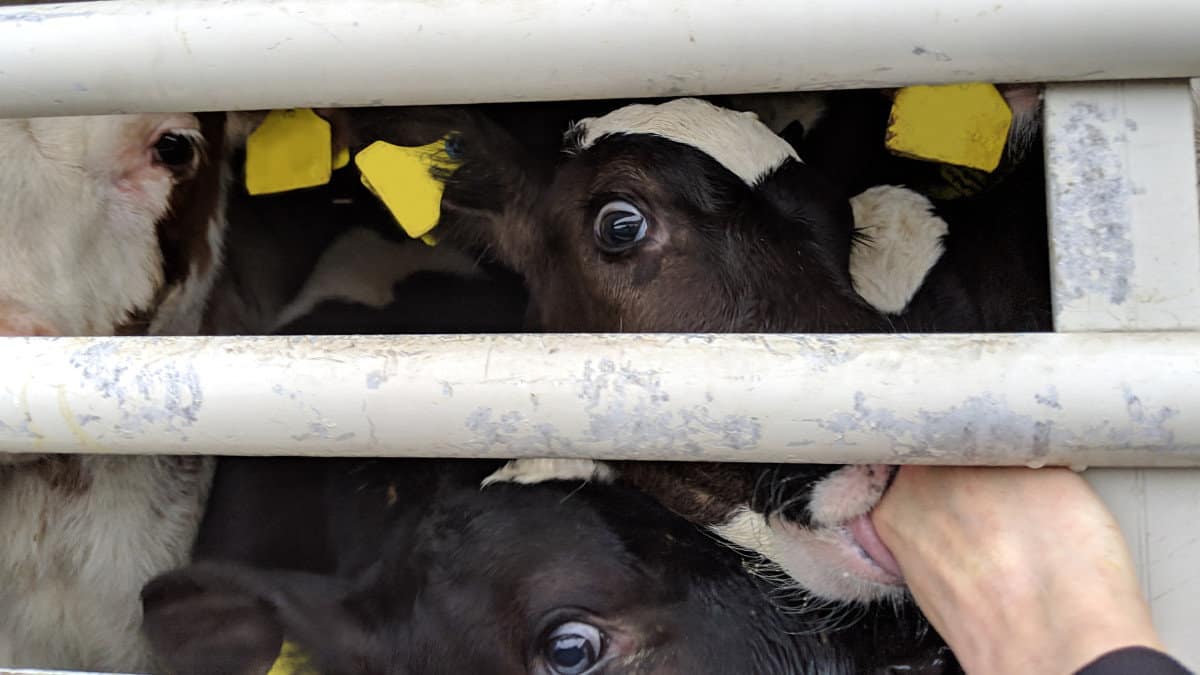
Animal welfare groups are speaking out against Brittany Ferries for continuing to transport unweaned calves from Ireland to France, saying the animals are suffering during these journeys.
Even though the company admits these journeys break EU animal welfare laws, they have not put a stop to them.
What happens to exported Irish calves
Unweaned calves are just babies. They haven’t been fully weaned off milk yet. They can’t digest solid food on their own and rely on milk to survive.
Brittany Ferries transports these young calves over long distances without proper feeding. As a result, many become dehydrated, hungry, and weak.
Long journeys also increase the risk of stress, exhaustion, and immune suppression, making calves more vulnerable to infection and disease.
When calves are forced to stand or sit for hours on end, their muscles get tired and sore, and they can end up with bruises or joint pain. If it’s too hot, too cold, or the air isn’t fresh, they might suffer from heat stress or even hypothermia.
Loading and unloading is also risky. Slippery and unstable floors can easily lead to bruises, sprains, or even broken bones for these fragile animals.
Studies by animal welfare groups and EU reports show that young calves get much more stressed and sick than older animals when they’re transported long distances without enough food or rest.
Illegal journey conditions
For over a year, Brittany Ferries has carried tens of thousands of unweaned calves from Ireland to France. The calves typically go more than 18 hours without milk or proper feeding before arrival. This is a breach of EU animal transport rules.
EU rules say animals shouldn’t travel too long without rest, food, and water, and young, vulnerable animals like calves need extra care.
In meetings with animal welfare organizations Compassion in World Farming, Four Paws, Ethical Farming Ireland and Welfarm, Brittany Ferries acknowledged the journeys were unlawful, but said they would continue them.
Peak season
This month marks the start of the peak export season. After docking in France, calves are often transported by road to other countries, including the Netherlands, Spain, and Poland.
These trips can add many more hours to the calves’ suffering, with total journeys sometimes lasting up to 50 hours.
A recent EU survey found that 83% of people are worried about transporting very young animals. Animal protection groups and members of the public are joining forces to raise awareness about what’s happening to these calves.
– Advertisement –
Disclaimer : This story is auto aggregated by a computer programme and has not been created or edited by DOWNTHENEWS. Publisher: theanimalreader.com








