The bodies typically do not decompose on Mount Everest because of the cold temperature. They sometimes break down due to extreme weathering in the glaciers.

Updated: February 10, 2026 7:06 PM IST
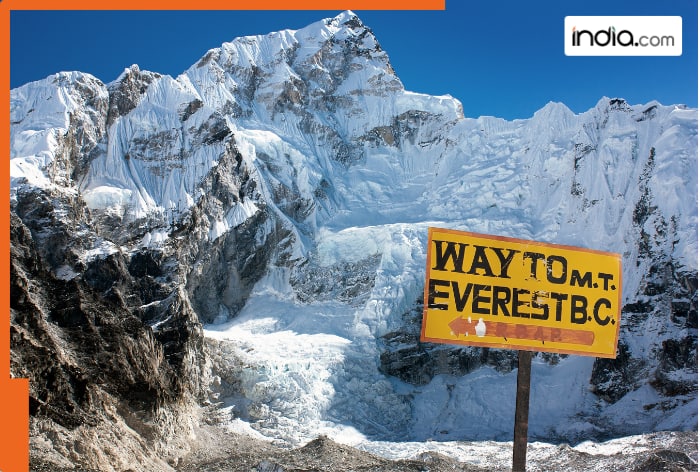
Viral News: Mount Everest is the highest mountain peak in the world and lies on the Nepal-China border. The peak has two climbing routes, one each from Nepal and Tibet. Out of many theories and hypotheses associated with Mount Everest, one is the Death Zone. The area is located at almost 26,000 feet above sea level, which is considered the most dangerous zone in the mountains. There are many bizarre facts about the death zone of Mount Everest. One such is that bodies never decompose on the mountain, which means they get preserved as they are. Here, we take you through ten such facts that may leave you shocked.
1. Depletion of oxygen levels
The death zone of Mount Everest begins 8,000 metres above sea level, where the oxygen levels fall rapidly. This sometimes makes it extremely difficult for the climbers to breathe while trekking.
2. Deterioration of body cells
The body cells in Mount Everest’s death zone deteriorate rapidly. The primary cause is the thinning of the air, which disables the body’s ability to repair the cells. As a result, the body cells begin to die faster.
Also Read: Do you know the last village on India-Pak border was part of Pakistan before 1971 war? Its name is…

3. Deaths on Mount Everest
The deaths on Mount Everest are quite common. It’s because of various factors, which include thinning of the air, less oxygen, and sudden changes in atmospheric pressure.
4. Death after reaching the peak
Many times, the climbers utilise all their energy while climbing the peak. This leads to peak exhaustion and tiredness, which leaves them with no energy to get down, causing death while climbing down.
5. Climbers leave dead bodies on the way
While climbing Mount Everest, the trekkers have no option but to leave their associates while trekking if they happen to die. It’s because if they make attempts to rescue them, it may lead to their death, too.
6. Bodies don’t decompose on Mount Everest
The bodies typically do not decompose on Mount Everest because of the cold temperature. This is because the bacteria don’t sustain the cold temperature, which disables the body’s ability to decompose. Hence, the bodies remain frozen and preserved on Mount Everest. Sometimes, the extreme weathering may cause the bodies to break.
7. Heavy cost to climb Everest
Climbing Mount Everest is extremely costly. The range stands between USD 33,590 and USD 129,995, as reported by Exped Review in 2026. However, people may die, unfortunately, even after paying the hefty amount.
Also Read:
Disclaimer : This story is auto aggregated by a computer programme and has not been created or edited by DOWNTHENEWS. Publisher: india.com