
With Bangladesh heading into a high-stakes national election on February 12, three major pre-poll surveys have offered early signals of a shifting political landscape. Two surveys project a clear advantage for the Bangladesh Nationalist Party (BNP), while a third suggests a razor-close fight between the BNP-led alliance and a rival bloc anchored by Bangladesh Jamaat-e-Islami.
The elections mark the first national vote since the ouster of former prime minister Sheikh Hasina, transforming the contest into a defining test for two competing alliances in a post-Awami League era.
EASD Survey Projects Decisive BNP Victory
A survey conducted by Eminence Associates for Social Development (EASD) indicates a sweeping win for the BNP-led alliance, projecting it could secure around 208 of the 300 directly elected seats in Parliament. The findings were reported by the Dhaka Tribune.
According to the survey, the Jamaat-e-Islami–led alliance is expected to win 46 seats. The Jatiya Party is projected to secure three seats, other parties four, and independent candidates 17.
The EASD survey was based on responses from approximately 41,500 voters nationwide, including 26,560 men (64 per cent) and 14,922 women (36 per cent). It found that 66.3 per cent of respondents intended to vote for the BNP, while Jamaat-e-Islami ranked second with 11.9 per cent support. The National Citizen Party (NCP) received 1.7 per cent backing, the Jatiya Party 4 per cent, and independent candidates 2.6 per cent.
The survey also suggested strong BNP support among women voters, with 71.1 per cent expressinga preference for the party. It further indicated a significant shift among former Awami League supporters. EASD Chief Executive Officer Shamim Hayder Talukdar was quoted as saying that 80 per cent of voters who previously backed Hasina’s party now plan to vote for the BNP, while 15 per cent intend to support Jamaat-e-Islami.
IILD Survey Points To Tight Constituency Battle
In contrast, an opinion poll by the International Institute of Law and Diplomacy (IILD) painted a more competitive picture. While the BNP-led alliance remained ahead in overall vote share, the Jamaat-led alliance appeared stronger in constituencies where outcomes seemed more certain.
According to Prothom Alo, the survey suggested that Jamaat’s alliance could secure assured victories in 105 constituencies, compared with 101 for the BNP-led bloc. Candidates from other parties were projected to win in 19 seats.
The IILD survey estimated the BNP-led alliance could receive 44.1 per cent of the vote, narrowly ahead of the Jamaat-led coalition of 11 parties at 43.9 per cent. It also identified 75 constituencies as battlegrounds where contests between the two alliances were too close to call.
The poll included 63,115 respondents nationwide, comprising 36,634 men (57.59 per cent) and 26,981 women (42.41 per cent).
NRC Poll Reinforces BNP Dominance Narrative
A third survey by the Nationalist Research Cell (NRC) echoed the EASD findings, projecting an even stronger performance for the BNP. The NRC poll estimated that the BNP could secure 77 per cent of the vote and win around 220 seats.
Jamaat-e-Islami was projected to win 57 seats, with the remaining seats divided among smaller parties and independent candidates.
What’s At Stake In Bangladesh Elections
Bangladesh will go to the polls on February 12, with results expected on February 13. The Jatiya Sangsad, the country’s Parliament, has 350 members. Of these, 300 are directly elected by voters, while the remaining 50 seats are reserved for women and allocated later through proportional representation among the elected members.
A party or coalition must win at least 151 of the 300 general seats to form a government. Members for the reserved women’s seats are chosen after the general election.
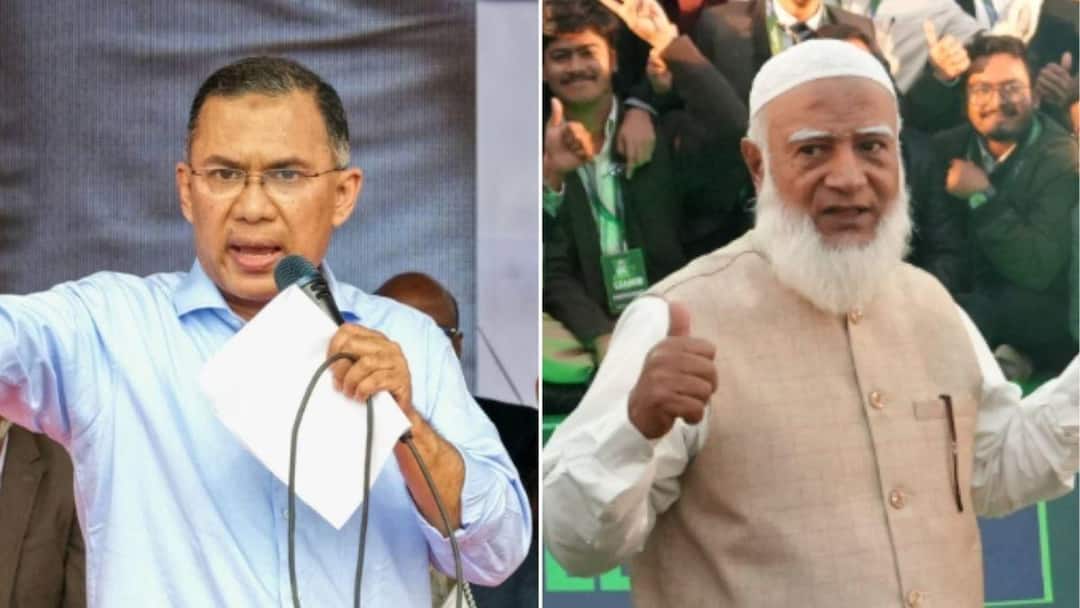
This year’s contest has effectively become a bipolar race. One alliance is led by the BNP, currently headed by Tarique Rahman, son of former prime minister Khaleda Zia. The opposing bloc is led by Jamaat-e-Islami in partnership with the National Citizen Party, a group formed by student leaders of the 2024 uprising that led to Sheikh Hasina’s removal, along with several other Islamist parties.
Related Video
Inside Parliament: Kiran Rijiju Holds Crucial Meeting with Opposition Leaders
Disclaimer : This story is auto aggregated by a computer programme and has not been created or edited by DOWNTHENEWS. Publisher: abplive.com







