Melbourne woman Erin Kennedy is a self-declared “unapologetically typical cat lady” who lives with her four inside-only cats, Blackie, Longsocks, March, and Tabs.
“My relationship with them goes beyond being ‘just pets’; they’re a part of who I am,” she said.
Erin Kennedy in her cat room holding March the cat. Tabs is on the cat tree.Credit: Justin McManus
After losing other pets to snakebites and car accidents, Kennedy chose to keep her cats indoors for their safety. Not wanting them to be bored or to lack adventure, she decided to create a dedicated ‘cat room’, so her feline family could live their best nine lives.
She’s not alone. Pet owners worldwide are investing time and money in creating purposeful spaces for their feline companions.
On social media, hashtags such as “cat rooms” and “cat spaces” appear on thousands of posts from cat parents sharing their custom spaces, some with elaborate designs and features, including custom-made and designer cat furniture.
Kennedy’s cat room is set up just for the cats, and she said she has probably spent upwards of $9000 on creating the dedicated space.
“It’s at the rear of the house and has three massive windows that overlook the backyard. It includes four cat towers positioned against the windows, which is one of their favourite spots to sit as it gets the morning sun,” she said.
The room has a three-seater couch, two armchairs, two cat cubbies, and a low horizontal storage unit.
“There are wooden step stools positioned around to help them climb up onto the towers and windowsills as both Blackie and March have arthritis in their spines,” she said.
During her house renovation, she ensured her cats were considered in the planning.
“I wanted to make it more open plan, but still be able to have a space for the cats, so my wonderful builder built in sliding doors, so I can still shut the rest of the house off when I need to,” she said.
Matt Greacen, Co-Founder of Catkea, an Australian designer cat furniture brand, said the popularity of cat rooms is reflected in the rising demand for well-designed cat furniture pieces that can cost from $19 to $500-plus.
“Interest has accelerated in recent years as more Australians treat their cats as full family members and are actively designing their homes around them,” he said.
“We are seeing increased demand for larger, more permanent pieces such as floor-to-ceiling cat trees, wall-mounted systems and dedicated cat zones, rather than single, disposable items.”
Some cat owners are choosing “catios” and cat enclosures – outdoor spaces that can be freestanding, built around an existing porch area, or attached to another external part of the home.
Chris Hawes, owner of Alcatraz Cat Enclosures, which has operated in Sydney for seven years, has noticed an increase in demand as councils introduce cat containment.
While enclosure options vary, Hawes said some are more popular.
“We often work on unit balconies and house sides,” he said.
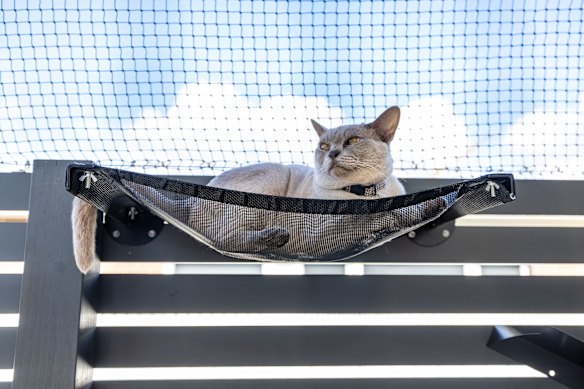
Lyndall Jones’ cat George on his catio.Credit: Sam Mooy
“As average Sydney suburban blocks are getting smaller, it’s common to enclose the entire yard.”
Sean McLoughlin said demand for his business, Cool Cat Enclosures, which builds custom-made cat enclosures in Sydney, Newcastle, and the Central Coast, has grown steadily since he built his first enclosure in 2022.
“What started as occasional enquiries has developed into a consistent pipeline of work, with demand increasing year on year,” he said.
McLoughlin’s customers are often motivated by safety, along with protecting local wildlife, and recommendations from vets and animal welfare groups.
“The biggest reason customers give us is peace of mind. Many owners feel anxious about letting their cats roam freely, but also feel guilty keeping them indoors with limited stimulation,” he said.
“A cat enclosure addresses both concerns.”
The cost of cat enclosures ranges from $2000 for a balcony enclosure to $5000 or more for a side of the house, patio, or full garden and custom enclosures.
But the price is worth it for owners, he believes, because it gives them peace of mind and improves their cats’ wellbeing.
“Enclosures allow cats to enjoy fresh air, sunlight, and environmental enrichment in a controlled space, which helps reduce stress and boredom while improving overall well-being,” he said.
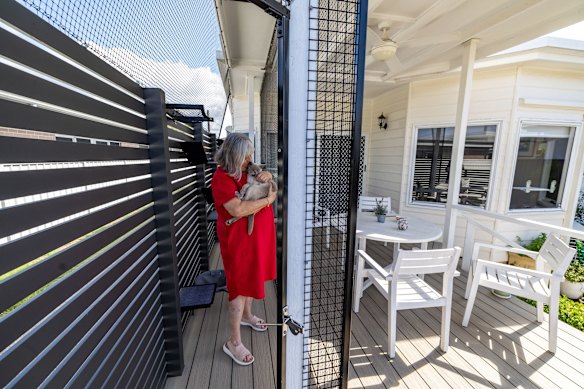
Lyndall Jones with her cat George on his catio.Credit: Sam Mooy
“Owners often tell us they see calmer behaviour and a more settled cat once an enclosure is installed.”
One of McLoughlin’s customers, Central Coast woman Lyndall Jones, agrees.
“As soon as he [her nearly two-year-old lilac Burmese, George] was shown the way out and into the enclosure, he was up the top of the enclosure and exploring, finding his feet and lolling in the hammock areas,” she said.
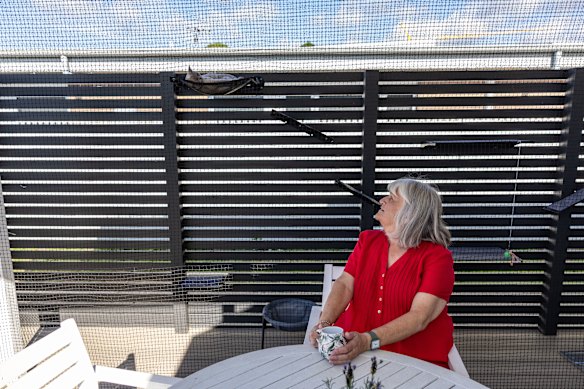
Lyndall Jones says George took to his catio immediately.Credit: Sam Mooy
“He has been much calmer and just loves going outside.”
Jones spent approximately $3500 on the enclosure that attaches to a side fence and back patio.
“It’s about four metres long, five metres high, and 1.5 metres wide. It’s covered with specialised black mesh and secured to the floor and roof. It also has a door for my access, a series of platforms and slopes and places to play and snooze. It is accessible to George from a window in the living room.”
This is the third cat enclosure Jones has had built over the years, with one for each of the three cats she has owned.
“Without being a crazy cat lady, I am conscious of the responsibility of having an indoor cat and their mental health needs,” she said.
For Jones and George, the enclosure is the solution to both.
“George has been keen to go outside and has been climbing a lot,” she said.
“Particularly given the warm weather, George seems to like getting right to the top of the enclosure in the later evening and just letting the wind blow through his whiskers.”
Most Viewed in Property
Disclaimer : This story is auto aggregated by a computer programme and has not been created or edited by DOWNTHENEWS. Publisher: www.smh.com.au