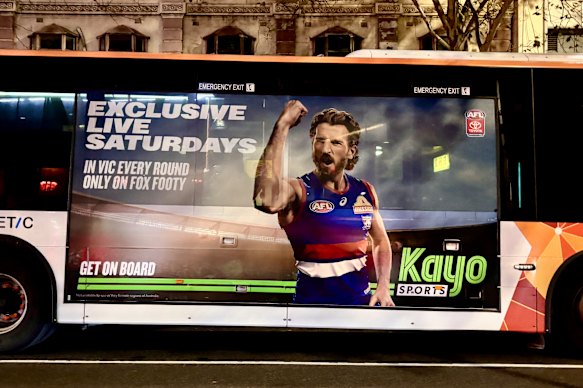
Kayo’s decision to increase its premium subscription price by $6 a month will hit AFL fans where it hurts – in the hip pocket – and the AFL itself must shoulder its share of the blame.
The AFL chose to structure a broadcast deal that maximised rights revenue (a combined $4.5 billion over seven years from Foxtel and Seven) while concentrating access in the hands of a single pay-TV ecosystem. It’s no surprise that the cost would ultimately be borne by supporters.
An advertisement for Kayo Sports promoting its exclusive AFL coverage on Fox Footy on Saturdays.Credit: Paul Rovere
Kayo’s explanation for the price hike raised more questions than it answered.
“These changes reflect the cost of sports rights in Australia and internationally, and our continued investment in production, commentary and cutting-edge technology,” a Kayo spokeswoman said.
But that logic does not withstand scrutiny.
Those costs were already passed on last year, when the new broadcast agreement began and Kayo streamed all nine AFL matches per round for the first time. That was when subscription prices jumped. That was when fans were introduced to “Super Saturday” — and to the reality that free-to-air coverage was no longer sufficient to follow the game in full.
(Kayo’s “standard” tier will remain at $29.99 per month, but premium allows viewers to stream sport on two devices at the same time and in 4K.)
Some context is important. Kayo is not alone in lifting prices. Stan Sport (owned by Nine Entertainment, which also owns this masthead) increased its fees by 19 per cent after securing English Premier League rights. Netflix, Amazon and Disney+ are all far more expensive than when they entered the Australian market.
But there is a crucial difference.
Less than a year after fans were told they must subscribe to Kayo or Foxtel to watch every AFL game, the price has gone up again.
Saturday afternoons on Seven, once defined by footy, have increasingly been replaced by horse racing and weekend news, forcing supporters into a simple choice: pay more or miss out. Now, they are being asked to make that choice again — during a cost-of-living crisis in which household budgets are already under extreme pressure.
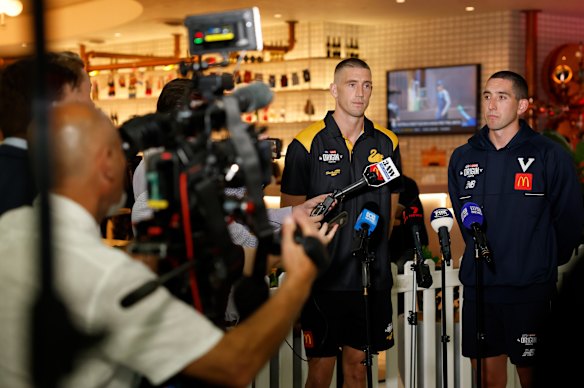
Darcy Cameron and Jacob Weitering on their way to Perth for Saturday’s State of Origin clash.Credit: AFL Photos via Getty Images
Kayo points to additional content, including this weekend’s State of Origin match and the introduction of a wildcard weekend. But the Origin clash will also be broadcast live and free on Seven. So will the additional games. That argument does not hold.
When the wildcard weekend was announced, AFL chief executive Andrew Dillon framed it as a gift to supporters.
“Our fans love finals games,” Dillon said. “We think it provides opportunities and hope for our fans. We know those games are the best-attended and most-watched on television.”
That may be true. But this decision is not driven by sentiment. It is driven by revenue.
Kayo does not disclose subscriber numbers, but industry estimates put the figure at around 1.5 million. Conservatively, if just half are premium subscribers and accept the $6 monthly increase, Kayo’s annual revenue rises by more than $50 million.
Late last year, Foxtel’s parent company DAZN began telling figures within the industry that it was unhappy with its financial exposure under the AFL broadcast deal, and could try to claw back some of the money.
DAZN denied this was the case.
“We categorically refute any claims that we are unhappy with Foxtel’s AFL deal,” a DAZN spokesperson said at the time. “Foxtel and the AFL share a long and successful history. We stand by Foxtel’s commitment to the AFL and fully support the continued growth of their partnership.”
These are the facts: there is limited room for subscriber growth. And DAZN’s deal, which is worth about $420 million per year, has not been renegotiated. And now the cost has been shifted onto the fans.
The AFL cannot wash its hands of this outcome.
For a league that routinely describes itself as a custodian of the national game, the decision to prioritise broadcast dollars over accessibility is a profound failure of responsibility.
The Kayo hike was revealed in the same week the AFL announced a price freeze on general admission tickets for the eighth straight season.
But for those watching at home, it’s a kick in the hip pocket for fans who were told the game belonged to them.
Keep up to date with the best AFL coverage in the country. Sign up for the Real Footy newsletter.
Most Viewed in Sport
Disclaimer : This story is auto aggregated by a computer programme and has not been created or edited by DOWNTHENEWS. Publisher: www.smh.com.au