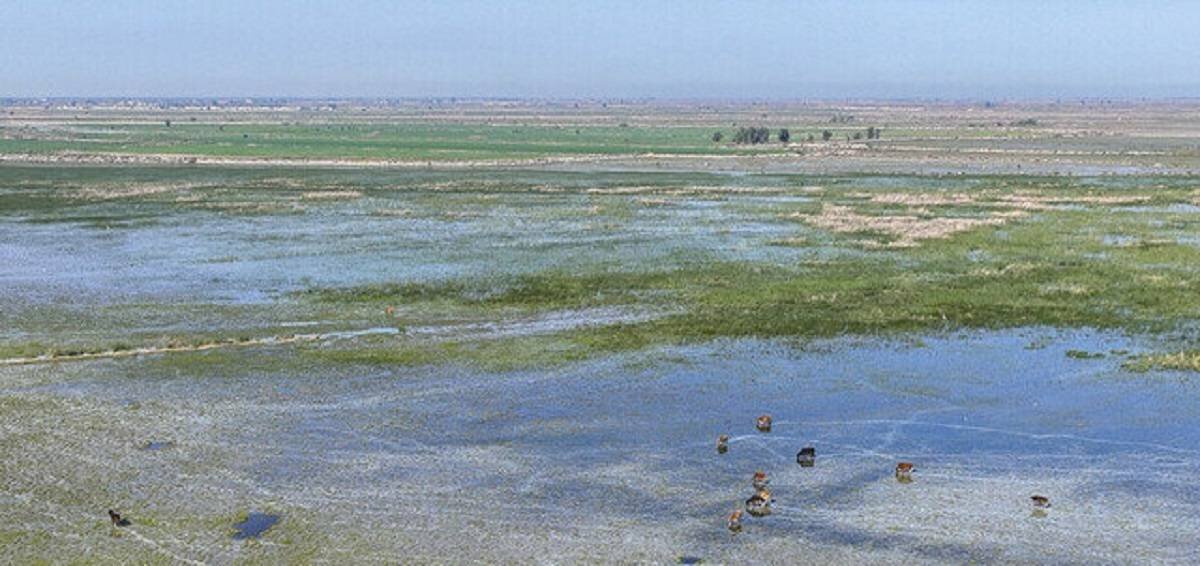
TEHRAN – The Department of Environment (DOE) is reviving four wetlands, namely Bamdej in southwestern Khuzestan province, Gomishan in northern Golestan province, Arjan in southern Fars province, and Qori Gol in northwestern East Azarbaijan province.
The project to restore Bamdej wetland kicked off about two years ago with the help of the private sector, investing 1.3 trillion rials (around 8 million dollars), with 2 trillion rial (about 12 million dollars) more which is needed to complete the project, ISNA quoted Ahmadreza Lahijanzadeh, the deputy head of the Department of Environment (DOE) for Marine and Wetlands affairs, as saying.
Stretching for over 4,000 hectares, the wetland is home to over 134 plant species from 49 plant families, such as lutea, carex brunnea, reed, and syperus, 22 mammal species, 12 fish species, 15 species of amphibians and reptiles, and 148 native and migratory birds.
Gomishan wetland is expected to be revived by June. The wetland was registered on the Ramsar Convention in 2003. It is known as one of the main habitats for the birds. About 20 species of fish, 24 species of reptiles, over 100 water and water-side birds, and more than 30 species of mammals, like Foca Caspinus, live in the wetland.
Qouri Gol wetland has a high potential, spanning around 160 to 200 hectares; once restored, it will turn into one of the main tourism spots. The wetland hosts over 92 bird species, which are all migratory birds, except redhead coot, 14 species of reptiles, 4 species of amphibians, and one species of fish.
The Arjan restoration project is in the beginning phase; it covers 2000 hectares. The water of the wetland depends on the amount of rainfall. The wetland is one of the main habitats for migratory birds like cranes, flamingos, wild ducks, and geese. Plant vegetation includes reeds, astragalus (milk-vetch), sagebrush, and mammals like boar, jackal, and fox.
Wetlands conservation projects
Iran’s geography is distinct, teeming with diverse landscapes. In Iran, 141 wetlands with ecological value, with an area of over 3 million hectares, have been identified, 27 of which were listed in the International Ramsar Convention.
The DOE has announced the beginning of a new phase of the wetlands conservation project (2025 –2028) to strengthen sustainable livelihoods and alleviate pressure on the wetlands ecosystem.
Backed by successful experiences in Lake Urmia, the basins in Gilan, Fars, Parishan, and those in East and West Azerbaijan provinces, the project has provided the basis for promoting wetland protection and improving sustainable resource utilization, IRIB quoted Fereshteh Jadori, an official with DOE, as saying on November 25.
The pilot implementation of the project in Shadegan and Behbahan in the previous phase yielded significant results, and these achievements led the project to enter a new phase with the support of international institutions and domestic agencies, she added.
The official went on to highlight the role of technical and vocational education and training in empowering local people to protect wetlands and improve their income.
The most recent strategies taken for the conservation of the wetlands are as follows. In June 2025, the DOE and the Ministry of Agriculture signed a memorandum of understanding (MOU) to launch a national plan for empowering local communities to protect and promote the sustainable use of wetlands.
In February 2025, the DOE and the United Nations Development Program (UNDP) extended their partnership by signing a three-year memorandum of understanding (MOU) to conserve Iranian wetlands projects in the country.
The MOU was signed by the head of DOE, Shina Ansari, and Resident Representative ad interim for UNDP in Iran, Ayshanie Medagangoda-Labé, in a meeting in Bushehr province, ISNA reported.
MT/MG
Disclaimer : This story is auto aggregated by a computer programme and has not been created or edited by DOWNTHENEWS. Publisher: tehrantimes.com