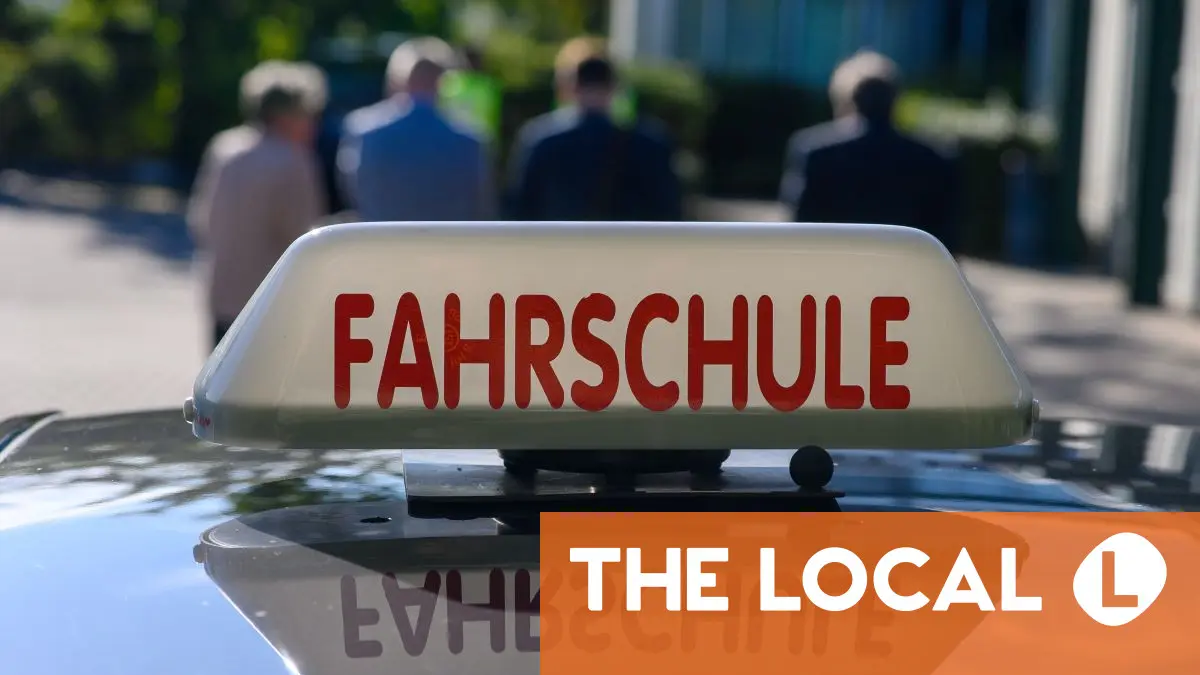
Getting a driving licence in Germany is expensive – and difficult. New figures show that a high number of people are failing both the theory and practical tests.
According to Germany’s TÜV Association, 44 percent of learner drivers did not pass the theory test in 2025, while 37 percent failed the practical exam.
The figures apply to standard passenger car licences (Class B) and the B17 licence, which allows accompanied driving from age 17.
It comes as the government prepares a reform aimed at bringing down the soaring cost of learning to drive in Germany.
READ ALSO: The plan to make it cheaper to get a driving licence in Germany
Why are so many candidates failing?
Overall it’s unclear, but it’s well known that Germany’s rules around learning to drive are notoriously strict.
The process is thorough and changes regularly. In 2024, for instance, 61 new questions were added to the theory test.
EXPLAINED: The changes to Germany’s driving licence theory test
The TÜV Association spoke of a high but largely constant level of “failure rates” in recent years – based on first-time and repeat tests combined. In 2024, the failure rate was 45 percent for the theory test and 37 percent for the practical exam.
However, there are significant differences compared to a decade ago: in 2016, only 37 percent did not pass the theory test and 32 percent failed the practical test.
Younger drivers perform better
Teenagers in Germany’s accompanied driving programme are doing noticeably better than adult learners.
Among under-18s, only 35 percent failed the theory test and 24 percent did not pass the practical exam.
Experts say the structured learning and additional supervised driving gives younger candidates an advantage.
“Young people who take part in accompanied driving from the age of 17 perform significantly better in the tests,” said Richard Goebelt, head of the Vehicle and Mobility department at the TÜV Association.
Record number of people learning to drive
Despite high costs and tough exams, demand for licences remains strong.
According to the TÜV, the total number of driving tests rose to a new high in 2025: across all classes, 2.04 million theory tests and around 1.89 million practical tests were taken.
But many candidates needed more than one attempt. While pass rates for first-time candidates were relatively solid – 63 percent in theory and 65 percent for practical exams – success rates drop sharply for repeat attempts.
Those who fail face extra stress and financial pressure, as each test and additional lesson costs money.
“If you want to make obtaining a driving licence more efficient and cost-effective, you have to do everything you can to make the first test attempt a success,” said Goebelt.
READ ALSO: ‘Not worth waiting’: When will the cost of a drivers licence in Germany fall?
What are the plans to reduce the cost of learning to drive?
Germany is widely seen as one of the most expensive places in Europe to get a driving licence. It can set learner drivers back up to €4,000 depending on the region, as well as the number of lessons and tests required.
Last October, Germany’s Transport Ministry presented plans to make it cheaper to obtain a driving licence. Proposals includ introducing more digital learning tools and simplifying procedures.
Transport Minister Patrick Schnieder will present proposals to federal states this week to gather feedback. If all goes to plan, the reforms could come into force in 2027.
However, driving instructor associations are already noticing an effect. Many driving schools report a drop in new registrations as learners wait to see if licences become cheaper before they start the process.
The TÜV Association said it welcomes plans to strengthen digital learning but warned against lowering training standards which it said could jeopardise road safety.
Disclaimer : This story is auto aggregated by a computer programme and has not been created or edited by DOWNTHENEWS. Publisher: thelocal.de