The bottle itself is remarkably intact. The glass is clear and unchipped, its fan-shaped stopper still catching the light. The liquid inside has darkened to a deep amber, evidence of time at work. Only the lettering shows its age. The gold script on the stopper has softened, with the “n” in Guerlain and the word Paris faintly worn. On the Shalimar label, the name remains legible, though the final letters have faded slightly, as if worn away by decades of fingers resting in the same place, again and again.
A staff member sprayed the fragrance for me, and I immediately bought five milliliters for $45. As my vial was labeled using a typewriter, the original bottle was flushed with inert gas, sealed instantly, and returned to its dark room for protection. “People think perfume sits on a shelf, but it’s aging, evolving, breathing,” Menard explains. “Perfume isn’t chemistry, it’s alchemy. Molecules talk to each other. They change each other. A fragrance is never finished—it’s always becoming.”
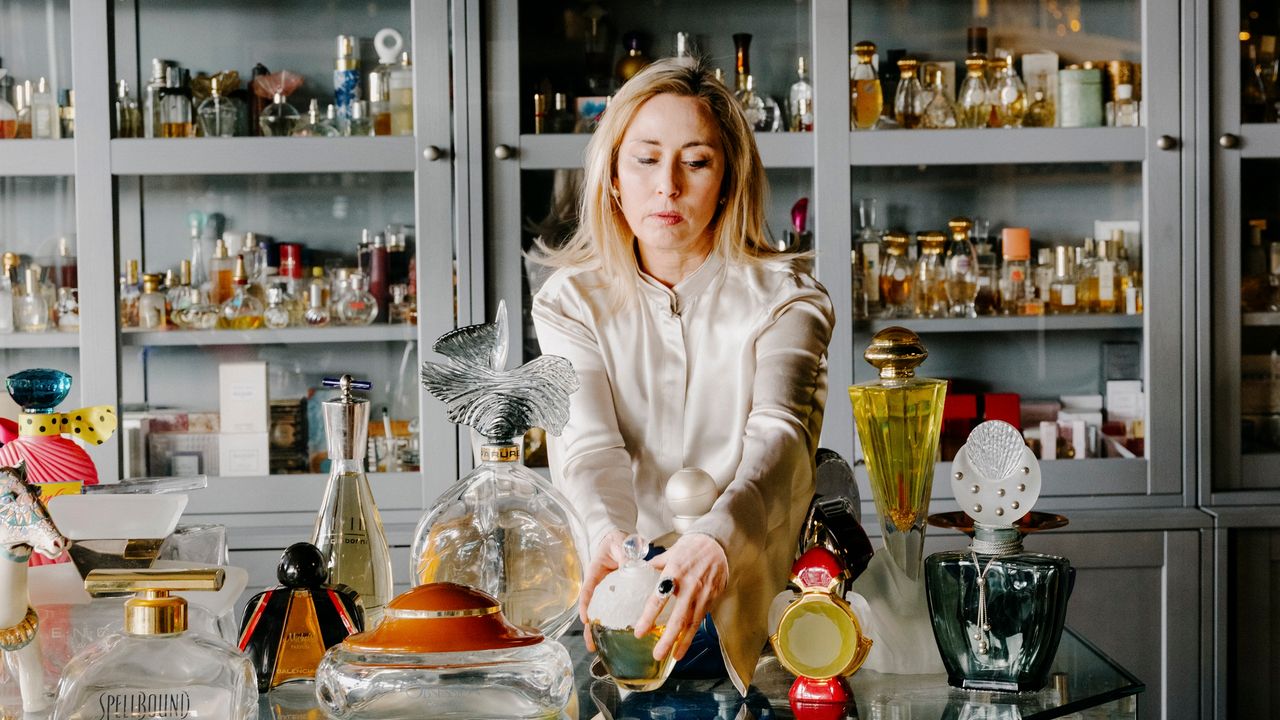
On my first visit, Menard wasn’t in the store. She was in Seattle, spending time with Zrnic, the perfumer, abroad. Even so, her presence was unmistakable, radiating through her staff. Menard extensively trained her three employees, none of whom arrived as perfume experts. “They all came in as customers first. They were just curious, and they stayed curious,” she says. “That’s the only thing I can’t teach—curiosity.”
Everything else, she teaches through immersion: “We smell everything, we talk about everything, we read, we research, we compare vintages, we compare reformulations. It’s a constant conversation.” She doesn’t want staff repeating marketing notes; she wants them to understand structure, materials, oxidation, evolution…the life cycle of a scent. “They need to be able to listen to someone describe their memories and give them five scents that fit that memory, not five scents that are popular on TikTok.”
The Quiet Extinction of Perfume’s Building Blocks
In addition to nostalgia and scent’s emotional pull, the Fragrance Vault serves a rarer purpose: olfactory preservation in a world where raw materials are vanishing. “We’re losing ingredients faster than we’re learning to protect them,” Menard says matter-of-factly, as if repeating a truth she’s had to accept.
Disclaimer : This story is auto aggregated by a computer programme and has not been created or edited by DOWNTHENEWS. Publisher: www.allure.com