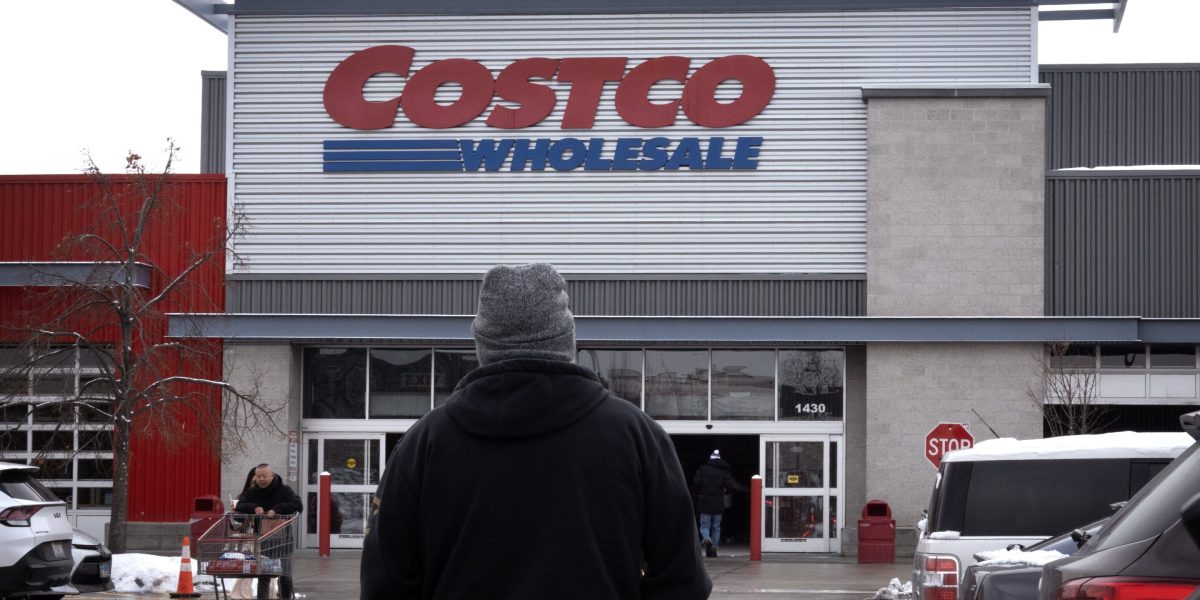
Costco is emerging as a high‑profile test case for whether big business can buck President Donald Trump’s crackdown on corporate diversity—and still win with investors and shoppers alike. While rivals like Target and Walmart have moved to scale back diversity, equity, and inclusion (DEI) programs in response to political and legal pressure from Washington, Costco has largely held its course—and its business is thriving.
Over the past year, Costco’s board and new chief executive Ron Vachris have repeatedly and publicly reaffirmed the warehouse chain’s DEI commitments, even as the Trump administration has turned such programs into a political target. The day after returning to the White House, Trump signed an executive order directing federal agencies to investigate DEI efforts at major public companies and large nonprofits, warning of potential legal action against firms whose programs are deemed discriminatory. That order triggered a wave of retreats across corporate America.
Target, under pressure from conservative activists and the new administration, announced days after Trump’s order it would wind down key pieces of its long‑standing DEI strategy, including its Racial Equity Action and Change (REACH) initiative, and would let earlier three‑year DEI goals expire. Walmart, the country’s largest private employer, had begun rolling back its diversity policies months earlier, shifting language away from “DEI,” revising supplier programs and reducing the visibility of internal equity efforts. Other blue‑chip brands—from McDonald’s and John Deere to tech giants like Amazon and Meta—have likewise scaled back or rebranded diversity work, often citing the new legal and political climate.
Costco went in the opposite direction. In late 2024 and early 2025, conservative activists led by the National Center for Public Policy Research pushed an anti‑DEI shareholder resolution demanding a formal review of how “companies with DEI policies risk litigation as well as reputational and financial harm.”
Costco’s board not only urged investors to vote against the measure, it defended its DEI efforts in unusually blunt language, arguing diverse employees and suppliers spur “creativity and innovation” and improve member satisfaction. At the company’s annual meeting in January 2025, more than 98% of shareholders voted against the proposal, an overwhelming rebuke that galvanized support from civil‑rights leaders and progressive customers.
Internally, Costco has kept a formal diversity office and program in place, even as management remains predominantly white—a contrast the company acknowledges while pledging to keep pushing toward its DEI goals. Vachris, who started out at Costco as a forklift driver, has publicly framed diversity as a business asset, saying he does not want to be “surrounded by a bunch of people like me” and insisting he will not change policies he views as fair and effective, even amid accusations that Costco favors hires based on race or gender identity.
So far, Wall Street and shoppers appear to be rewarding that stance. Analysts note Costco enjoys strong customer loyalty, robust traffic, and a reputation for high wages and low executive‑employee pay gaps—factors that have helped it outperform many retail peers through political swings and economic turbulence.
“Why rock the boat? It’s sailing very nicely,” said Neil Saunders of GlobalData, adding investors see little reason to tamper with a model that keeps delivering steady growth.
The divergence between Costco and peers like Target and Walmart underscores a broader split in corporate strategy in the Trump era. Many companies have opted for legal risk‑management and political damage control, trimming DEI efforts or burying them under softer language about “belonging.” Costco, by contrast, is betting that visible, if measured, support for diversity can coexist with—and even underpin—a booming business, turning the warehouse club into an unlikely bellwether for how far corporate America is willing to go in defying the president’s DEI directive.
Costco stock is virtually unchanged since December 2024, before Trump took office, although its stock did not outperform the S&P 500 in 2025, as it usually does. Same-store sales came in slightly below expectations in its last quarter even as revenue was up 8.2%, to $65.98 billion. With Costco due to announce results in March, investors will be tuned in to see if it declares a special dividend, as it usually does in the spring.
Costco did not respond to a request for comment.
For this story, Fortune journalists used generative AI as a research tool. An editor verified the accuracy of the information before publishing.
Disclaimer : This story is auto aggregated by a computer programme and has not been created or edited by DOWNTHENEWS. Publisher: fortune.com