Olympic bobsledding often gets called the “Formula 1 of ice.” Tracks are more than 1.5 kilometers (nearly a mile) long, and athletes often race down them at speeds nearing 145 kilometers per hour (90 mph). Bobsledders—whether in teams of four, two, or sliding solo—are often subjected to gravitational forces in excess of 5g. At the 2026 Milano Cortina Winter Games, they’re using tech aimed at making each phase of the race, from initial push to technical driving to final braking, just a little bit more precise than in previous Games.
Men’s four-person bobsledding made its Olympic debut in Chamonix, France, in 1924; women’s two-person bobsledding didn’t enter the Games until 2002 in Salt Lake City. Women’s monobob arrived in 2022. While the earliest bobsleds were made of wood, the sport has been synonymous with steel for years, although in recent decades it has been replaced by carbon fiber, which provides greater lightness and strength.
Each new technological development in the sport has come amid the constraints necessary to keep athletes safe, such as weight and sled sizes. The two-person bobsled can have a max length of 2.7 meters (about 8.9 feet) and a max weight of 390 kilograms (859.8 pounds), including crew. A four-person bobsled cannot exceed 630 kilograms (1,388.9 pounds), including bobbers, and 3.8 meters (12.47 feet) in length.
The weight limit was a necessary move to equalize race conditions and curb the use of athletic specialists who, although not bobsledders, have in the past proven decisive in their teams’ success through the pushing phase. This is far from coincidental, because this is one of the areas where technology makes the biggest impact bobsledding.
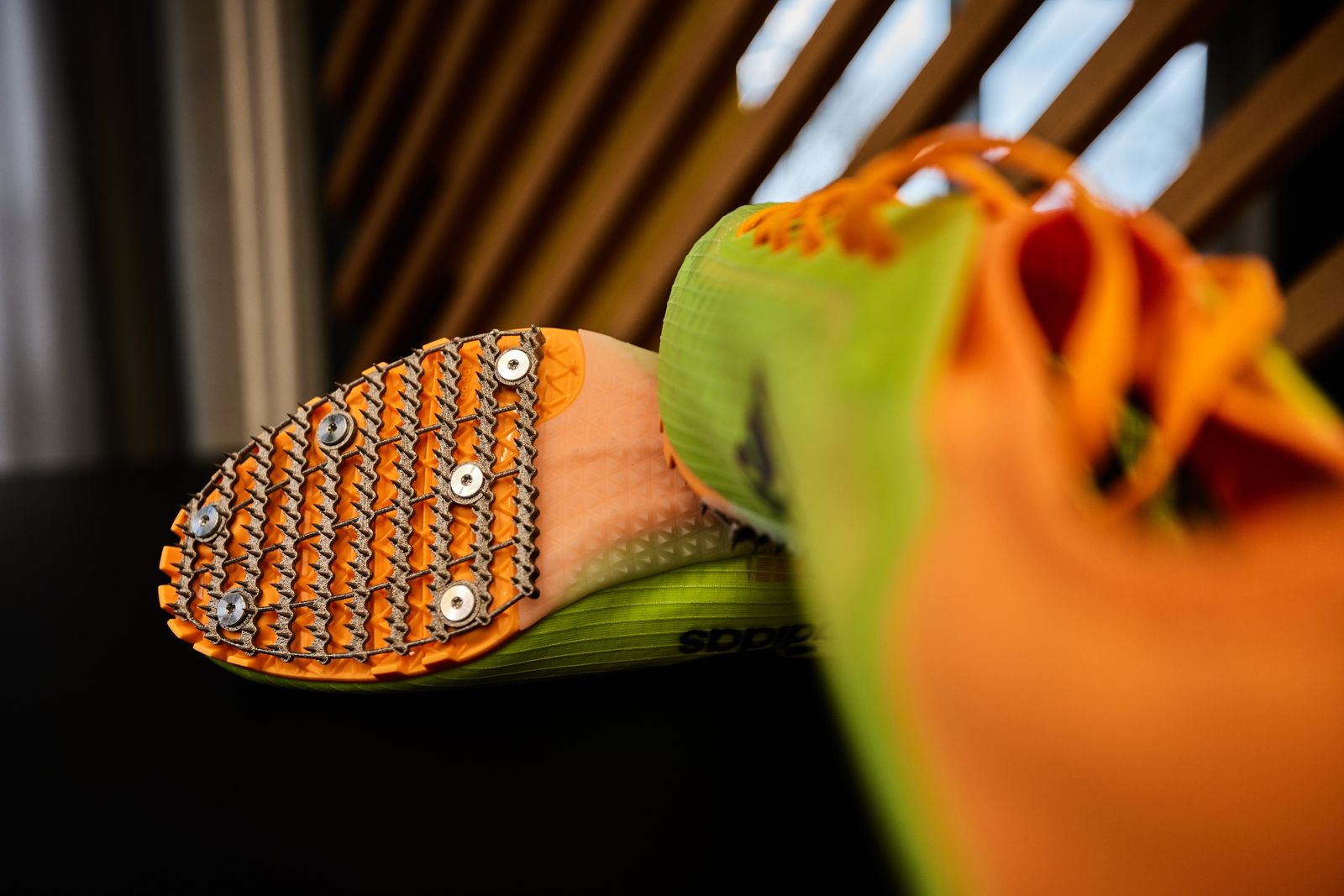
At the 2022 Beijing Olympic Games, Germany won 27 medals, 16 of which came from bobsledding, luge, and skeleton. German athletes tend to excel at bobsled because the sport has a long tradition in Germany but also because the country has long focused on innovation in the sport. Automaker BMW, for example, is a strategic partner of the the German federation that oversees bobsledding, luge, and skeleton (Bob- und Schlittenverband für Deutschland) and is credited with the introduction of custom studded shoes, a crucial tool for bobbers’ performance.
The first 30 to 50 meters of Olympic bobsled often prove decisive in a race, because it is the only time when athletes can push the sled to reach max acceleration. A couple of years ago, BMW realized that innovations in the bobbers’ footwear could improve their performance during that crucial time.
Looking at the preferences for each team member, BMW made custom spike plates that can be integrated into any type of shoe. Using 3D printing, the company was able to adapt the stiffness and shape of the studs for different shoes and needs. Working this way allowed them to experiment and modify designs quickly. To avoid excessive wear or breakage, the spikes are given greater hardness through plasma nitriding, in which nitrogen is ionized in a high-temperature vacuum and diffused into the steel.
Like Germany, the US is a bobsledding powerhouse. One key piece of gear for the team at the 2026 Games are the bobbers’ dynamic insoles. Devised by VKTRY Gear, which has partnered with the US Bobsleigh and Skeleton Federation for more than a decade, the insoles are the brainchild of the company’s founder, Matt Arciuolo. Traditional insoles are “passive devices that absorb shock and support,” Arciuolo says, but his insole “is shaped, and when placed on a flat surface only touches the heel and toe of the foot.”
“These insoles help provide a higher level of stiffness and useful energy return to optimize effort during the bobsled push,” says Kaillie Humphries, a Canadian bobber who has been competing for the US since 2019 and won gold in the monobob at the Beijing 2022 Games.

The US and Germany are also ahead of the curve when it comes to their focus on leveraging data to help athletes map their tracks and remedy weaknesses in their performance. Prior to this year’s Games, the US Bobsleigh and Skeleton Federation partnered with a company called Snowflake to leverage the company’s AI tools to analyze data and make changes to bobbers’ movements on the track.
Snowflake’s AI allowed coaches to identify which push pairings worked best for two- and four-person crews. It also analyzed performance inefficiencies with a focus on any bumping between athletes during the jump phase—the moment in which team members board the bobsled after the push. The analysis aimed to shave a few hundredths of a second off of race time.

The new Cortina Sliding Centre provides the ideal place for Germany’s bobsled and luge teams to test out Data Coach, their new system for analyzing data from sensors installed on the sled. Thanks to software developed by Julian von Schleinitz, a former world luge champion and current head of BMW Group’s tech and AI solutions division, the team can study the best trajectories with which to approach curves and facilitate race strategy.
As the data set has grown, Data Coach has refined its effectiveness and even made it possible to test out new components and configurations before trying out a new sled.
While improving performance is key for bobsled teams, so is safety. Moving at speeds close to 90 mph puts a strain on the spine and neck. To help, China has built a sled from T800 carbon fiber, a composite often used by the aerospace industry for its lightness and rigidity. In addition to reducing the overall weight by nearly 20 percent compared to conventional models, the bobsled made in China can reportedly withstand bad impacts, making it more durable and safe.
Many of the more serious accidents in bobsledding happen during runway exists, collisions, and rollovers. A year ago, the German federation and Allianz launched an initiative to address those accidents. The Allianz Safety Sled appeared as a prototype during last year’s World Championships, and during the Milano Cortina Games it’s being used to analyze ice and runway conditions, allowing riders to prepare for their decent.
The sled, says Carsten Reinkemeyer, the head of safety research at the Allianz Center for Technology, aims to apply safety principles in three key areas: “keeping athletes inside the sled in case of an accident, the ability to brake the bobsled, and improving protective clothing and helmets.”

One of the Safety Sled’s most notable features is the Head Impact Protector, which was designed to be easily integrated into existing bobsleds without hindering athletes’ mobility during entry into the sled. At the rear of the structure are raised push bars, which create additional space for the bobsled’s occupants and protect dedicated push athletes.
Current preliminary designs, involving Allianz and the Institute for Research and Development of Sports Equipment in Berlin (manufacturer of the bobsleds for the German federation), involve a system consisting of two parts, one attached to the suit and the other to the bobsled, which are to be adapted to each athlete’s position inside the sled. “These are measures aimed at preventing athletes from being thrown out of the bobsled by high collision forces and suffering damage generated by contact with the sled,” Reinkemeyer says.
Disclaimer : This story is auto aggregated by a computer programme and has not been created or edited by DOWNTHENEWS. Publisher: wired.com