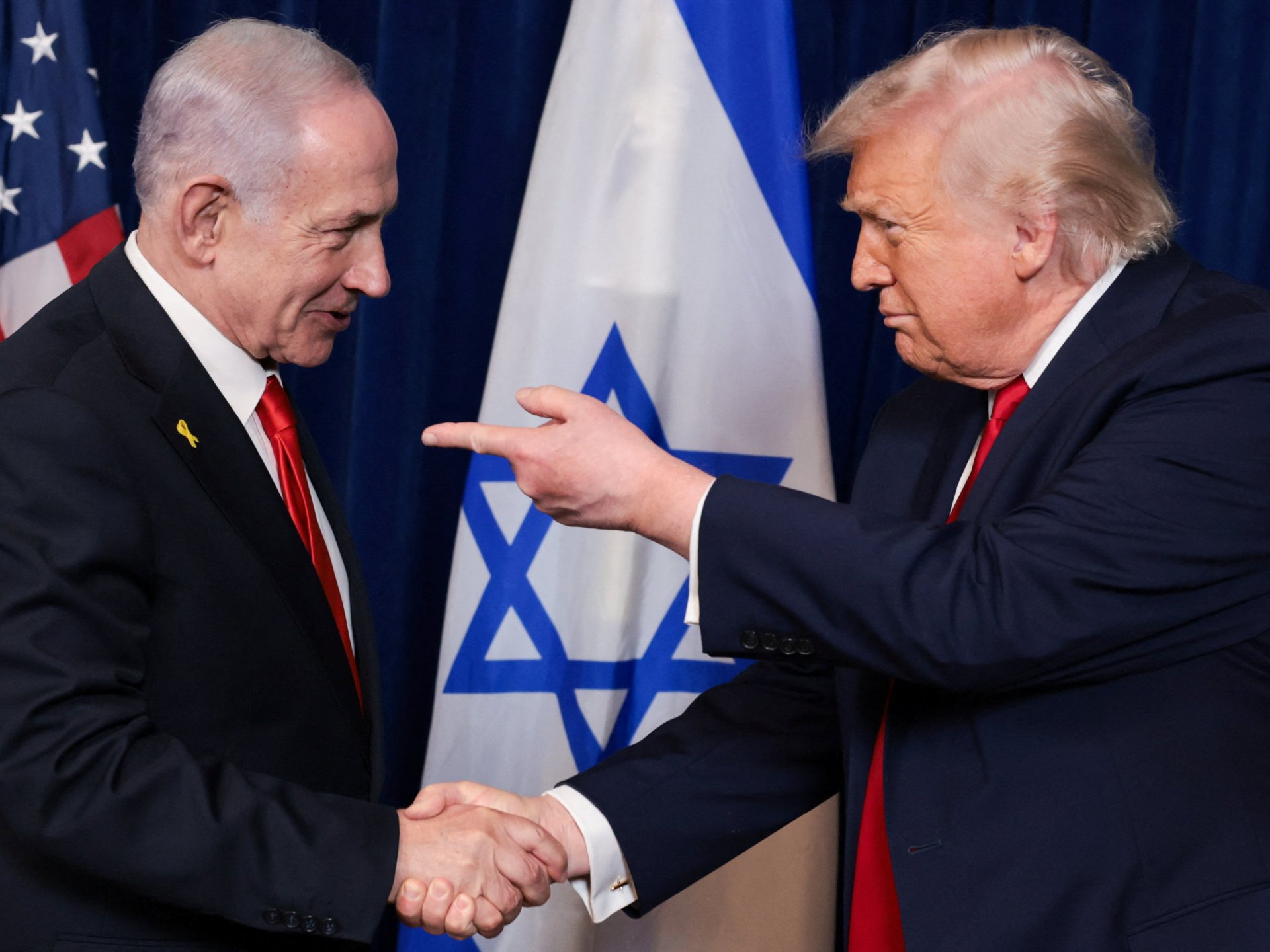
United States President Donald Trump and Israeli Prime Minister Benjamin Netanyahu have solidified a strategy of “maximum pressure” against Iran, targeting the country’s vital oil exports to China, even as deep rifts emerge regarding the ultimate goal of the escalation.
According to a report by Axios, the two leaders agreed during a White House meeting last week to intensify economic strangleholds on Iran. The strategy relies heavily on a recent executive order signed by Trump, which empowers the imposition of a 25 percent tariff on any nation conducting business with Iran – a direct threat to China, which currently buys more than 80 percent of Iranian crude.
However, while the tactics align, the strategic endgame remains contested.
Trump has expressed a willingness to cut a deal, reportedly telling Netanyahu, “Let’s give it a shot.” In contrast, the Israeli prime minister has privately argued with Trump that any agreement is futile, a stance analysts argue is designed to drag the US into a direct war with Tehran.
Diplomatic gamble
Despite the hawkish rhetoric, the Trump administration has kept the diplomatic channel open. On February 6, Oman hosted indirect negotiations between Washington and Tehran. That same evening, President Trump announced that a new round of talks would be held.
Now, US envoys Steve Witkoff and Jared Kushner are scheduled to meet Iranian officials in Geneva, Switzerland, on Tuesday for a second round of negotiations.
The US proposal reportedly includes a suspension of uranium enrichment for three to five years and the removal of 450kg (992 pounds) of highly enriched uranium from the country, according to the Axios report.
Advertisement
Netanyahu, however, is pushing to expand the scope of any potential deal to include impossible conditions for Tehran, such as curbing its ballistic missile programme and severing ties with regional proxies.
Mohannad Mustafa, an expert on Israeli affairs, told Al Jazeera Arabic channel that Israel’s insistence on broadening the terms is a calculated move to ensure diplomacy fails.
“Israel knows Iran will not accept these conditions,” Mustafa said. “By placing them, Israel is saying its only option is war. The current government has moved beyond using military force to achieve political settlements; war has become the goal itself.”
Cover for annexation
While global attention remains fixed on the potential for a regional conflagration, Palestinian leaders warn that Israel is exploiting the regional tensions to irreversibly alter the reality in the occupied West Bank and the Gaza Strip, which has been turned into ruins following two years of nonstop bombardment.
Mustafa Barghouti, general secretary of the Palestinian National Initiative, said the focus on Iran serves as a smokescreen for Israel’s accelerating annexation policies in the West Bank. Earlier this month, the Israeli cabinet approved measures to make it easier to grab Palestinian lands to expand illegal settlements, which is considered the biggest obstacle to a sovereign Palestinian state as part of the so-called two-state solution.
“The picture is clear,” Barghouti told Al Jazeera Arabic. “Israel wants to be the sole imperial power in the Middle East. They are using the pretext of the Iranian threat to drive the final nail into the coffin of the Oslo Accords, stripping the Palestinian Authority [PA] of powers even in Area A.”
According to the 1993 Oslo Accord, the PA administers Areas A and B, while Israel remains in control of Area C, which is 60 percent of the West Bank. Since then, Israel has continued to expand illegal settlements in violation of the accord.
Liqa Makki, a senior researcher at the Al Jazeera Centre for Studies, echoed these concerns, noting that a potential US-Iran conflict would provide the perfect cover for mass expulsions.
“If war breaks out, Israel will exploit the global distraction to execute what it dreams of but fears to announce: real annexation and population transfer,” Makki said. “When the dust settles, the West Bank will look completely different.”
Senior members of Netanyahu’s far-right coalition have made no secret of these ambitions. Finance Minister Bezalel Smotrich and National Security Minister Itamar Ben-Gvir have repeatedly called for the “voluntary migration” of Palestinians and the re-establishment of illegal settlements in Gaza.
Advertisement
Smotrich has previously denied the existence of a Palestinian people, declaring that their ambitions must be crushed to ensure Jewish control between the Jordan River and the Mediterranean Sea.
Nuclear double standards
The renewed focus on Iran’s nuclear capabilities has also reignited debate over Western double standards regarding Israel’s undeclared nuclear arsenal.
“Israel possesses 200 nuclear warheads and is one of the strongest military powers in the world,” Barghouti said, dismissing the narrative that Israel faces an existential threat from Iran.
“The existential threat is being faced by the Palestinian people, who are being liquidated,” Barghouti added.
Since October 2023, Israel’s genocidal war on Gaza has killed more than 72,000 Palestinians, reducing vast swaths of the territory to rubble. In the occupied West Bank, Israeli forces and armed settlers have killed hundreds more, displacing more than 40,000 people and systematically dismantling Palestinian infrastructure.
Paul Davis, a professor at the Global Policy Institute, defended the US stance, arguing that while Israel has possessed nuclear weapons for years without using them, Iran’s enrichment to 60 percent signals aggressive intent.
Mustafa, however, concluded that Israel’s approach indicates a total rejection of diplomacy in favour of reshaping the Middle East by force.
“Israel is trying to cancel any possibility of reaching settlements on all fronts,” Mustafa said. “They want to topple the Iranian regime to change the face of the region, regardless of the economic or human cost.”
The Israeli objective is not merely disarmament but government change in Iran, which Netanyahu called the “head of the octopus” coordinating a multi-front war of attrition through allies in Lebanon, Yemen, Iraq and Syria. However, the weakening of Hezbollah and the fall of Bashar al-Assad in Syria have dealt a huge blow to Iran’s so-called “Axis of Resistance”.
Disclaimer : This story is auto aggregated by a computer programme and has not been created or edited by DOWNTHENEWS. Publisher: aljazeera.com