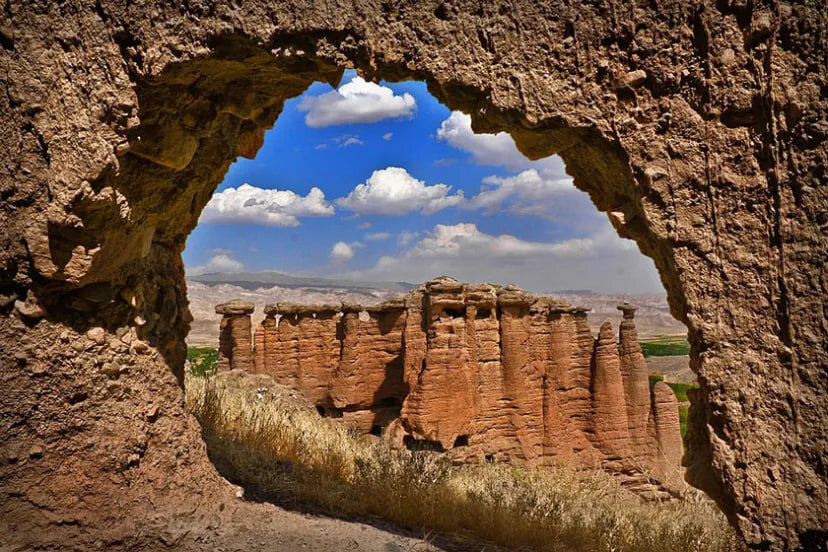
TEHRAN–With registration of five more natural relic, the total number of national natural monuments of Zanjan province has reached 32.
According to Miras Aria, a specialized meeting of the National Council for Registration of Natural Heritage was held on Saturday.
During the meeting, the dossiers of five outstanding relics of Zanjan province were carefully examined by the council members and approved.
Head of Zanjan Cultural Heritage, Tourism and Handicrafts Department Mikael Mousavi explained that during the meeting, the dossiers of the following monuments were reviewed: the Jinn Chimney—known locally as Doodkesh-e Jinn—Mahneshan county, Stork castle in Shakourchi village of Zanjan county, a rocky landscape in Yengeje Sinar village in Mahneshan county, Tange Darband in Andabad-e Olya village in Mahneshan county, and the old mulberry tree in Ich village, Tarom county.
He stated: “With registration of these five works, the number of national natural monuments in Zanjan has increased and another step has been taken towards the protection of the province’s pristine natural attractions.”
Mousavi added that natural heritage includes physical, biological and geological phenomena, habitats of endangered plant and animal species, and areas with scientific and aesthetic values.
He said that according to the laws, national natural heritage is identified, introduced and registered by Ministry of Cultural Heritage, Tourism and Handicrafts.
“These works include geographical areas with special physical and biological characteristics, unique landscapes and valuable habitats of plant and animal species that must be preserved for future generations and exploited sustainably.”
Zanjan province with a total area of 22,164 square kilometers, is located in the northwestern part of Iran’s central plateau. This mountainous province is restricted from the east to the provinces of Gilan and Qazvin, and from the south to Hamedan province, from the west to West Azarbaijan and Kordestan, and from the north to Ardabil and East Azarbaijan.
The province consists of two plain mountainous regions with cold climates and mild and semi-humid climates.
KD
Disclaimer : This story is auto aggregated by a computer programme and has not been created or edited by DOWNTHENEWS. Publisher: tehrantimes.com