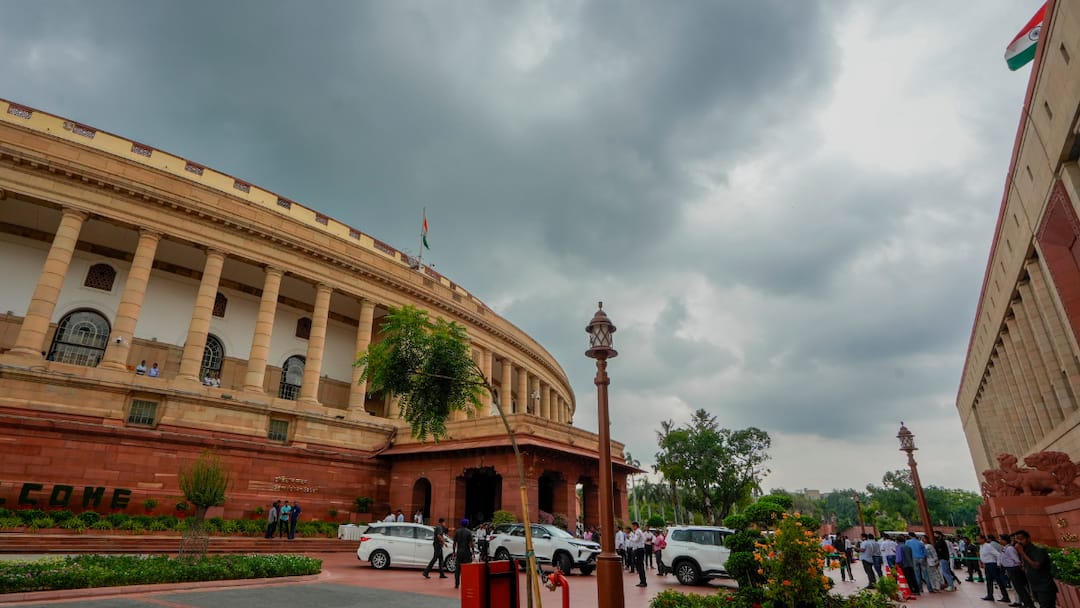
The Delhi-NCR region recorded intense sunshine and unusually high temperatures over the past 24 hours, with February 17 emerging as the hottest day of the year so far. Amid the unseasonal warmth, the India Meteorological Department (IMD) has forecast heavy rain and thunderstorms for February 18.
According to the IMD, winds are expected to blow at speeds of up to 40 km per hour, accompanied by lightning. The change in weather conditions is likely to take effect from February 18, with the possibility of overcast skies and reduced daylight during the day.
Yellow Alert Issued for Delhi-NCR
The IMD has issued a yellow alert for Delhi-NCR for February 18, advising residents to remain cautious and take necessary weather-related precautions.
The forecast predicts rainfall along with dark cloud cover. Wind speeds during the thunderstorm could reach around 40 km per hour, and incidents of lightning are also likely, potentially leading to gloomy conditions during the daytime .
“Generally cloudy sky. A spell of very light to light rain with thunderstorm/ lightning at isolated places accompanied with gusty winds (Speed 30-40 KMPH) towards forenoon. Another spell of very light tain at isolated places towards afternoon,” the IMD forecast said.
Western Disturbance To Trigger Rainfall
Mahesh Palawat, Vice President of private weather agency Skymet Weather, said that an active western disturbance is set to influence the region’s weather. Under its impact, light to moderate scattered rainfall is possible over the next two days.
He noted that such high temperatures in mid-February are unusual. Limited wind activity and clear skies have led to strong afternoon sunshine, pushing temperatures upward. While the expected rainfall may provide temporary relief from the heat, minimum temperatures are likely to remain elevated.
Temperature To Rise Again After Brief Dip
The IMD stated that following the rainfall on February 18, both maximum and minimum temperatures are expected to decline on February 19 and 20, making the weather relatively pleasant for a short period.
However, by February 21 and 22, maximum temperatures may once again climb to around 30 degrees Celsius. Clear skies and strong sunshine could lead to a renewed spell of warmth across the region.
The IMD said that the Safdarjung observatory, the city’s base station, on Monday recorded a maximum temperature of 31.6 degrees Celsius, which is 7.2 degrees above normal. The station also recorded a sharp 24-hour temperature change of 3.1 degrees, showing a sudden warm spell affecting the region.
Related Video
UP POLITICS: Jal Jeevan Mission Under Scanner After BJP MLA Raises Concerns
Disclaimer : This story is auto aggregated by a computer programme and has not been created or edited by DOWNTHENEWS. Publisher: abplive.com