Medics in the UK and US believe they have been denied re-entry to Gaza after speaking out on the conflict.
Following reports of rising refusal rates, medical workers and organisationswho have provided humanitarian aid in Gaza have described what they see as arbitrary denials.
Under international law Israel is required to allow and facilitate the unimpeded and rapid passage of humanitarian aid. Provided with no reason for being blocked from entry, medics who spoke with the Guardian believed their refusals came after giving first-hand testimony from their time in Gaza. Others said their identity or prior experience in the territory may have influenced decisions to block them.
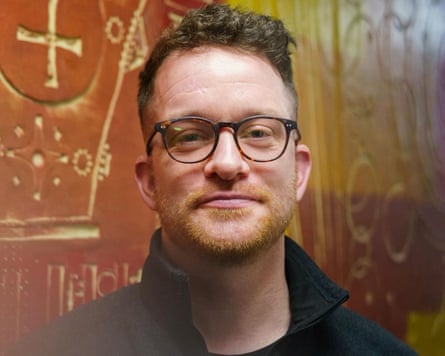
Among those recently denied entry is James Smith, an emergency doctor who has not returned to Gaza since June 2024. On two consecutive occasions in 2025 he was denied entry, with no explanation given.
“Not just had I spoken to media outlets but I had spoken in a particular way,” said Smith, mentioning Israel’s registration guidelines for NGOs and foreign staff, which includes considerations such as having called for or participated in a boycott of the state of Israel.
“I can only assume that it was elements of my public profile, because I’m otherwise a white, middle-class, British man with no Palestinian heritage, no criminal convictions,” said Smith, who was travelling with the nonprofit Medical Aid for Palestinians (MAP).
“It’s the expression of my politics that must have rattled them,” he added.
After the announcement of a ceasefire in October, the death toll in Gaza continues to grow, and humanitarian organisations have remained critical of barriers to aid and medical evacuations. In August, the World Health Organization (WHO) said the denial rates of international health professionals rose by nearly 50%, with 102 people barred from 18 March.
Khaled Dawas, a consultant surgeon, told the Guardian it was clear those who had been outspoken had been denied entry.
“I can’t think of anything else,” Dawas said from London. “I’m not military. I don’t carry anything. I’m no different to the colleagues who have gone in. The only difference is that they haven’t spoken up as much.”
He was denied entry in August and November with two separate organisations, after travelling to Gaza in 2024.
Thaer Ahmad, an emergency physician from Chicago, was denied entry four times, most recently in January. As a Palestinian-American born in the US, he believes his identity is one of the reasons behind his blocked entry, as well his advocacy since travelling to Gaza in 2024. The reason given by Israeli authorities were security concerns.

“This idea of weaponising access and weaponising aid, it’s engrained in all of the decisions that we see are being made in Gaza,” said Ahmad, adding that respective governments should assist doctors in appealing against decisions.
Fresh concerns over access into Gaza were raised after 37 NGOs active in Gaza were told in December they must cease operations. Among those deregistered was the UK-based MAP (Medical Aid for Palestinians). For the past six months, MAP has not been able to get medical workers or aid into Gaza. For each blocked entry, no reason was given.
Steve Cutt, MAP’s chief executive, called the denial of entry a “deliberate measure” taken by Israel authorities, with life-and-death consequences for Palestinians in Gaza.
“Israel’s deregistration of international NGOs and restrictions on medical personnel are part of a wider pattern of measures that are cruelly blocking humanitarian assistance and obstructing independent medical witnesses,” said Cutt.
It is understood humanitarian organisations share lists of volunteer medics with the WHO before they go to Gaza.
Some medics and humanitarian organisations first discovered they had been denied entry close to 24 hours before their entry date after travelling to Jordan. In other cases, they received rejections days before leaving the UK ahead of Israeli holidays.
Cogat, the Israeli military agency that controls access to Gaza, called the claims “false and unfounded”.
“They stem from ulterior interests of organisations that refuse to operate transparently and to cooperate with Israel’s registration process, which is based on clear professional and security criteria designed to safeguard the integrity of the humanitarian system,” it said.
Cogat added: “It should be underscored that Israel continues to act to strengthen the healthcare system in the Gaza Strip.”
A UK Foreign, Commonwealth and Development Office (FCDO) spokesperson said the foreign secretary late last year met with medical teams denied entry into Gaza.
“Israel must immediately lift restrictions and allow food, medical supplies and fuel to reach those in desperate need, in line with international humanitarian law,” they added.
A petition recently filed by lawyers to the Israeli supreme court cites seven cases of alleged illegal refusals of entry, including that of Graeme Groom, an orthopaedic surgeon from London and co-founder of the charity Ideals, who has visited Gaza more than 40 times. Since 7 October, he has been four times, and denied entry on three occasions. Each time he was refused, no explanation was given.
“We think it may be because we are bearing witness to what is happening in Gaza,” he said. “Denying us entry is an extension of the policy which has excluded international journalists, and kills Palestinian journalists.”
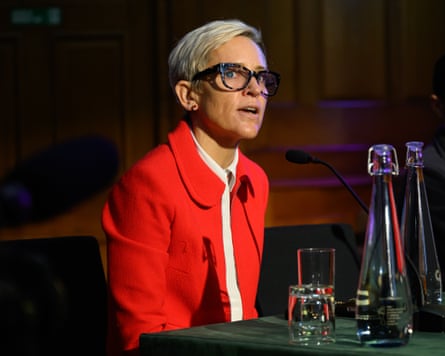
London-based consultant plastic surgeon Victoria Rose, who was denied entry alongside Groom in late 2025, does not necessarily believe that having been outspoken on the number of injuries or paediatric injuries of Gaza was the reason she was blocked from entering.
“They don’t want anyone going that knows the system, is useful, that is effective, that’s where it seems to be. I don’t necessarily think they’ve got a handle of what I’ve done or said,” she said. “Maybe.”
Disclaimer : This story is auto aggregated by a computer programme and has not been created or edited by DOWNTHENEWS. Publisher: theguardian.com