
Alpine has strongly backed the legality of the Mercedes Formula 1 engine amid the compression ratio furore, arguing the FIA would set the wrong precedent should it intervene.
This year F1 is introducing a completely new set of regulations, and one of the changes concerns the engine compression ratio, which has been reduced from 18:1 to 16:1.
But Mercedes has caused a huge stir by referencing Article C5.4.3, which states that a static test at ambient temperature is the only method of measuring the ratio.
So it is understood to have found a way to meet the 16:1 limit during static tests, but increase it while the engine is running – something rivals argue is still illegal.
They believe it gives Mercedes and its three customer teams – McLaren, Alpine and Williams – an unfair advantage and are urging F1’s governing body the FIA to change the procedures.
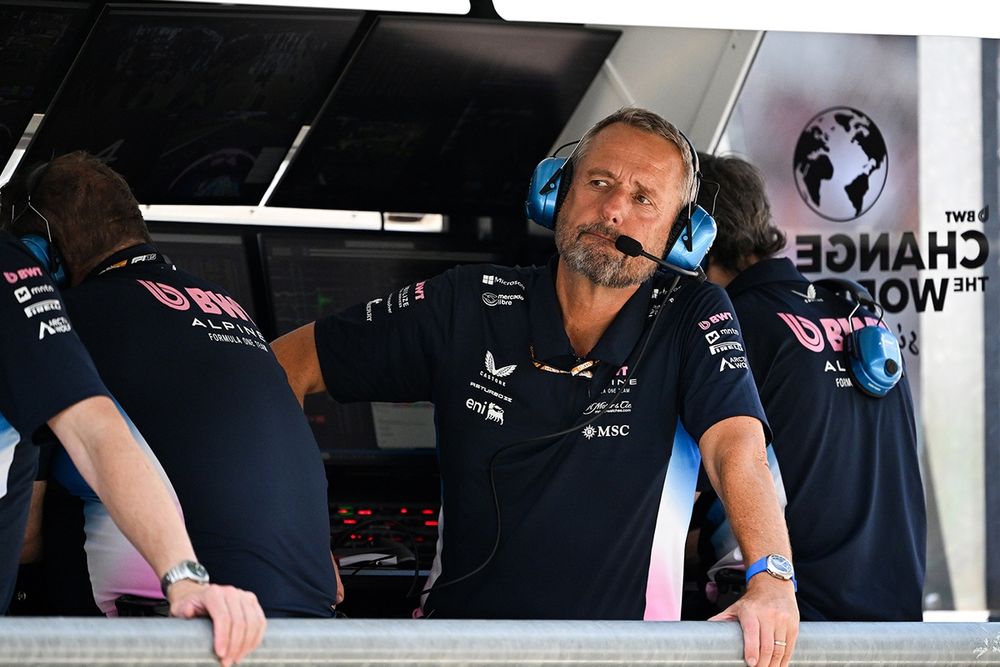
But Alpine managing director Steve Nielsen stated his support in the German marque, arguing: “My personal view is I’m not concerned about it because I think the regulations are crystal clear on when compression ratio is measured.
Steve Nielsen, Managing Director at Alpine F1
Photo by: Mark Sutton / Formula 1 via Getty Images
“Some other people are trying to introduce different parameters to that. That’s for reasons best known to themselves, but no, we’ve got full confidence in Mercedes.
“They’ve built a PU in good faith with a very clear set of regulations, and we’re happy with it. We trust the governing body to do the right thing.”
Nielsen claimed “it very clearly says ambient temperature” for when the ratio is measured, so the prospect of teams protesting ahead of the season-opening Australian Grand Prix in March doesn’t faze him.
“They’ve got their right to protest, I suppose. But if they really feel that strongly, then put some skin in the game and do something about it,” he said.
“I don’t know whether the FIA will express a view on this before Melbourne. I kind of hope they do because I kind of hope the story in Melbourne isn’t about compression ratios.”
But it is unlikely any decision will be made before Australia, considering the engine homologation date is 1 March – leaving hardly any time for modifications.
F1 and FIA logo
Photo by: Ben Vinel
“The more fundamental thing for me is the way we’re going about it,” added Nielsen. “If we’re saying that a very clear set of regulations, written set of regulations can be challenged in this way, then what else is off limits?
“Everything’s up for discussion then. If a certain set of teams don’t like something that’s very clearly written, if suddenly you can have a lobby group and change it, then you’re in a whole different world.
“People invest an awful lot of time and money, and particularly money into this, in good faith, and if suddenly we’re going into a world where everything can be challenged, even though it’s clearly written for any reasons other than safety reasons, then I think that’s a whole new world, which we’ve not been in before.
“So I think the compression ratio discussion is one thing, but I think it’s very clear. You could say I’m biased because we’ve got a Mercedes engine in our car, but that’s honestly what I believe.
“But I think the more fundamental question is, do we really want a sport where clearly written stuff can just be challenged because people fancy doing it? I think that’s for the FIA to answer…”
We want your opinion!
What would you like to see on Motorsport.com?
– The Motorsport.com Team
Disclaimer : This story is auto aggregated by a computer programme and has not been created or edited by DOWNTHENEWS. Publisher: motorsport.com



