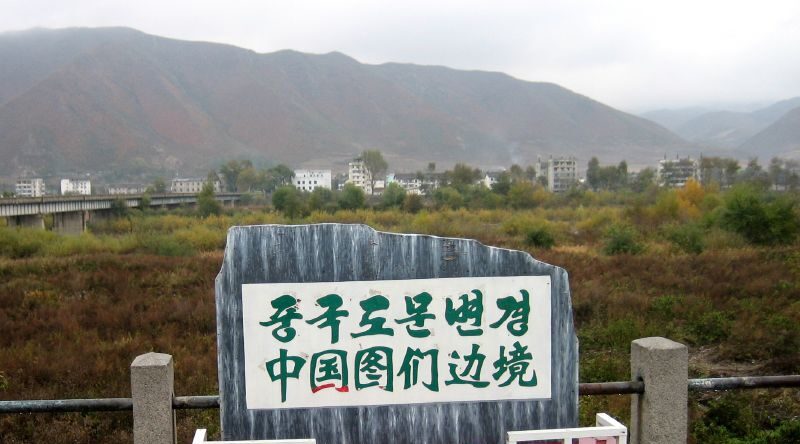
North Korean authorities suspended state smuggling across North Pyongan, North Hamgyong and Jagang provinces in early February, ahead of the Ninth Party Congress scheduled for the end of the month, raising fears the crackdown will disrupt consumer goods supplies and push up market prices.
According to a Daily NK source in North Pyongan province who requested anonymity for security reasons, border guard units in the province were ordered to halt all cargo transportation along the border on Jan. 31. The order warned that if goods moved across the border, both the parties involved and the border guard units responsible for that stretch would face punishment.
State smuggling led by government agencies has long taken place in collusion with the border guard. With units now ordered to stand down, smuggling has come to a virtual standstill.
In Hyesan, Ryanggang province, a leading smuggling hub, state smuggling had already stopped since late January. In some border areas of North Pyongan, North Hamgyong and Jagang provinces, however, it had continued until recently. The latest order brought even smaller-scale operations to a halt — in Uiju, North Pyongan province; Hoeryong and Musan, North Hamgyong province; and Chunggang, Jagang province.
“Originally, there was ‘room’ to move items through specific stretches of the border during nighttime, but because the border guard units that used to watch smugglers’ backs are playing it safe, smugglers can’t go out to receive items,” the source said. “This means they can’t smuggle, even if they have money to bribe border guard units.”
Markets brace for shortages as imports dry up
The suspension has created problems for the illicit import of industrial goods — including cars, car parts, clothing, bags and shoes — as well as foodstuffs such as rice, cooking oil and processed foods.
North Korean authorities currently allow official trade through customs, but imports through official channels focus on production supplies for sectors such as agriculture, industry and construction rather than consumer goods. The suspension of state smuggling is therefore expected to directly affect everyday life.
In particular, demand for foreign currency has fallen sharply in recent weeks, dragging down market prices. But if imports contract and distribution slows, prices could reverse course and rise.
“There won’t be immediate problems, but if people believe the situation will continue for a bit, there will be hoarding, or prices will skyrocket,” the source said. “The key is how markets will endure without smuggling.”
A Note to Readers
Daily NK operates networks of sources inside North Korea who document events in real-time and transmit information through secure channels. Unlike reporting based on state media, satellite imagery, or defector accounts from years past, our journalism comes directly from people currently living under the regime.
We verify reports through multiple independent sources and cross-reference details before publication. Our sources remain anonymous because contact with foreign media is treated as a capital offense in North Korea—discovery means imprisonment or execution.
This network-based approach allows Daily NK to report on developments other outlets cannot access: market trends, policy implementation, public sentiment, and daily realities that never appear in official narratives. Maintaining these secure communication channels and protecting source identities requires specialized protocols and constant vigilance.
Daily NK serves as a bridge between North Koreans and the outside world, documenting what’s happening inside one of the world’s most closed societies.
Disclaimer : This story is auto aggregated by a computer programme and has not been created or edited by DOWNTHENEWS. Publisher: dailynk.com