
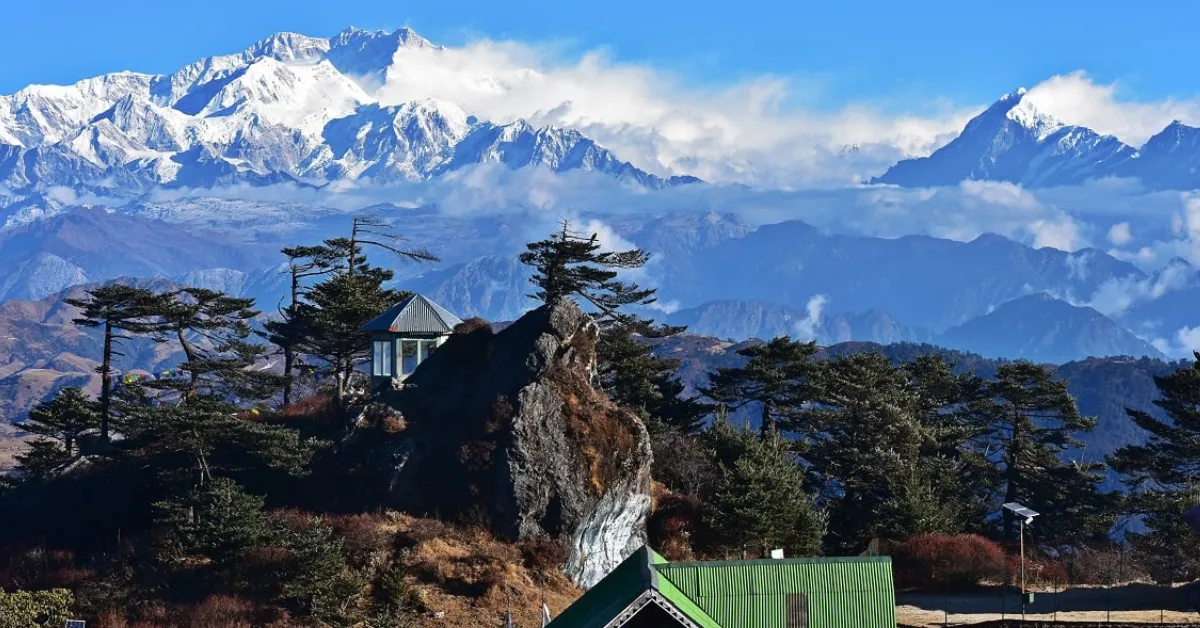
For many trekkers, the Sandakphu trail on the Singalila Ridge offers one of the most magnificent mountain experiences in eastern India. February is often highlighted for particular reasons that distinguish it from other months, especially for those who value clear views and winter scenery.
1. Clear mountain views and visibility
In February, the weather at high elevations remains cold, with daytime temperatures generally pleasant. At the same time, the atmosphere is frequently dry and clear. This combination improves long‑range visibility, making it easier to see major Himalayan peaks such as Kanchenjunga, Makalu, and Everest on properly crisp days. Many trekkers who focus on photography or panoramic views choose this month precisely for this clarity.
Clear skies also contrast briskly with the haze and humidity common in warmer months, giving wide mountain horizons a more vivid appearance against vast blue skies.
2. Distinct winter ambience
Although December and January can bring heavier snowfall, by February, the immense winter begins to ease. Snow remains on higher ground and on trail edges, creating a distinctly winter landscape without the heaviest accumulation seen in mid‑winter.
This means walkers can experience a genuine winter setting, which includes snow‑fringed paths and crisp air, while the overall conditions can be marginally less severe than in the coldest months.
3. Less-frequented routes
February is outside the peak trekking windows of spring (March-May) and autumn (October-November), when crowds tend to be at their highest. As a result, the Sandakphu trail generally sees fewer trekkers in late winter, making the experience pleasant and more focused on the environment rather than tourism traffic.
For walkers who prefer a degree of solitude or a gentler rhythm on the trail, this relative quiet is a recognised advantage of visiting in February compared to the busier peak seasons.
/filters:format(webp)/english-betterindia/media/media_files/2026/02/17/sandakphu-february-trek-2026-02-17-13-16-54.png)
4. Snow and photography potential
Snow is still present on sections of the route in February. While heavy snowfall is less common than in January, lighter snow or frost on the ground can improve the visual contrast between snowy peaks and the trail.
This seasonal mix, snow, clear air and strong daylight, presents excellent conditions for photography, especially in early mornings when the mountains are distinctly outlined against the horizon.
A unique season for prepared trekkers
February is not usually recommended for complete beginners due to cold weather and the possibility of snow affecting higher sections of the trail. However, for walkers with suitable gear and some experience of cold conditions, the month combines reliable views, distinct winter terrain and a calmer setting.
/filters:format(webp)/english-betterindia/media/media_files/2026/02/17/sandakphu-february-trek-2026-02-17-13-33-58.png)
In summary, February on the Sandakphu trail is notable for:
- Excellent high‑altitude visibility and clearer views of Himalayan peaks.
- Retained winter landscape features without the very harshest mid‑winter conditions.
- Fewer trekkers, giving the route a more peaceful character.
- Good photographic conditions, with contrast between snow, sky and mountain ridges.
Disclaimer : This story is auto aggregated by a computer programme and has not been created or edited by DOWNTHENEWS. Publisher: thebetterindia.com







