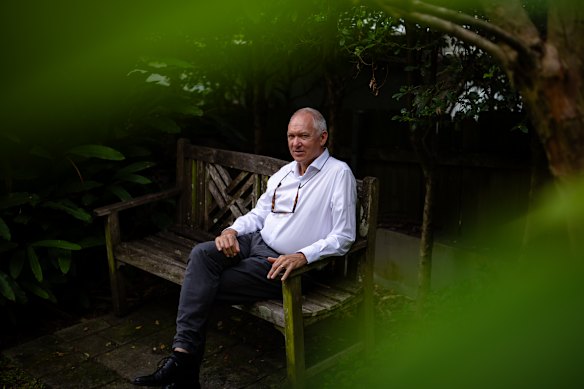

A senior Sydney psychiatrist said rare killings by psychiatric patients are the predictable outcome when mental health facilities are expected to function as prisons for people diverted from the criminal justice system.
The use of Section 19b orders, which enable magistrates to divert people who may be mentally ill or disordered to mental health facilities and detain them for assessment, has become a lightning rod for the failures of the state’s mental health system.
Mooniai Leaaetoa, 25, who is accused of stabbing one person to death and severely injuring two others at a Merrylands shop, and Luke Peter Francis, 31, who allegedly killed two women in a car crash during a police pursuit, were both under Section 19b orders when they allegedly absconded from Cumberland Hospital, sources within the mental health system said.
Francis allegedly overpowered a nurse and stole her access card to escape the facility. Health Minister Rose Jackson has initiated an urgent review into Cumberland’s security protocols, and NSW Health will conduct a review of Leaaetoa’s care.
The number of defendants in lower courts who were diverted due to mental health or cognitive impairments rose from 2215 between October 2019 and September 2020 to 3428 between October 2024 and September 2025, NSW Bureau of Crime Statistics and Research data shows.
Forensic psychiatrists said Section 19b of the Mental Health and Cognitive Impairment Forensic Provisions Act was also used for non-violent, vulnerable people whose psychiatric conditions deteriorated because community mental healthcare services were overwhelmed and underresourced.
“These awful situations have highlighted how much stress the system is under in managing patients with a higher degree of risk,” forensic psychiatrist Dr Christina Matthews said.
UNSW Conjoint Professor of psychiatry Matthew Large said: “While the homicide of a stranger by a mentally ill person is always a surprise as it is shocking, this sort of event was predictable.
“Over the years, the number of section 19b patients transferred from the criminal justice system to public mental health units has increased, as has the seriousness of the precipitating events.
“Increasingly, we are expected to treat these patients with the level of security afforded to some prisoners.”
Large said magistrates knew that if they sent someone to prison, they would wait several days to see a psychiatrist, “so they quite understandably send them to Cumberland and our other public hospital mental health units”.
How common is it for mental health patients to abscond?
Roughly 200 admitted mental health patients absconded so far in the 2025/2026 financial year (about one per cent of patient admissions).
In NSW, rate of patients absconding:
- from a mental health unit is 0.23 per 1000 bed days,
- while on escorted leave is 0.28 per 1000 bed days.
At Cumberland Hospital (which treats the most severe and complex patients), the rate of absconding:
- from the hospital is 0.75 per 1000 bed days,
- while on escorted leave 0.23 per 1000 bed days.
Source: NSW Health
He said the result was that two cohorts of patients end up in the same wards: “First, the very disturbed patients, often methamphetamine affected, who have been diverted from the justice system after various forms of [alleged] crime. These patients are in effect in custody.”
The second cohort, and the majority of patients, are very unwell, law-abiding and rarely dangerous, who require patient-centred, recovery-focused, trauma-informed care in the least restrictive way possible, he said.
“This combination leads to wards that can be unpredictable, frightening and at times even dangerous,” Large said. “Hospital staff, mostly nurses, are well-trained and caring, but they are not guards.
“Public mental health services need to be better built and staffed to provide both care and custody for all comers.”
A Sydney psychiatrist with experience in the forensic system said that not all people on Section 19b orders were violent, but were before the court for allegedly minor offences due to their deteriorated mental illness.
“These are not criminals,” they said. “There are all sorts of people, including women and non-violent people, on Section 19s, and it is appropriate that they have been diverted away from the justice system.”
They said the clear benefits of diverting people from the justice system included reduced reoffending rates.
Matthews said there was recognition, particularly among magistrates, that there had been missed opportunities to provide appropriate care for mentally ill people in prison.
She said hospitals faced challenges treating people on Section 19bs, but they were more therapeutic than transfer to prison.
Australian Society of Psychiatrists chief executive Dr Pramudie Gunaratne said “the issue isn’t the patients” but a “system under strain where we can actually end up doing more harm than good”.
“When we group together people with vastly different clinical presentations in overstretched units, we create conditions where therapeutic care becomes secondary to risk management [and] no one receives the level of care they truly need.
“You might have a young woman admitted for severe depression who’s not eating or drinking, alongside someone in the midst of acute psychosis or substance withdrawal.
“It’s an enormous clinical spread to manage in one environment, especially when it’s a locked ward.”
Gunaratne said the problem stemmed from a broader crisis: “We are failing to provide adequate upstream community supports for the 58,000 people in NSW living with severe and complex mental illness who are slipping between the cracks.”
The Bondi Junction attack inquest recommended more community outreach and specialist teams, particularly when mentally ill people disengage from care.
Giancarlo de Vera, CEO of mental health consumers’ advocacy organisation BEING, said prevention and early intervention were crucial.
“If we invest in the right mix of supports, especially in community-based care, which is currently lacking, we would dramatically reduce deadly incidents like the one in Merrylands.”
Start the day with a summary of the day’s most important and interesting stories, analysis and insights. Sign up for our Morning Edition newsletter.
From our partners
Disclaimer : This story is auto aggregated by a computer programme and has not been created or edited by DOWNTHENEWS. Publisher: www.smh.com.au