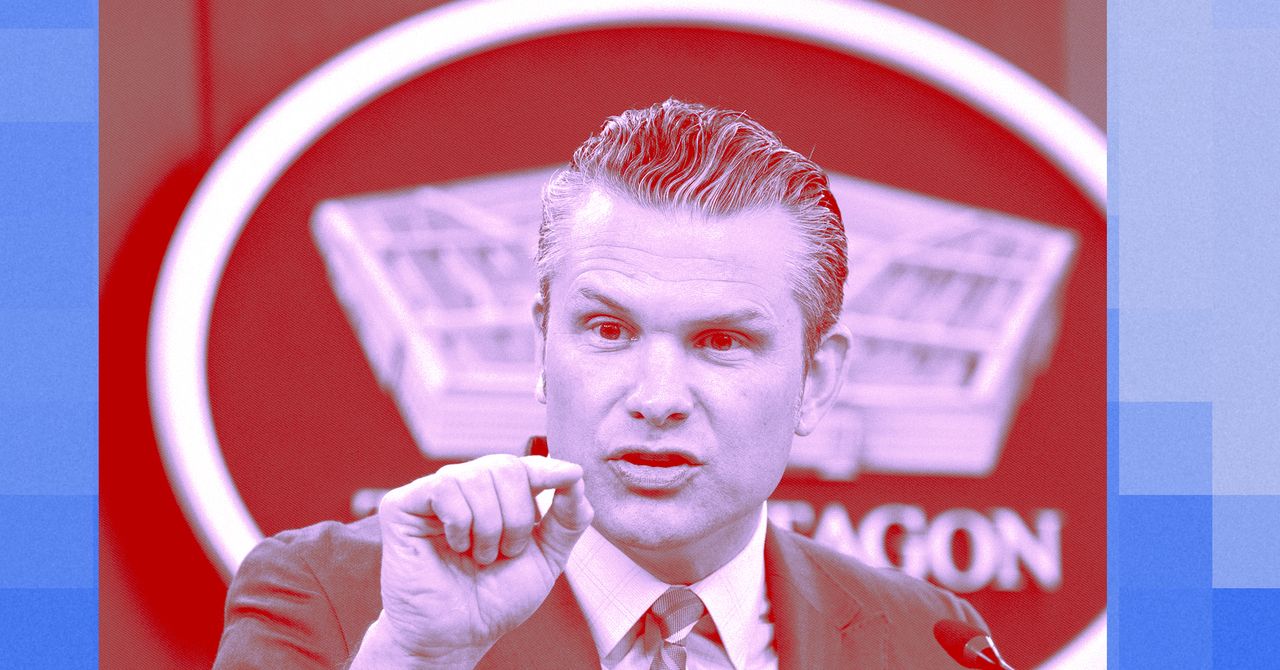
When Anthropic last year became the first major AI company cleared by the US government for classified use—including military applications—the news didn’t make a major splash. But this week a second development hit like a cannonball: The Pentagon is reconsidering its relationship with the company, including a $200 million contract, ostensibly because the safety-conscious AI firm objects to participating in certain deadly operations. The so-called Department of War might even designate Anthropic as a “supply chain risk,” a scarlet letter usually reserved for companies that do business with countries scrutinized by federal agencies, like China, which means the Pentagon would not do business with firms using Anthropic’s AI in their defense work. In a statement to WIRED, chief Pentagon spokesperson Sean Parnell confirmed that Anthropic was in the hot seat. “Our nation requires that our partners be willing to help our warfighters win in any fight. Ultimately, this is about our troops and the safety of the American people,” he said. This is a message to other companies as well: OpenAI, xAI and Google, which currently have Department of Defense contracts for unclassified work, are jumping through the requisite hoops to get their own high clearances.
There’s plenty to unpack here. For one thing, there’s a question of whether Anthropic is being punished for complaining about the fact that its AI model Claude was used as part of the raid to remove Venezuela’s president Nicolás Maduro (that’s what’s being reported; the company denies it). There’s also the fact that Anthropic publicly supports AI regulation—an outlier stance in the industry and one that runs counter to the administration’s policies. But there’s a bigger, more disturbing issue at play. Will government demands for military use make AI itself less safe?
Researchers and executives believe AI is the most powerful technology ever invented. Virtually all of the current AI companies were founded on the premise that it is possible to achieve AGI, or superintelligence, in a way that prevents widespread harm. Elon Musk, the founder of xAI, was once the biggest proponent of reining in AI—he cofounded OpenAI because he feared that the technology was too dangerous to be left in the hands of profit-seeking companies.
Anthropic has carved out a space as the most safety-conscious of all. The company’s mission is to have guardrails so deeply integrated into their models that bad actors cannot exploit AI’s darkest potential. Isaac Asimov said it first and best in his laws of robotics: A robot may not injure a human being or, through inaction, allow a human being to come to harm. Even when AI becomes smarter than any human on Earth—an eventuality that AI leaders fervently believe in—those guardrails must hold.
So it seems contradictory that leading AI labs are scrambling to get their products into cutting-edge military and intelligence operations. As the first major lab with a classified contract, Anthropic provides the government a “custom set of Claude Gov models built exclusively for U.S. national security customers.” Still, Anthropic said it did so without violating its own safety standards, including a prohibition on using Claude to produce or design weapons. Anthropic CEO Dario Amodei has specifically said he doesn’t want Claude involved in autonomous weapons or AI government surveillance. But that might not work with the current administration. Department of Defense CTO Emil Michael (formerly the chief business officer of Uber) told reporters this week that the government won’t tolerate an AI company limiting how the military uses AI in its weapons. “If there’s a drone swarm coming out of a military base, what are your options to take it down? If the human reaction time is not fast enough … how are you going to?” he asked rhetorically. So much for the first law of robotics.
There’s a good argument to be made that effective national security requires the best tech from the most innovative companies. While even a few years ago, some tech companies flinched at working with the Pentagon, in 2026 they are generally flag-waving would-be military contractors. I have yet to hear any AI executive speak about their models being associated with lethal force, but Palantir CEO Alex Karp isn’t shy about saying, with apparent pride, “Our product is used on occasion to kill people.”
The US might be able to flex its AI muscles with impunity when in combat with a country like Venezuela. But sophisticated opponents will have to aggressively implement their own versions of national security AI, with the result being a full-tilt arms race. The government will likely have little patience for AI companies that insist on carve-outs or lawyerly distinctions about what consists of “legal use” when a lethal practice is under question. (Especially a government that feels free to redefine the law to justify what many consider to be war crimes.) That Pentagon statement says it explicitly: If AI companies want to partner with the Department of Defense, they must commit to doing whatever it takes to win.
That mindset may make sense in the Pentagon, but it pushes the effort to create safe AI in the wrong direction. If you are creating a form of AI that won’t harm people, it’s counterproductive to also work on versions that deliver lethal force. Only a few years ago, both governments and tech executives were talking seriously about international bodies that might help monitor and limit the harmful uses of AI. You don’t hear that talk much any more. It’s a given now that the future of warfare is AI. Even more frightening, the future of AI itself might be more amenable to the kind of violence seen in warfare—if the companies that make it and the nations that wield it do not take care to contain the technology.
I have long believed that the major story of our times is the rise of digital technology. Politicians, regimes, and even countries may come and go—but tech’s remaking of humanity is irrevocable. When Donald Trump was first elected president in 2016, I spelled out this theory in a column called “The iPhone Is Bigger Than Donald Trump.” Upon his reelection in 2024, I wrote a sequel, arguing that AI was a bigger chaos agent than the president. In the long run, I argued, science trumps even Trump.
That theory now feels a little shakier. The future might hinge on who is in charge of advanced AI and how they shape and exploit it. While the lords of AI wrap themselves in patriotism and seek deals with the Pentagon, the fact is that they are supplying a fearsomely powerful and unpredictable technology to a government and a war department that rejects the idea of oversight. What would Asimov think?
Disclaimer : This story is auto aggregated by a computer programme and has not been created or edited by DOWNTHENEWS. Publisher: wired.com