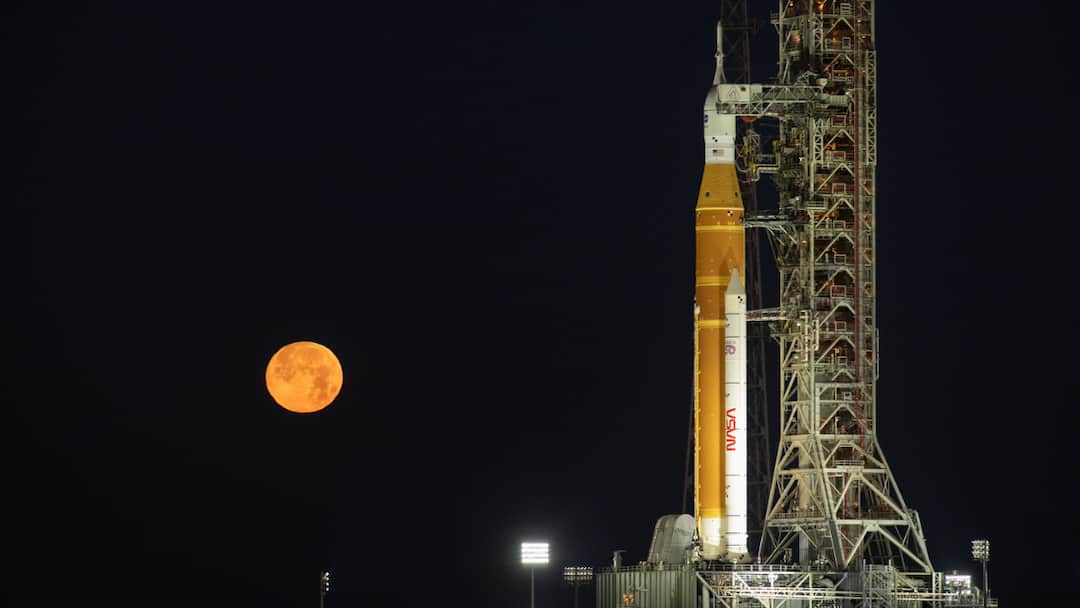
More than half a century after humans last ventured to the Moon, NASA has set a date to go back. The US space agency confirmed that 6 March is the target launch day for Artemis II, a mission that will send astronauts around the Moon for the first time since 1972.
The announcement marks a defining moment in modern space exploration and signals a new chapter in humanity’s return to deep space.
ALSO READ: At Least 10 Killed In Deadly Israeli Strikes On Lebanon’s Bekaa Valley
A 10-Day Journey Around The Far Side
We are targeting no earlier than March 6 for the launch of Artemis II, pending completion of required work at the launch pad and analysis of test data.
The Artemis astronauts have entered quarantine to remain in good health before the mission. https://t.co/SEq4DPmluZ pic.twitter.com/udLNFXbn8P
— NASA Artemis (@NASAArtemis) February 20, 2026
The Artemis II mission will carry four astronauts on a 10-day voyage. They will travel around the far side of the Moon before looping back to Earth, a path not taken by humans in more than five decades.
The crew includes NASA astronauts Reid Wiseman, Victor Glover and Christina Koch, alongside Canadian Space Agency astronaut Jeremy Hansen. Ahead of launch, the astronauts will enter quarantine in Houston to minimise exposure to illness before liftoff.
The mission represents the first crewed lunar expedition since the final Apollo flight in 1972.
A Key Step Toward A Lunar Base
Artemis II is not just a symbolic return. NASA views it as a stepping stone toward landing humans on the Moon again and eventually building a long-term lunar presence.
That future base, the agency hopes, could serve as a launch point for missions to Mars, extending human exploration deeper into the solar system.
Final Tests Clear The Way
NASA confirmed the launch window after completing a successful “wet dress rehearsal”, a full countdown simulation in which the rocket is fuelled as though it were preparing for liftoff.
Earlier attempts had uncovered a hydrogen leak, forcing engineers to replace crucial seals and delay plans. This time, teams “closely monitored liquid hydrogen fueling operations, which proved challenging during previous tests”. NASA said the gas levels “remained under allowable limits”, giving confidence that the rocket is ready.
During the rehearsal, a temporary “loss of ground communications” occurred. However, controllers switched to a backup system until normal operations resumed, and engineers later identified the source of the issue.
Countdown To A Historic Launch
The Artemis II Space Launch System rocket and Orion spacecraft will now remain at the launchpad as engineers complete final preparations.
If all goes to plan, 6 March will mark humanity’s first crewed journey around the Moon in over 50 years, a mission that bridges the legacy of Apollo with the ambitions of a new generation of explorers.
Related Video
Brahmin Politics Heat Up: Demand for Parashuram Jayanti Holiday Sparks Debate in UP
Disclaimer : This story is auto aggregated by a computer programme and has not been created or edited by DOWNTHENEWS. Publisher: abplive.com