Getting tested for sexually transmitted infections can feel complex, confusing, or embarrassing, but at-home STI tests can make the process easier and more private. Getting tested is important. STDs are more prevalent than they were a decade ago, with 2.2 million reported infections in 2024, according to the Center for Disease Control. Today, there are plenty of testing alternatives for people reluctant or unable to visit a doctor or clinic. But even though these tests can be convenient, they might not be for everyone. We break it all down below.
What Are At-Home STI Tests?
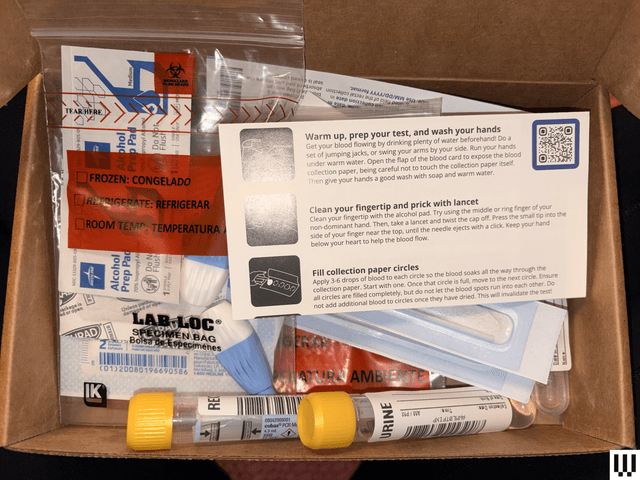
At-home testing is nothing new. You can get at-home medical tests for everything from Covid-19 to drug testing to hormone levels or food sensitivities. You can examine your gut, your blood, or even your DNA. At-home STI tests use samples of your blood, urine, and/or samples collected from the vagina or rectum to detect whether or not you have a sexually transmitted infection. You’ll collect these samples with swabs, finger lances, and/or cups. Depending on the test, you’ll either send in your samples by mail to await results from the lab, or you’ll process them at home in a dedicated device. These tests typically cost between $100 and $400.
“At-home STI tests can be just as accurate as those performed in a doctor’s office when used correctly, since they often use the same laboratory testing methods,” says Dr. Shannon Chatham, Medical Director at online health care company Wisp. Chatham says the key to accuracy is carefully following the collection instructions and using tests from reputable, FDA-approved, or CLIA-certified companies.
Dr. Kate McLean, Chief Medical Officer at at-home test company Evvy, agrees that at-home tests can match lab accuracy since the underlying technology is the same, but cautions that if you get a positive result, the next step will still bring you in contact with a medical professional: “A positive result should be paired with a care conversation to understand next steps.”

What Can They Test For?
You can self-test for chlamydia, gonorrhea, Hepatitis C, syphilis, and trichomoniasis, depending on the test you purchase. Bacterial infections like chlamydia, gonorrhea, and syphilis are easier to test for at home; viral infection testing for diseases like herpes, hepatitis, and HIV is more reliable if conducted at a doctor’s office.
You can buy home tests for herpes or HIV I and II, but since those STIs have specific incubation periods and symptoms, they aren’t necessarily recommended for routine tests unless you have specific concerns or symptoms.
Most available at-home tests screen for multiple sexually transmitted diseases. Some tests include follow-up consultations, either in person or through telehealth services, if you test positive.
As an example of what’s available, the sex toy maker Dame also offers at-home tests that check for gonorrhea, chlamydia, and syphilis. You can choose between tests that sample urine or a vaginal swab, or get a three-site kit that adds on oral and rectal collection. Dame’s tests arrive in a discreet box. You collect samples and send them off to the lab using the prepaid mailer for results in about three to five business days.


Another test comes from Everlywell, a company that sells at-home tests for everything from colon cancer detection to thyroid function. I used and was impressed by the company’s STI screening kit. The packaging is discreet, the instructions are easy to follow, and the results pop up on your phone in 30 minutes. It’s similar to an at-home Covid-19 test, but it checks for three common STIs. It even came with a bag of tea to sip while I waited for the machine to analyze my sample. My results were negative, but had I tested positive, I’d have been put in touch with a telehealth provider to discuss treatment options.
The Pros of At-Home STI Tests
At-home STI test kits are convenient, especially for common STIs. You can order them online (in some cases, even from Amazon) or pick them up at a local pharmacy. You can conduct the test whenever you want, in the privacy of your own home, without needing to make an appointment. Some tests even spit out results in 30 minutes or less, which may come in handy if you find yourself recently single and wanting to participate in hookup culture responsibly despite your doctor having a two-week waitlist for appointments. (Note that those fast-result tests are currently only available for people with vaginas.)
“At-home STI-tests can be a great alternative to professional sexual health screening,” says Sofie Roos, licensed sexologist and relationship therapist. “It’s always much better to buy an at-home kit than not testing yourself at all!”
If you’re the kind of person who gets nervous or squeamish at the doctor’s office, you might find that collecting your own samples doesn’t freak you out as much as someone in a white coat doing it.
Depending on where you live and your transportation situation, at-home STD tests might be more accessible than visiting a clinic or making a doctor’s appointment. And you can pay for them out of pocket, which might be a better option based on your health insurance.
Finally, and unfortunately, sexually transmitted infections have a stigma attached to them. You shouldn’t feel ashamed of checking up on your sexual health—far from it, in fact—but at-home tests might be a better option if you’re concerned about what others may think.
The Cons of At-Home STI Tests
At-home STI tests are expensive. Depending on your specific health care situation, they might be more affordable, and many of them are FSA- and HSA-eligible or may be covered by insurance. But if you live in an area where there’s free testing through your city or state health departments, or a third-party clinic like Planned Parenthood, those options are likely going to be much cheaper than testing at home.
There’s also the risk of you collecting your samples incorrectly, which can lead to false negatives. Depending on the test you choose, if you do get positive results for a sexually transmitted infection, you might still end up having to go visit a doctor in person to get it treated. While many tests are reputable, it’s still important to ensure that the lab analyzing your results is well-regulated (and that the test itself comes from a reputable company). “It’s important to follow the kit instructions exactly and collect the sample properly while avoiding contamination. You should also follow the warnings and avoid factors that can interfere with results, including incorrect kit storage or use of certain products in the last 48 hours,” says Dr. Gary Schoolnik, Chief Medical Officer at Visby Medical.
Your individual health and timing can impact the accuracy of at-home tests, too. For example, if you’re on your period or have recently used antibiotics, those variables might affect the quality of the samples you can collect. A health care provider can take these things into account and adjust your testing protocol accordingly.
If the situation is urgent—for example, if you’re experiencing physical symptoms that raised concerns, or you’re immunocompromised, or you’re pregnant, or you know you were exposed to an STI—it’s important to actually visit a health care provider rather than trying to treat your condition at home. “I still recommend people who’re having symptoms or know they’ve been with someone that has an STI to seek professional sexual health care to be completely sure, as a false result from a do-it-at-home-kit can make you think you’re okay and therefore dismiss or overlook symptoms,” says Roos.
If privacy is a concern, it might actually be more beneficial for you to go to a routine doctor’s appointment rather than having the packaging for an STD test in the trash. And if you think you might test positive for something, it might be beneficial for you to hear that news from a health care provider rather than finding out while opening the mail in your kitchen. It’s something that’s important to think through before you decide to go with testing at home.
No matter which route you go with, it’s important to be responsible, for yourself and for your sexual partners.
Meet the Experts
- Dr. Shannon Chatham, medical director at Wisp
- Dr. Kate McLean, chief medical officer at Evvy
- Sophie Roos, licensed sexologist and relationship therapist
- Dr. Gary Schoolnik, chief medical officer at Visby Medical
Disclaimer : This story is auto aggregated by a computer programme and has not been created or edited by DOWNTHENEWS. Publisher: wired.com