
Formula 1’s 2026 technical regulations are pushing teams to maximize aerodynamic efficiency, favoring innovative solutions.
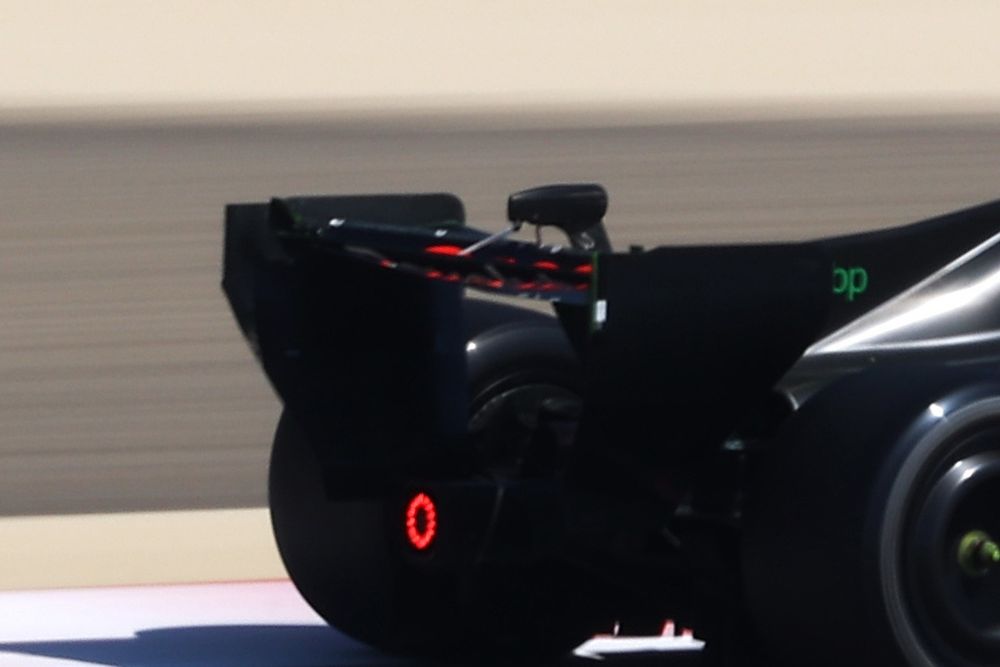
Audi has worked on this front and changed its philosophy from the Barcelona shakedown: its rear wing flap now goes down like Alpine’s.
The hybrid-imposed energy management limitations have made aerodynamic efficiency a key area, with the new rules granting engineers greater freedom in design, particularly regarding active aerodynamics, which is used on virtually every straight. This contributes to reducing drag on the straights, and consequently energy consumption.
Multiple rear wing configurations were observed in pre-season testing. Ferrari’s 180-degree rotating wing is a prime example, as a new concept that pushes the limits of imagination. It is the most extreme interpretation of the rules thus far, but other interesting solutions include Alpine’s, with the wing rotating on the leading edge, and Audi’s, which initially opened obliquely.
Audi R26 rear wing
Photo by: Audi
Alpine was the first team to take a completely new conceptual path compared to what DRS was allowed to be, pushing other squads to carefully evaluate its benefits and limitations.
Audi adopted this solution during the second week of the Sakhir test, tweaking the actuator that controls the mobile wing.
In Audi’s original concept, the system raised the first element, while the second remained passive and followed the main flap’s movement. Now, similarly to Alpine, the opening occurs in the opposite direction: the actuator acts on the second element, pushing it downward, while the first remains passive.
This was made possible by the wing rotation pivot being placed on the first flap, not the second – even on the initial concept. Thus, the way the wing opens can be tweaked.
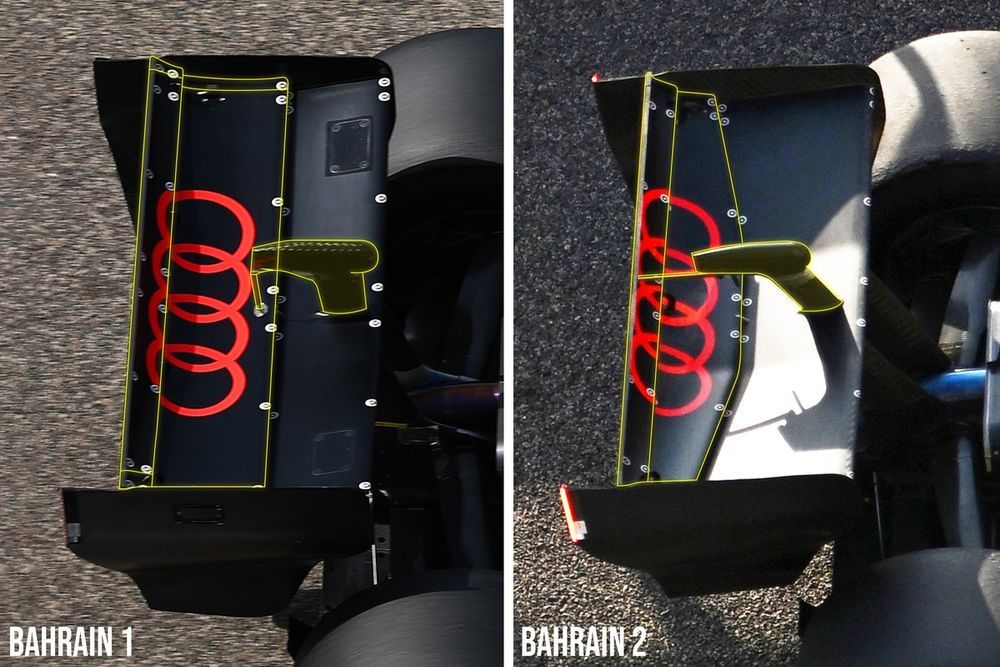
Audi R26 rear wing comparison
Photo by: Audi
This solution offers some aerodynamic advantages, notably in the transition phase, ensuring greater stability in early braking, but it also introduces significant challenges that teams must carefully manage.
While the DRS opened at relatively low speed and returned to its initial position under the pressure of air, Alpine’s and Audi’s rear wing experiences the opposite situation. The actuator must exert significantly greater effort to overcome drag and move the flap.
Alpine’s solution is quite complex, with multiple attachment points, while Audi’s appears simpler, based on a single attachment to the upper flap. An interesting choice, which once again shows how the 2026 rules are stimulating engineers’ creativity.
We want your opinion!
What would you like to see on Motorsport.com?
– The Motorsport.com Team
Disclaimer : This story is auto aggregated by a computer programme and has not been created or edited by DOWNTHENEWS. Publisher: motorsport.com



