As the final weekend of the 2026 Winter Olympic Games comes to a close, many athletes are returning to their 9-to-5 jobs, with some even retiring from their sport for good. But hanging up their skis doesn’t mean they have to leave their competitive past behind. Olympic champions are getting a second start at the $280 billion bank Goldman Sachs—and no financial expertise is required.
“I didn’t necessarily have the financial background history that other candidates would have, so [Goldman Sachs’] patience with me was incredible,” Ryan Held, a two-time gold medal Olympic swimmer who started as a risk analyst one year ago, tells Fortune. “They just wanted to see me succeed.”
Held is in good company at Goldman Sachs, where former pros are muscling their distinct skill sets to succeed in new careers. Most Olympians and athletic champions retire from their sport by their mid-30s, searching for passion in a different line of work.
Fortunately for elite athletes on the job hunt, the famously selective bank is looking to tap into the same talent that rowing stars, competitive swimmers, and Super Bowl champions bring to the table.
And apparently, there’s much more in common between athletics and banking than what meets the eye. Jacqueline Arthur, head of human capital management at Goldman Sachs, tells Fortune that competing in some of the biggest sporting events can lay the groundwork to succeed at the U.S. bank.
“Olympians and competitive athletes generally are a really interesting talent pool for us, given these incredibly valuable attributes like resilience, leadership, ability to manage time, and performing at the highest level under pressure,” Arthur says. “These things are valuable in any career, but especially here.”
Now, a litany of sports stars are trading the Olympic arena for the office floors of the Wall Street titan.
The Olympic medalists who started their second careers at Goldman
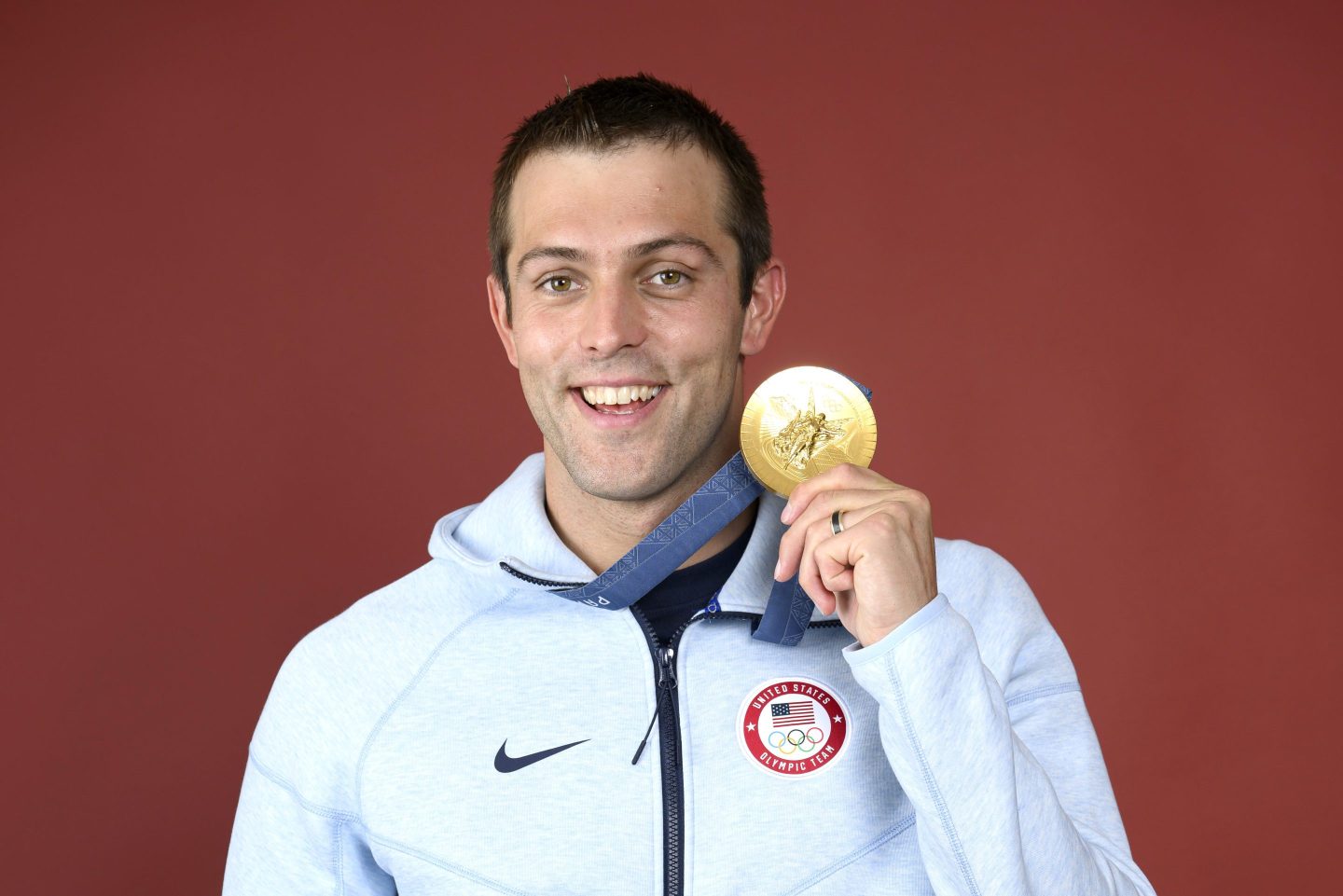
Held is just about one year into his role as a risk analyst at the bank, but just a handful of summers ago, he was topping the winners podium at the Paris Olympics.
Kristy Sparow / Stringer / Getty Images
The longtime swimmer is a two-time Olympic gold medalist; Held won the 4x100m freestyle relay at the 2016 Rio games alongside Michael Phelps and his fellow teammates, while he was still a young science student at North Carolina State University. And in a mic drop moment, he conquered the event once again at the 2024 Paris Olympics, then swiftly announced his retirement from the sport.
The three-time world-record holder never considered a career in banking up until leaving the sport, figuring he’d likely work for an environmental organization. But Held diverged from his academic background in conservation biology after speaking with a fellow prolific swimmer who found a post-pool career at Goldman Sachs. Held questioned if he was the right fit, having known so little about banking. But upon a second look into the company, he found another calling in risk analysis. And ever since taking the leap, the 30-year-old has been leveraging both his athletic prowess and STEM skills in the banking industry.
“I didn’t study finance… But after talking with him, I discovered that there’s so much more to the bank,” Held tells Fortune. “What’s great is that not everyone is a Nobel laureate, or [come from] prestigious universities…[If] you’re the best of what you can do, that’s it. That’s what they’re looking for, no matter what: perseverance, grit, determination.”
Hiring top-notch competitors is no new fad for Goldman; the bank has been welcoming Olympains to its bankroll for decades. Rob Williams, a managing director in global banking and markets for Goldman Sachs, has spent his entire 14-year corporate career at the company since retiring from rowing in his 20s. Right after Williams won the silver medal in the London 2012 Summer Olympics, the British athlete opted to bow out on a career high, then chased a new career with longevity.
“Rowing is not a well paid sport,” Williams tells Fortune. “It can be okay for a few years, but you’re not going to be retiring off the back of being good at rowing.”
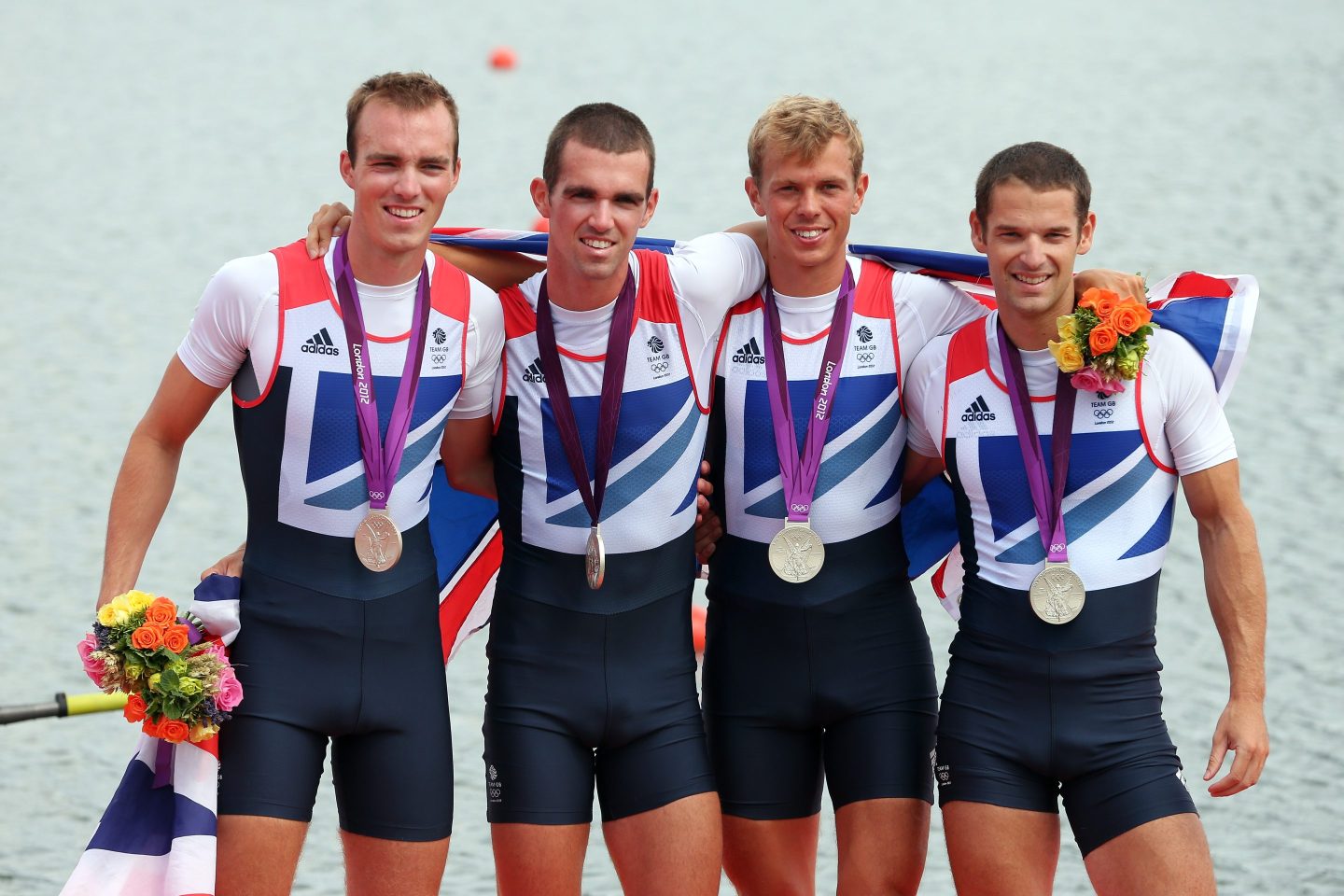
Ezra Shaw / Staff / Getty Images
Just like Held, Williams only had an academic background in the sciences at the time of his Olympic retirement—but that didn’t stop him from joining Goldman Sachs as an associate in foreign exchange forward trading in 2012. The then-27-year-old forged a new path in finance, drawn to the bank’s work environment that energizes him like rowing had for years.
“I wanted to do a role where I could have defined parameter success,” Williams continues. “When you’re racing, you’ll have days when you go out and you’re so nervous before your race, and then you finish, and you’re so happy. You have this range of emotions going through…I need that level of stimulation.”
What skills former Olympians bring to the table—and why the bank is the perfect place for athletes
Standing out in today’s cutthroat job market is no easy feat, and it’s even harder when vying for a gig at the financial services giant. In 2025, more than 1 million experienced candidates applied to Goldman Sachs’ open roles, and over 360,000 applicants battled for roughly 2,600 summer internship spots: less than 1% making the cut. It’s crucial that candidates make an impression to stand out from the pack.
Dominating in sports is just one way to catch the attention of a hiring manager, beyond flexing a string of Wall Street stints or Ivy League degrees. Athletes may not always have an MBA, but through Olympic games and Super Bowl championships, they’re trained to work at an “elite level in the highest pressure environment.”
“It’s exciting to see these Olympians who may not have been trained necessarily in financial services,” Arthur says, adding that it doesn’t take long to get them up to speed. What Goldman is really looking for isn’t their business savvy, but rather their “innate traits, like discipline, commitment to excellence, meticulous preparation, strategic thinking, focusing on continuous improvement, and being open to coaching.”
Held says he brought three key skills to the bank that he learned from years of swimming at the international level: camaraderie, cultural connectedness, and time management. Meanwhile, Williams recognized that Goldman Sachs “likes to hire skill sets,” and he was the perfect candidate, having cultivated intense work stamina from completing his PhD and rowing at the top level. The retired athlete also brings the Olympic “every inch matters” mindset to his current role, striving to get better each day. Athletes seeking their new professional passion upon retirement should be looking out for a good energy match, the champion rower advises.
“Find something that lives at the pace that you were used to with your sport,” Williams says. “There’s lots of different types of corporate jobs, and if you finish doing sport at a high level, you’re probably used to that emotional volatility.”
Disclaimer : This story is auto aggregated by a computer programme and has not been created or edited by DOWNTHENEWS. Publisher: fortune.com