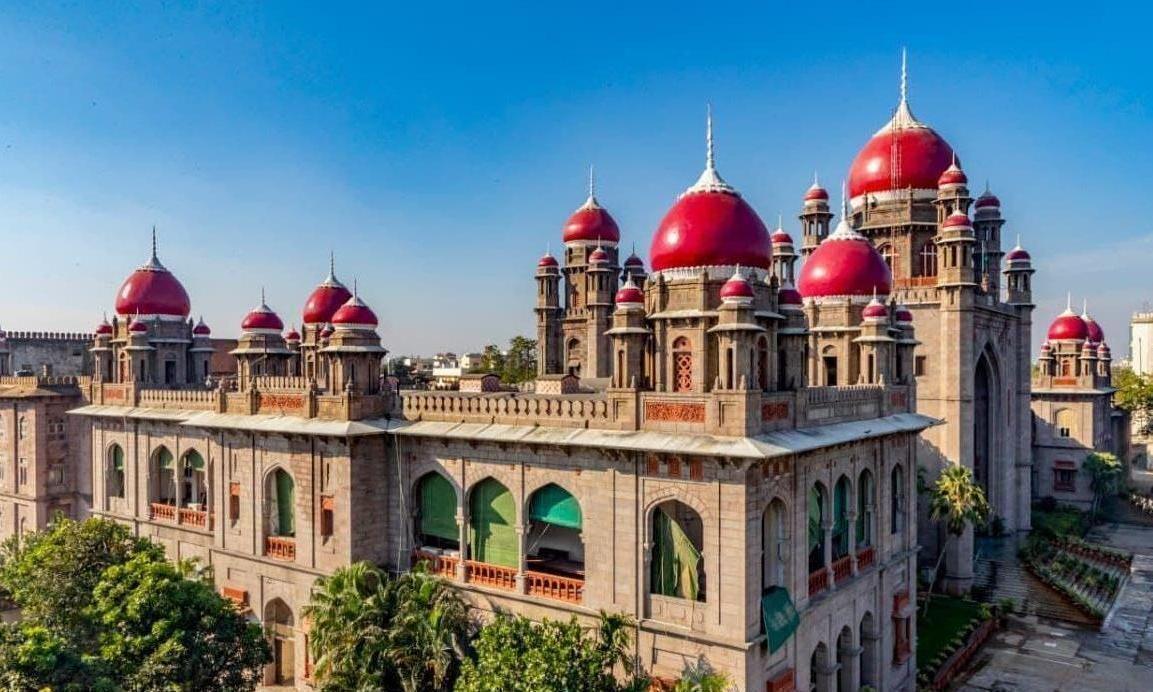
Hyderabad: A two-judge panel of the Telangana High Court permitted the endowments department to recover land acquisition compensation in a temple land dispute. The panel comprising Chief Justice Aparesh Kumar Singh and Justice G.M. Mohiuddin was dealing with a writ appeal filed by the assistant commissioner, endowments department. Earlier a writ petition was filed by Sama Suresh and others, questioning the notice dated March 18, 2023, issued by the special collector, land acquisition, in relation to recovery of compensation paid in respect of land in Survey No. 105/2 of Upperpally, which was acquired by the GHMC for public purposes. An amount of over ₹4.96 crore had been awarded and disbursed to the writ petitioners. Subsequently, the trustee of Sri Murali Manohar Swamy Temple at Kishanbagh, Bahadurpura, Hyderabad, claimed title over the land and sought release of the compensation in favour of the temple. A single judge recorded that serious disputes existed regarding the title and classification of the land and observed that the writ petitioners had failed to establish clear ownership over the land for which compensation was awarded. The judge permitted the temple authorities to approach the Endowments Tribunal within six months for adjudication of rights and during the interregnum restrained it from taking steps from recovering the amounts from the private parties, the writ petitioners.
Assailing this, the endowments department argued that once the writ court held that the petitioners had failed to establish title and were not entitled to retain the compensation, there was no legal basis to continue protection against recovery. It was argued that the compensation amount ought to have been directed to be restored to the temple. Counsel for the writ petitioners submitted that the dispute involved complex questions of title requiring adjudication before the competent tribunal and that interim protection was justified pending such determination. The panel granted interim suspension of the operation of the single-judge order and posted the matter for further consideration.
Child rape convict appeals sentence
A two-judge panel of the Telangana High Court admitted a criminal appeal challenging conviction in an alleged aggravated sexual assault of a five-year-old girl from the Scheduled Tribe community in Bhadradri Kothagudem district. The panel comprising Justice K. Lakshman and Justice B.R. Madhusudhan Rao was dealing with a criminal appeal filed by Sayyad Lalu Lalmiya, convicted by the Special Sessions Judge, Bhadradri Kothagudem, in connection with a crime registered at the Chandrugonda police station. The prosecution alleged that on August 6, 2023, at Thippanapalli, the accused, a lorry cleaner known to the family of the victim, allegedly lured the child with biscuits to a nearby vacant house and committed the offence.
The mother of the victim reportedly discovered the incident after hearing the child cry and lodged a complaint later the same night. During the trial, the prosecution relied on the statement of victim recorded under Section 164 of the Code of Criminal Procedure, the testimony of her mother, corroboration from neighbours, forensic reports detecting semen and spermatozoa on the victim’s clothing and swabs, DNA analysis linking the biological material to the accused, medical evidence, and caste certificates establishing the victim’s Scheduled Tribe status. The trial court convicted the accused under the Protection of Children from Sexual Offences (Pocso) Act and the Scheduled Castes and Scheduled Tribes (Prevention of Atrocities) Act. He was sentenced to life imprisonment for the remainder of his natural life, with a default sentence of one year’s simple imprisonment, and directed to pay `5 lakh as compensation to the victim through the District Legal Services Authority. The panel while admitting the appeal posted the matter for further adjudication.
Advocate seeks loan to fight litigation
Justice N. Tukaramji of the Telangana High Court took on file a writ plea seeking financial and legal assistance to a practising advocate, Balamukund Rao, to enable him to pursue litigation pending before the High Court. The judge was dealing with two connected writ petitions filed by Balamukund Rao and another. He contended that despite a proposal allegedly forwarded by the office of the Advocate General, no orders were passed. He pleaded that financial aid was necessary to meet his monthly medical expenses and sustain himself. During the hearing, Justice Tukaramji specifically queried as to how a writ of mandamus would be maintainable in the absence of any statutory obligation cast upon the respondents. The court observed that the petitioner must demonstrate an enforceable legal right and a corresponding public duty on the authority concerned. The petitioner pointed out that Article 226 confers wide discretionary powers on the High Court. The state contended that no formal application had been processed by the law department. It was pointed out that financial assistance to advocates did not fall within the direct administrative control of the department and that the welfare trust was an independent body governed by its own statutory framework.
Disclaimer : This story is auto aggregated by a computer programme and has not been created or edited by DOWNTHENEWS. Publisher: deccanchronicle.com