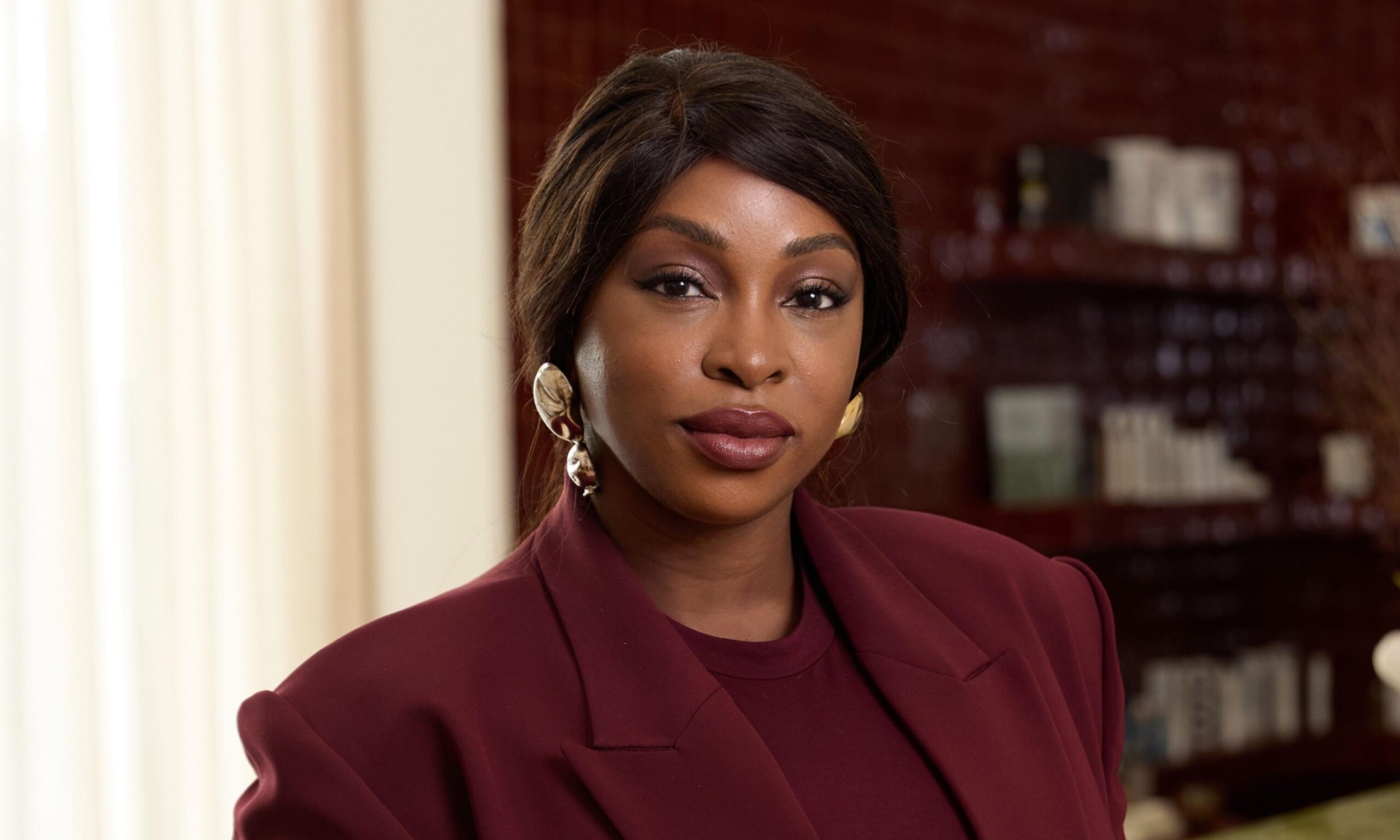
Morin Oluwole, an International Luxury Business Leader who serves on the boards of Breitling, Rituals, and Biologique Recherche and the former Global Luxury Director at Meta, explores how important it is to craft a sense of belonging in the workplace.
Belonging is often misunderstood. We speak about it as something external – a group, a title, a seat at the table. As something to be granted or earned. But for women who lead, belonging is rarely given. It’s built. And more often than not, it begins in-ward, long before it’s visible to the world.
Over the years, I’ve observed something consistent across women navigating leadership – whether in boardrooms, creative industries, en-trepreneurship, or global organisations. The most impactful leaders are not those constantly trying to prove they belong. They are the ones who have already decided that they do.
It’s a mindset that changes everything.
Leading From a Place of Belonging
Leadership conversations often focus on visibility, power, scale. But beneath every enduring form of leadership sits something quieter, more structural: belonging. The sense that you can occupy space without negotiation. That you don’t have to translate yourself to be understood. That your ambition doesn’t come at the cost of who you are.
When belonging comes from within, leadership becomes quieter and stronger at the same time. There’s less performance and more presence. Less permission-seeking and more clarity. The energy shifts from “Do I fit in?” to “What am I here to build?”
For many women, belonging is not a given. It’s something built over time, sometimes deliberately, sometimes after years of adaptation. And it is from this place that the most grounded, impactful leadership emerges.
Beyond Proximity
You can be surrounded by people and still feel peripheral. You can hold a title and still question your place. Many women reach senior roles only to discover that physical or titles presence does not automatically equal belonging. Because belonging is not about proximity to power. When women feel they belong, they lead differently. They ask sharper questions. They make clearer decisions. They stop over-explaining. They take responsibility not to prove, but to build.
It’s the moment when a woman no longer separates who she is from how she leads. When her values, intuition, ambition and discipline align. This is where authority becomes natural. It’s a subtle shift, but a transformational one.
The Private Shapes the Public
Leadership is often discussed as if it exists in isolation from life. As if what happens beyond the office door is irrelevant to how one leads. But in reality, the opposite is true. The way women manage responsibility, care, continuity and boundaries in their personal lives deeply informs how they show up professionally.
For many women, the journey to leadership is also a journey through fragmentation. We learn to adapt early by creating different versions of ourselves for different rooms. Professional here. Caregiver there. Strategic in one space, emotional in another. While this adaptability is often praised, it can slowly distance us from a deeper sense of coherence.
When women stop compartmentalising their identities, we gain coherence. And coherence is one of the most underestimated leadership strengths. In this way that fundamental sense of belonging only truly begins where fragmentation ends.
Belonging Is Not Consensus
A tough lesson that I’ve learned in my career is that belonging does not mean being liked. It does not require agreement. Some of the most respected women leaders I know are not the loudest in the room, but they are unmistakably anchored. They don’t bend to belong. They set the tone. When you feel internally rooted, power is no longer something to fear or apologise for.
Belonging, in this sense, is not something you request. It is something you embody. It becomes a tool to create clarity, to protect what matters, to open doors for others without losing yourself in the process. You can say no without guilt. You can set boundaries without aggression. And when you do, others adjust.
Leading From Self, Creating Space for Others
In today’s leadership conversations, we speak a lot about resilience, agility, and transformation. But beneath all of these sits a quieter foundation: identity. Knowing who you are. Knowing where you stand. Knowing what you will not compromise. Belonging, therefore, is the infrastructure of that knowing.
It is what allows women to move through change with grace rather than fear. To evolve without losing coherence. To lead through uncertainty while remaining deeply anchored. Because leadership is not only about claiming your own place – it is about shaping spaces where others can stand firmly too. Women who lead with depth are acutely aware of who feels marginalised, unheard or invisible. Not out of ideology, but because they remember what it costs to lead without belonging.
From Where We Lead
The future of leadership will not be defined by speed alone, or scale alone, or authority alone. It will be defined by depth. By leaders who know where they belong, and therefore know what they stand for. And especially for women, belonging is not a luxury. It is the ground from which everything else rises. And when leadership is rooted there, it doesn’t just perform – it lasts.
– For more on luxury lifestyle, news, fashion and beauty follow Emirates Woman on Facebook and Instagram
Images: Supplied
Disclaimer : This story is auto aggregated by a computer programme and has not been created or edited by DOWNTHENEWS. Publisher: emirateswoman.com