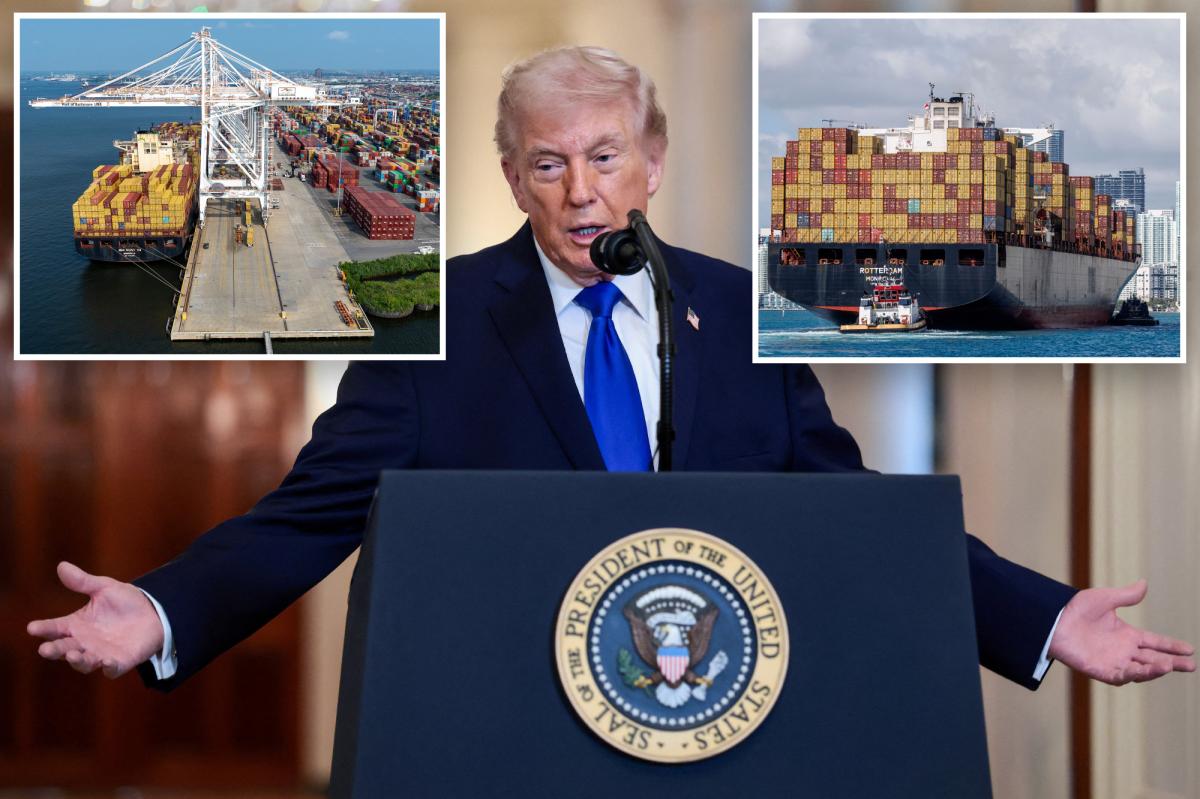
President Trump is reportedly weighing a new batch of levies on six industries after the Supreme Court last week overturned his main tariffs.
The new tariffs could affect large-scale batteries, cast iron and iron fittings, plastic piping, industrial chemicals, power grid supplies and telecom equipment, the Wall Street Journal reported, citing people familiar with the plans.
New tariffs would be applied in addition to a broad tariff that Trump announced soon after the Supreme Court on Friday overturned his levies imposed under the International Emergency Economic Powers Act, or IEEPA – ruling that the move surpassed his presidential authority.
The Trump administration imposed a new global tariff of 10% on Tuesday, after the president suggested Saturday the rate would be 15%. The White House is working on an order to up the rate 5%, according to Bloomberg.
Trump said over the weekend he has several other duties lined up for when the 10-15% rate expires in five months.
His tariffs targeting the six specific industries would be imposed under Section 232 of the Trade Expansion Act of 1962, which gives the Oval Office sweeping powers to impose levies based on national security risks, according to the Journal.
While the Supreme Court’s ruling tossed out the steep tariffs placed on most US trading partners, it did not touch Trump’s Section 232 tariffs on foreign vehicles, auto parts, steel, aluminum, copper, furniture and semiconductors.
Those tariffs have not faced serious legal challenges, and the Trump administration has largely refused to hand out exemptions to them – except for a small “destacking” rule on auto imports that limits how many tariffs can be combined.
Lengthy government investigations are required before Section 232 tariffs can be put in place.
It is unclear when the Commerce Department plans to impose the new tariffs, according to the Journal.
“Safeguarding America’s national and economic security remains a top priority for President Trump, and the administration remains committed to using every lawful authority to deliver,” White House spokesman Kush Desai told the Journal in a statement.
The White House did not immediately respond to The Post’s request for comment.
In its 6-3 ruling last week, the Supreme Court threw a major wrench in Trump’s trade agenda when it ended his IEEPA tariffs, which hit virtually every major US trading partner when they were unveiled on “Liberation Day” last April.
The IEEPA taxes accounted for more than half of the total tariff revenue in Trump’s second term – prompting major questions about potential refunds and whether Americans will still see the $2,000 tariff “dividend checks” that the president promised to send out by the 2026 midterms.
Meanwhile, experts have voiced skepticism around whether businesses will actually start lowering their prices now that the main tariffs have been deemed illegal.
Along with the newly-planned Section 232 tariffs, Trump’s team is considering fresh tariffs on nine industries including semiconductors, pharmaceuticals, drones, industrial robots and polysilicon used in solar panels, according to the Journal.
Many of the Section 232 investigations on those industries reportedly began about a year ago, which could help the Trump administration speed along the process, the report said.
The Trump administration is also eyeing changes to its steel and aluminum tariffs that would lower the nominal tariff rate, but apply the tax to the product’s full value – likely resulting in overall higher charges, according to the Journal.
Members of the Trump administration have repeatedly said there are many other ways to impose tariffs even if the Supreme Court ruled against them.
US Trade Representative Jamieson Greer told CNBC last week that the White House might “adjust the way some of the tariffs are applied for compliance purposes.”
Disclaimer : This story is auto aggregated by a computer programme and has not been created or edited by DOWNTHENEWS. Publisher: nypost.com