
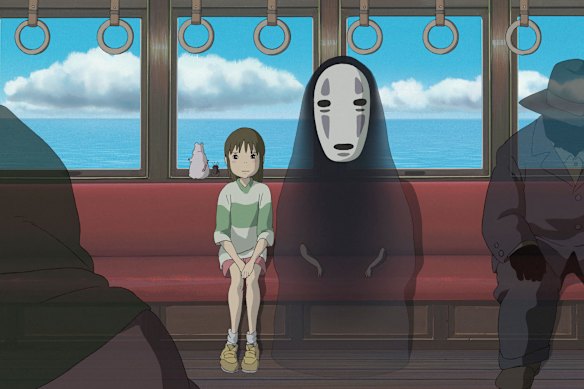

Each Studio Ghibli film has a distinct sound. From the whimsical charm of My Neighbour Totoro to the soaring grandeur of Howl’s Moving Castle, the scores are so memorable fans can name the film before even seeing it on-screen.
Music has played such a pivotal role in Studio Ghibli’s films that veteran composer Joe Hisaishi – often called the “John Williams of anime” – has won both an Annie Award and Japan Academy Film Prize for his work on Spirited Away and Ponyo, respectively. He even received a Golden Globe nomination in 2024 for best original score with The Boy and the Heron.
Now, for the first time, Australian audiences can hear this music brought to life. Taking place in Sydney and Melbourne, The Music of Studio Ghibli – Original Singers Symphony features original cast members Yoshikazu Mera, Sumi Shimamoto, Azumi Inoue and Yuyu performing songs from films such as Spirited Away and Princess Mononoke, accompanied by the Tokyo Asia Orchestra.
Though the films will not be played during the live show, concertmaster Takeshi Hashima says audiences will nevertheless be immediately drawn into each cinematic world.
“Hisaishi’s music becomes one with the visuals,” he says. “It’s so closely tied to the themes of the works. Each time you watch the films and hear the music the emotions come flooding back.”
Despite Japanese culture imbuing many Ghibli films (be that through food, landscapes, clothing or customs), Hashima says the animations cross borders. In Australia, several festivals have been held to celebrate the legacy of Ghibli films, and decades-old movies like Princess Mononoke (1997) remain some of the most-liked titles on Netflix.
Hashima attributes the films’ global appeal to their universal themes: “Love, nature and growth are things that anyone can relate to, regardless of culture or borders.”
Ghibli films are also proving popular with Gen Z, who weren’t even born when the likes of Castle in the Sky (1986) and Kiki’s Delivery Service (1989) were released. According to a study in the Journal of Medical Internet Research, some younger viewers find an improved sense of calm and purpose after watching a Ghibli film.
Much of this likely comes down to the scores. Hisaishi often uses pentatonic scales, which are common in children’s folk songs, creating repetitive melodies that feel instantly familiar and safe – almost like a heartbeat.
So intrinsic is music that it even helps build worlds and direct storylines, Hashima adds. During the early stages of Ponyo – a 2008 film about a goldfish who wants to become human – Hisaishi’s initial piano numbers reportedly captured the energy of the character so well they inspired Ponyo’s animated movements.
“Hisaishi’s music expresses the subtle emotions of the characters and draws the audience into the narrative. The theme songs and background music of each work shape the world of the film in a more memorable way,” Hashima says.
In fact, you often hear a character before you see them. In Spirited Away, for example, the repetitive piano notes of One Summer’s Day signals the main character’s displacement and anxiety before we’re even aware of the supernatural plot. And the main theme in Howl’s Moving Castle is a waltz that evolves to reflect the developing storyline, including the main character’s ageing (and then anti-ageing).
Azumi Inoue, who began singing for Studio Ghibli in 1986 with Castle in the Sky, says music is an “indispensable presence”.
“There are many scenes in the films without dialogue, and I feel that Hisaishi’s music sometimes speaks more eloquently than words in those moments,” she says. “Director Hayao Miyazaki and Hisaishi never compromised or held back. They truly collaborated as creators and built these worlds with complete sincerity.”
Inoue hopes Ghibli music continues to reach new generations, just as it did with her daughter Yuyu, who now performs alongside her mother. During smaller concerts in Japan, Inoue invites children to join her during her closing number, which is always from My Neighbour Totoro.
“I truly value singing together,” she says. But above all, it’s seeing her daughter pick up the baton that fills Inoue with most pride. After all, Ghibli films and their scores are often grounded in the comfort and familiarity of familial love.
“It’s wonderful to sing with my mother,” Yuyu says. “And being able to perform with Yoshikazu Mera and Sumi Shimamoto – both indispensable to Ghibli – and with the orchestra as well, it feels like a dream come true.”
The Music of Studio Ghibli – Original Singers Symphony will take place at Sydney’s Darling Harbour Theatre on February 27 and at Melbourne’s Palais Theatre on March 1.
Must-see movies, interviews and all the latest from the world of film delivered to your inbox. Sign up for our Screening Room newsletter.
 Nell Geraets is a Culture and Lifestyle reporter at The Age and The Sydney Morning Herald.Connect via X or email.
From our partners
Disclaimer : This story is auto aggregated by a computer programme and has not been created or edited by DOWNTHENEWS. Publisher: www.smh.com.au


