
Table of Contents
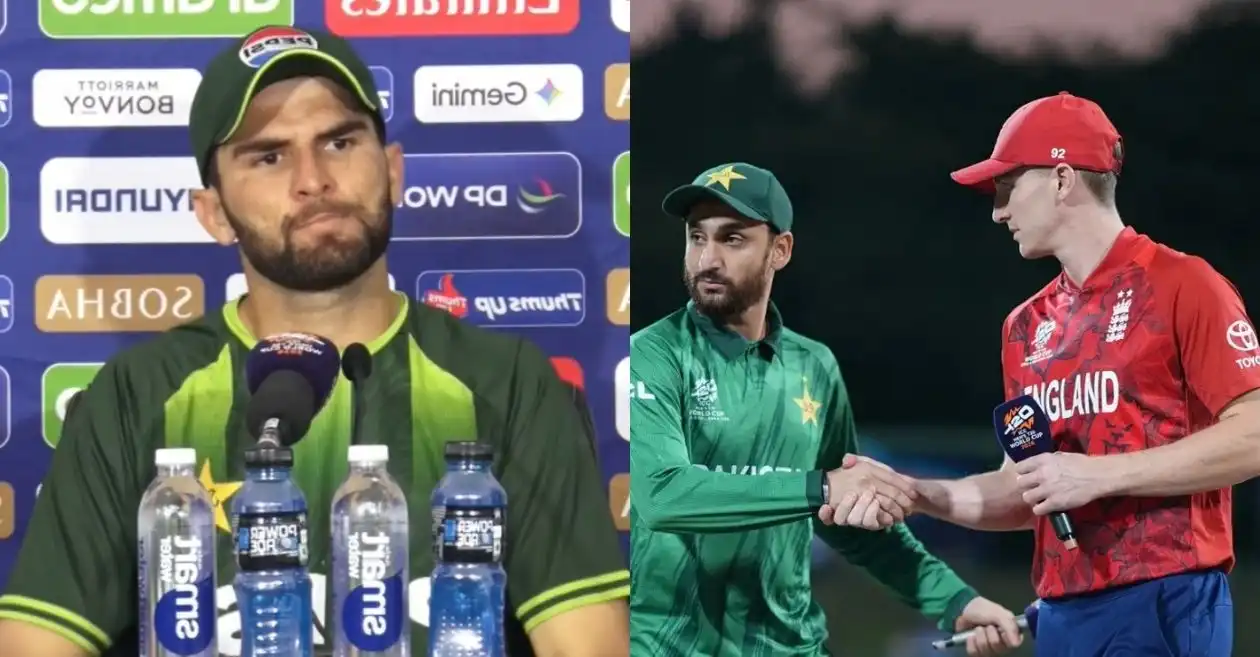
Pakistan‘s campaign in the T20 World Cup 2026 suffered a major setback after a heart-stopping defeat to England in their Super 8 clash at the Pallekele International Cricket Stadium. While the margin of defeat was slim, the underlying reasons, according to Pakistan spearhead Shaheen Afridi, were rooted in the middle overs where his side failed to stitch together a meaningful partnership.
In a game that ebbed and flowed until the final over, Pakistan posted 164/9 after being sent in to bat first. England eventually chased it down with two wickets in hand and five balls remaining, but the modest total always left Pakistan’s bowlers with very little cushion on a surface that was fresh and true.
Shaheen Afridi opens up on where Pakistan went wrong in the match
Afridi did not shy away from identifying the turning point. The left-arm quick, who returned impressive figures of 4/30, admitted that Pakistan’s inability to build a steady partnership during the middle phase of the innings cost them a potentially defendable total.
He emphasized the importance of having a batter set at the crease through the middle overs — someone capable of rotating strike and maintaining momentum. Instead, Pakistan lost wickets in clusters, halting any rhythm they attempted to build.
On a pitch that did not offer early assistance to bowlers, Afridi felt a target in the range of 180–190 would have been competitive. However, frequent dismissals prevented the side from accelerating at the right moments. The absence of stability meant the team struggled to consistently score the eight to nine runs per over that often form the backbone of a successful T20 innings.
“I feel in a wicket like this you need a partnership and you need a set batsman in that position who can bat throughout the middle overs. But unfortunately we lost wickets back to back, which is why we did not go for that 180-190 score,” said Afridi as quoted by GeoSuper.
Afridi hails Harry Brook’s sizzling knock
While Afridi’s fiery spell brought Pakistan back into the contest, England’s composure with the bat made the difference. Harry Brook anchored the chase with a brilliant century, demonstrating exactly the kind of approach Afridi believed Pakistan lacked.
Brook rotated the strike efficiently, built partnerships, and absorbed pressure even as wickets fell at the other end. His calm presence ensured England never drifted too far from the required rate. Afridi pointed out how England’s ability to keep a set batter at the crease throughout the middle overs tilted the balance. The contrast between the two batting approaches was evident — where Pakistan faltered, England consolidated.
“If you see, when England batted, Harry Brook stayed at the crease and he was rotating the strike and he was just building partnerships. I think we missed this opportunity to build partnerships. A partnership means you have to have somebody in the crease who can go for single and twos. Throughout a T20 innings you need those eight or nine runs an over, if you want to build a partnership as well,” added Afridi.
The Pakistani pacer also acknowledged England’s bowling effort, singling out leg-spinner Adil Rashid for his decisive spell. Rashid’s control and variations during the middle overs tightened the screws and prevented Pakistan from launching a late surge.
“I think that middle phase Adil Rashid bowled really well, so I think the credit goes to him as well,” Afridi explained.
Despite the defeat, Afridi’s performance with the ball was a silver lining. His four-wicket haul, including the prized scalp of Brook, showcased his return to rhythm at a crucial stage of the tournament. Yet, even that individual brilliance could not compensate for the team’s collective shortcomings with the bat.
Disclaimer : This story is auto aggregated by a computer programme and has not been created or edited by DOWNTHENEWS. Publisher: crickettimes.com



