Almost three years after five horses from five different stables tested positive to a mysterious breast cancer drug, their trainers are just days away from learning their fate.
The Victorian Racing Tribunal retired to consider penalties after hearing submissions on Wednesday.
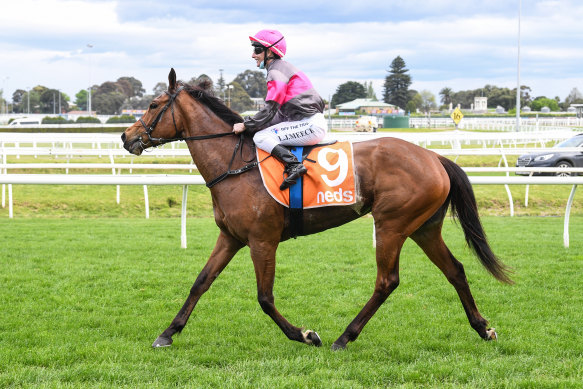
Sirileo Miss has returned to racing after testing positive to formestane, a product used to treat breast cancer.Credit: Getty Images
They will make a finding despite no one being able to prove how, or why, these horses tested positive to formestane and its metabolite, 4-hydroxytestosterone.
The trainers – Smiley Chan, Julius Sandhu, Symon Wilde, Mark and Levi Kavanagh, and Ash and Amy Yargi – have all pleaded guilty to presentation (a horse testing positive on race day).
But they have continually denied any knowledge of where the substances came from, or how they came to be in their horses.
Racing Victoria stewards also admit they don’t know the source of the mysterious positives.
Formestane, which is on the WADA banned list, is used to treat breast cancer overseas, mainly in postmenopausal women. It is not imported for human or animal use in Australia.
It is designed to inhibit the production of estrogen, as some breast cancer cells depend on estrogen for viability. But it also leads to an increase in the body’s production of hormones and testosterone (4-hydroxytestosterone).
The trainers initially pleaded not guilty to the charges, but after a contested hearing lasting five days in December last year agreed to change their pleas to guilty after reaching an agreement with Racing Victoria.
The tribunal now has to make a judgment on agreed facts.
The trainers have also agreed they would not seek to establish that the substances – formestane and 4-hydroxytestosterone – are produced naturally in horses (endogenous origin).
As part of the plea deal, Racing Victoria agreed it would not seek to establish the substances were given to the horses (exogenous origin).
Essentially, there is no evidence to suggest the substances were administered to the horses, or that the substances occurred naturally.
Racing Victoria also agreed it did not have evidence to contradict what the trainers told stewards.
The sudden cluster
The formestane positives appeared out of nowhere. It had never been detected in Australian racing circles before February 2023.
There was no common link. Five horses, trained by five different stables and racing at five different tracks returned positive urine samples.
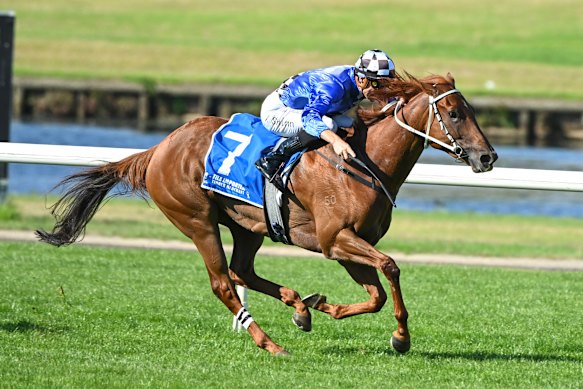
Circle Of Magic tested positive to a banned substance in 2023.Credit: Getty Images
Stewards were unable to gather any supporting evidence. They searched stables, but could not find materials or drugs linked to the formestane cluster.
Testing had been going on in Victoria since 2017. Racing Analytical Services Limited processed 45,000 urine samples across seven years and none of them showed traces of either formestane or 4-hydroxytestosterone.
Then it came in a wave – five horses between February 22, 2023 and April 13, 2023.
Since then, about 20 stables across thoroughbred and harness racing have returned positive swabs.
The case for the trainers
The five horses at the centre of the case were stripped of their winning prizemoney and banned from the sport for 12 months.
In Wilde’s case, his stable lost $150,000 in Sirileo Miss’s group-3 winnings and her sale value as a brood mare was said to have dropped from $800,000 to $400,000.
But their legal counsel, Damian Sheales, has continually argued that formestane and 4-hydroxytestosterone could occur naturally in horses, as it does in humans. He said it was “reasonably possible”.
He said for that reason the matters before the tribunal were unique.
He said, unlike in presentation cases in the past involving cobalt or elevated TCO2 (bicarb) levels, there was no evidence of a substance being administered to a horse.
“It’s difficult to discern objectively why these people should be punished on the agreed facts,” Sheales said.
“Where’s the justice in that?
“What have they done? What are the circumstances? What have they not done? What are the circumstances which attract some form of penalty?”
He said in the past two years Racing Victoria had not released any advice to trainers on how to avoid positive tests to formestane and 4-hydroxytestosterone.
Sheales said Racing Victoria should have introduced a threshold.
“They now test down to one quadrillionth,” he said of the sensitive testing measures.
“We’ve got 1980s rules for 1980s machines in 2026. Every substance should have a threshold. WADA has it. But they [RV] choose not to, and, of course, by choosing not to, they create these circuses.”
The case for the stewards
Legal counsel for the stewards, Adrian Anderson, said the trainers were being prosecuted under presentation charge AR 240(2). He said they had not been charged with the more serious administration charge.
But Anderson urged the tribunal to send a message to the industry by imposing heavy fines.
He recommended $10,000 fines for Chan, Sandhu and the Yargis, while saying Wilde and the Kavanaghs should be hit with $15,000 fines because they had prior offences.
He told the tribunal the onus was on the trainers to establish “reduced or absent culpability” in a presentation case.
“There can be substantial penalties even though no knowledge or willful intent is required,” Anderson said.
“It’s the common scenario in the context of racing that the stewards need to have this rule that you do not turn up to a racecourse with a horse with a prohibited substance in it.
“The onus is on you if you want to show some innocent explanation or some reduced culpability. And that hasn’t happened here.”
News, results and expert analysis from the weekend of sport are sent every Monday. Sign up for our Sport newsletter.
Most Viewed in Sport
Disclaimer : This story is auto aggregated by a computer programme and has not been created or edited by DOWNTHENEWS. Publisher: www.smh.com.au