
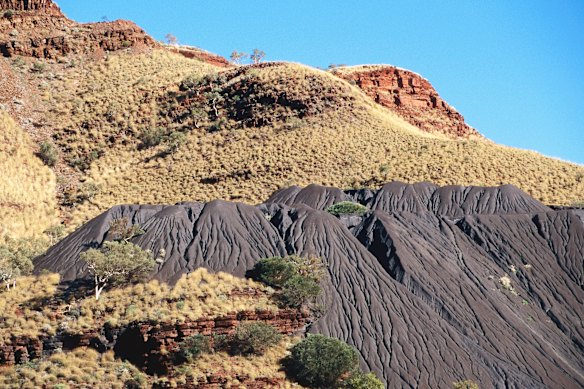

Western Australia’s government is facing legal action from an Aboriginal corporation which wants the Federal Court to force it to clean up asbestos contamination from the Wittenoom mine.
Gordon Legal commenced legal proceedings against the WA government on behalf of the Banjima Native Title Aboriginal Corporation in the Victorian Federal Court on Wednesday morning.
Deputy chair and Banjima traditional owner Johnnell Parker said: “We Banjima people belong to one of the most beautiful parts of the world, and our connection to Banjima country runs deep.”
“As Uncle Maitland Parker said: ‘I still cry for country, but that’s imbedded in me, I just can’t walk away from it’,” he said.
“Despite the damage, our elders have raised us to be strong and resilient. We carry in our hearts their strength as we continue the fight, to heal our country, to protect it, and to ensure future generations can stand on healthy land and remain connected to who they are.”
The Wittenoom asbestos mine closed 60 years ago, but the leftover tailings made the surrounding area extremely hazardous, and eventually forced the closure of the Wittenoom townsite.
The group says Banjima people have the highest rates of asbestos cancer in the world and want the government to remediate contaminated areas.
The Banjima people are also seeking redress for the devastation the mine wrought over the past 80 years.
Gordon legal senior partner Peter Gordon said the relocation, dispossession, exploitation, and erosion of the cultural integrity of the Banjima nation would take generations to repair.
“But the longest journey to clean up the largest contaminated site in the Southern Hemisphere begins with a single step,” he said.
WA Premier Roger Cook said he was sympathetic to the Banjima people, and respected their decision to sue over the asbestos contamination, but said the government would defend its position regardless.
Cook revealed he was not surprised about the Federal Court legal action, but said he would have preferred a “negotiated” outcome.
“I wasn’t surprised, and it’s because I’ve been speaking with the Banjima and their legal representatives about what they want to see, which is justice that they regard in relation to the impact of the asbestos mine at Wittenoom,” he said.
“I would prefer a negotiated outcome, but I respect absolutely and fundamentally respect their right to get to seek justice for what they believe are health impacts in relation to their population, but also the damage that’s been done to their country.”
Start the day with a summary of the day’s most important and interesting stories, analysis and insights. Sign up for our Morning Edition newsletter.
 Hamish Hastie is WAtoday’s state political reporter and the winner of five WA Media Awards, including the 2023 Beck Prize for best political journalism.Connect via X or email.
From our partners
Disclaimer : This story is auto aggregated by a computer programme and has not been created or edited by DOWNTHENEWS. Publisher: www.smh.com.au


