An entry-level house in Sydney costs $1.15 million – up 64 per cent in five years, Domain’s latest First-Home Buyer Report released on Thursday shows.
At that price, an average working couple aged between 25 and 34 would need to save for more than 7.5 years to amass a 20 per cent deposit, Domain modelling shows.
The mortgage would then theoretically chew up 61.8 per cent of their income, but it is unlikely lenders would approve such a loan due to debt-to-income guidelines.
Domain derived the entry-level house price by disregarding the top three-quarters of sales in Greater Sydney in the three months to December, then selecting the top sale from the remaining 25 per cent.
By this methodology, the entry-level house price in some parts of Sydney is significantly more.
In the northern end of the eastern suburbs, an entry-level house costs $3.44 million, while in Canada Bay, the price is almost $2,303,000.
To amass a 20 per cent deposit, an average-earning couple would need to save for over 16 years for the eastern suburbs and almost 13 years for Canada Bay.
Sydney-wide, the entry-level house price rose 15 per cent in 2025.
By contrast, an entry-level unit in Sydney costs $645,000, up a comparatively modest 4 per cent in 2025 and 9.7 per cent over five years.
It would take an average-earning couple almost four and a half years to save the 20 per cent deposit, and loan repayments would account for 34.7 per cent of their income.
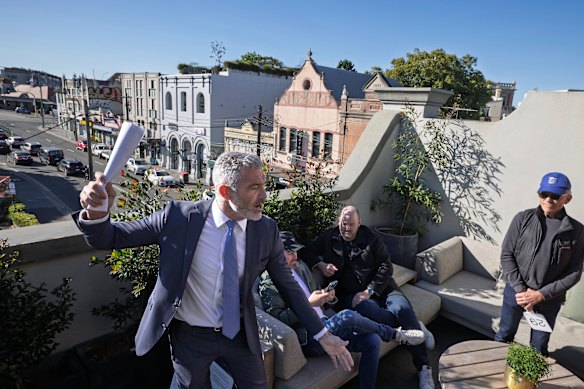
Sydney’s entry-level prices have risen.Credit: Sitthixay Ditthavong
The average post-tax income for an individual was $67,229 in Sydney in December, on ABS data.
Dr Nicola Powell, Domain’s chief of research and economics, labelled Sydney’s entry-level house price as “shocking”.
“Sydney is the only capital with an entry-level house price above one million,” she said.
“It means that purchasing an entry-level house as your first step on the property ladder is now pretty much unachievable for the vast majority of Sydneysiders.”
The Help to Buy scheme, through which the government contributes up to 30 per cent of the price of an existing home in exchange for an ownership stake, could reduce mortgage repayments slightly.
But the government’s 5 per cent deposit scheme wouldn’t help the average couple aiming for an entry-level house in that it would increase repayment amounts, making finance harder to obtain.
Powell said more young couples and families would be pushed into units this year. Meanwhile, single adults determined to buy face tough choices.
“This is when compromise really starts to play a poignant role in decision-making,” Powell said.
“It may mean that you opt to purchase in a different city that is more affordable, or you purchase in a regional market, or you go to the very outskirts of Sydney just to get your foot on the ladder in any way, shape or form you can.”
Anthony Landahl, managing director of mortgage brokerage Equilibria Finance, said a growing number of his Sydney-based clients were looking further afield.
“First-time buyers are saying ‘I just cannot afford to buy in the Sydney market’ and are looking at commutable areas like Wollongong, the Central Coast or the Blue Mountains.”
He said rising prices at the market’s low end were creating a sense of urgency.
“There is that emotive fear of missing out entirely. People want to get into the market any way they can.”
To achieve this, Landahl said more of his clients were asking for assistance from parents and grandparents.
“Sometimes, it’s help topping up their deposit, but we’re also seeing more parents paying for buyers’ agents to help their children secure property because it has become so competitive.”
Landahl said the relentless increase in prices was testing his young clients’ morale.
“It’s quite an emotional and distressing time for someone in their 20s or 30s trying to get into a house or a unit and continually seeing themselves priced out of markets or missing out at auction.”
AMP chief economist Dr Shane Oliver said price growth in the middle bands of Sydney’s house market was compounding the woes of would-be buyers at the entry level.
“Poor affordability has the effect of pushing everybody down to lower price points, where they drive up prices.”
He attributed the relatively modest growth of Sydney’s entry-level unit price to an apartment-construction boom in the second half of the 2010s.
“A lot of that supply came on stream in 2020 and 2021, and there was a comparatively low corresponding number of new houses.”
Oliver said he expected Sydney houses to keep rising faster than apartments for now.
“But I suspect what will happen as houses get less and less affordable is that people will be pushed into units, and so the strength we’ve seen in house prices over the past few years will start swinging into units as well.”
Most Viewed in Property
Disclaimer : This story is auto aggregated by a computer programme and has not been created or edited by DOWNTHENEWS. Publisher: www.smh.com.au