
Updated ,first published
A blaring siren will sound at the same time on all of the 25 million mobile phones within service range around the country when a test alert is sent by the Commonwealth’s AusAlert emergency warning system in July.
The federal government will test its new AusAlert national warning system on July 27 at 2pm AEST, blaring out a 10-second alarm that is expected to replace the current patchwork of state-based emergency alerts by October.
AusAlert can be triggered on virtually all devices with a sim card within a designated area, from nationwide to street-by-street messages, and will be used to issue a wide range of warnings including natural disasters, threats to public safety – such as shooting incidents – as well as biosecurity and health threats like a disease outbreak.
It is expected to be operational by October.
“AusAlert will be more reliable, more accurate, and efficient than the current systems in place,” Emergency Management Minister Kristy McBain said on Thursday.
“It means authorities can reach people quickly when it matters most, helping to save lives and property.”
There are two levels of alert. The “critical” warning for imminent threat to life, like when a cyclone is about to hit, sounds an alarm and triggers a message on a phone’s home screen. These warnings are compulsory and cannot be turned off.
“Priority” alerts are issued when there is not an immediate threat to life but when people are advised to follow instructions before an approaching emergency, like a bushfire designated at the “watch and act” level. Phones can be set to opt out of priority alerts.
AusAlert will be sent via cell-broadcast technology, which is a one-to-many communication service designed to deliver geographically targeted alerts. It functions regardless of the volume of traffic on any network and can reach any phone within range of a mobile tower.
Cell broadcast technology does not use general mobile networks, which are designed primarily for one-to-one communication.
AusAlert does not collect phone numbers or geographic locations. It will work across all phones in the country, including those owned by residents and tourists.
The government has not imposed restrictions on what matters can be subject to alerts, arguing it needs flexibility to respond to an unpredictable range of threats to the community.
However, McBain said the alerts would be reserved for “impending threats” that would be issued after consultation between local, state, and national emergency agencies, including law enforcement.
“We’re living in a world that is rapidly changing, and so we want to make sure that we’re working with state and territory emergency agencies on whether the police might be required to use a particular alert like this in an event that has the potential to impact multiple people.”
AusAlert costs the government $132 million to develop, rising from an initial estimate of $10 million and was pushed back from its initial release date of 2024. It was a key recommendation of the royal commission into the 2019-20 black summer fires.
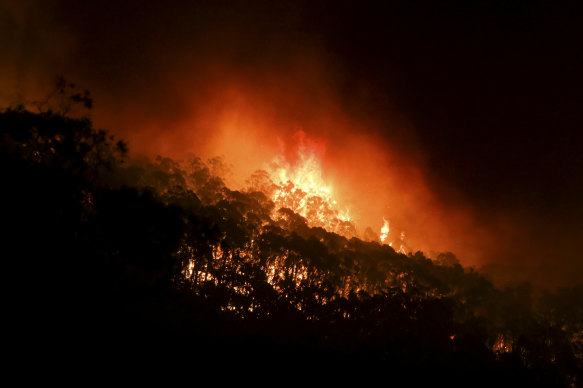
McBain said the new system was needed to overcome the limitations of state emergency warnings, which were exposed during the bushfires.
“A number of people did not receive their emergency text messages until days after the fire event when they were back in their hometown, where they had access to their own provider’s tower,” she said.
The cell-broadcast technology is used for emergency alerts in more than 35 countries, including the UK, USA, Canada, Germany and France.
A test alert by the UK government in September last year was largely successful, but there were multiple news reports from people whose phones were either not alerted, received garbled messages or failed to sound an alarm.
However, McBain said she was not worried about potentially embarrassing failures.
“I’m not nervous at all. I’m really excited that we’re actually moving to cell-based technology,” she said.
She will work with her state counterparts to finalise protocols for how the Commonwealth will work with local authorities on issuing alerts.
Prior to the national test on July 27, an alert will be sent to nine locations in June, including Majura in the ACT, Launceston in Tasmania, Port Douglas in Queensland, Liverpool in NSW, Tennant Creek in the Northern Territory, Geelong in Victoria, Goomalling in Western Australia, Port Lincoln in South Australia and Queanbeyan in NSW.
The test message will read: “This is a TEST alert of AusAlert, Australia’s new emergency warning system. NO ACTION IS REQUIRED. In an actual emergency, follow the instructions in the alert to keep yourself and others safe. Visit www.ausalert.gov.au for more information. This message is authorised by the Australian Government.”
Cut through the noise of federal politics with news, views and expert analysis. Subscribers can sign up to our weekly Inside Politics newsletter.
 Mike Foley is the climate and energy correspondent for The Age and The Sydney Morning Herald.Connect via email.
From our partners
Disclaimer : This story is auto aggregated by a computer programme and has not been created or edited by DOWNTHENEWS. Publisher: www.smh.com.au