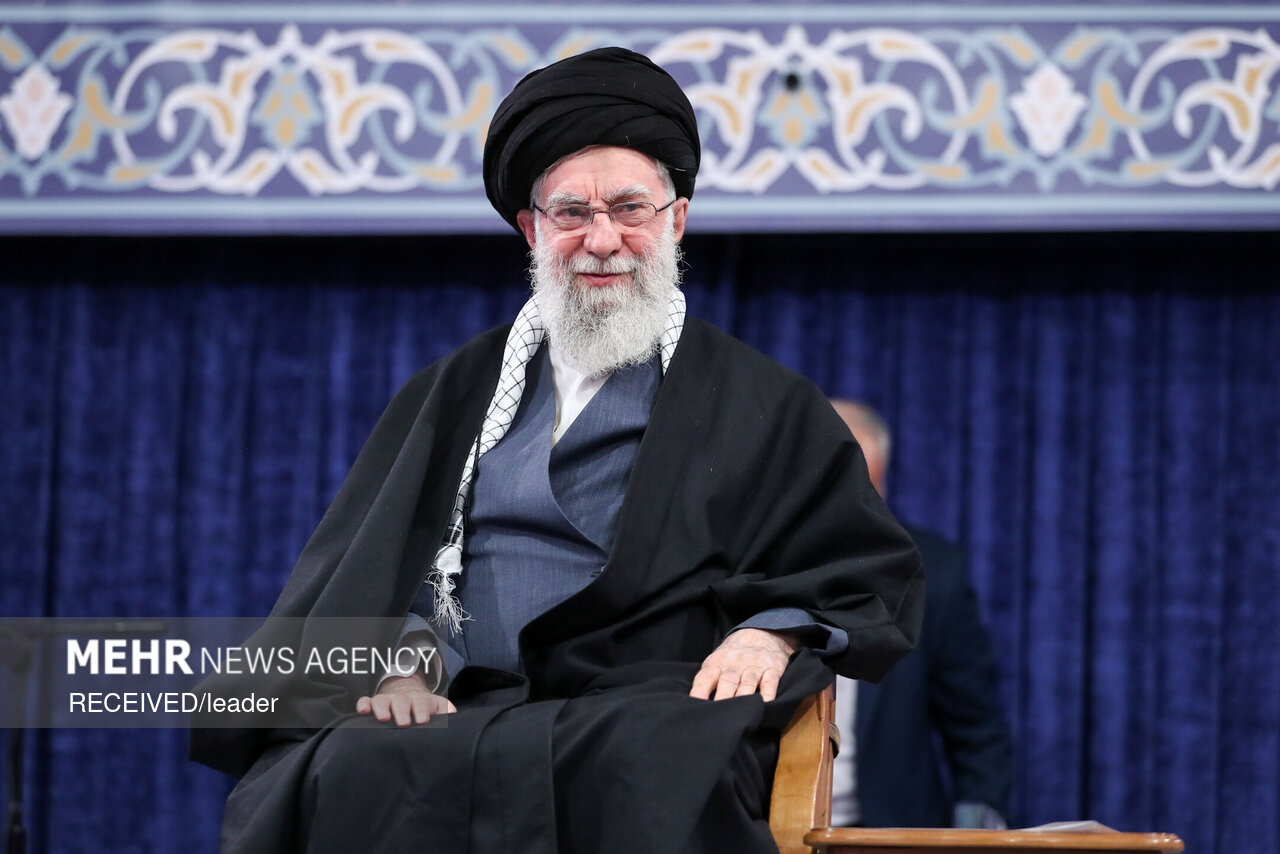
MADRID – At one of the most delicate moments for Iran since the Iran–Iraq War, Leader of the Islamic Revolution Ayatollah Seyyed Ali Khamenei once again stands at the center of political analysis.
For some observers, his conduct is reduced to the caricature of a rigid leader instinctively hostile to the West. Such interpretations obscure the strategic logic that guides his decisions and the institutional architecture he has helped consolidate. Understanding Ayatollah Khamenei requires situating him within Iran’s modern history, the structure of the Islamic Republic, and the evolution of his thinking in response to internal and external pressures.
Ayatollah Khamenei operates within a hybrid political system that combines Islamic principles, republican institutions, and a security apparatus shaped by revolution, war, and sanctions. His political trajectory can be divided into two broad phases: first, as a revolutionary actor and wartime president between 1981 and 1989; and second, from 1989 onward, as Iran’s Leader and ultimate politico-theological authority of the Islamic Republic, focused on consolidation and long-term preservation.
Before assuming high office, Ayatollah Khamenei was deeply embedded in the revolutionary movement against the Shah. He participated in clandestine networks, endured arrest during the 1960s and 1970s, and witnessed firsthand the coercive mechanisms of the pre-revolutionary state. These formative experiences shaped a lasting element of his worldview: the conviction that Iranian sovereignty has repeatedly been constrained by foreign intervention. Episodes such as the 1953 coup are not isolated incidents but structural patterns in Iran’s modern history. This historical memory remains central to his strategic outlook.
His presidency coincided with the Iran–Iraq War (1980–1988), a conflict that was not merely as a territorial dispute but as an existential struggle fought under diplomatic isolation and arms embargo. The war profoundly shaped Iran’s security doctrine. Three enduring lessons emerged: military self-reliance is indispensable; internal cohesion is integral to national security; and economic vulnerability can become an instrument of external coercion.
Institutional stewardship
The passing of Ayatollah Ruhollah Khomeini (known as Imam Khomeini inside Iran) in 1989 marked a decisive turning point for the Islamic Republic. The revolutionary founder had embodied both religious authority and political direction. His passing raised immediate questions about continuity and cohesion. In that moment of uncertainty, Ayatollah Khamenei assumed leadership as the country was emerging from a costly war, facing economic strain, and navigating diplomatic isolation.
Ayatollah Khamenei did not inherit a stable order; he inherited a state in transition. The revolutionary momentum of the 1980s had to be translated into durable institutions. Over the subsequent decades, his leadership has been defined less by dramatic gestures than by steady consolidation. Under his stewardship, the Islamic Republic evolved from a revolutionary polity into a structured political system with defined centers of authority, layered decision-making mechanisms, and increasing institutional depth.
A defining feature of his tenure has been his role as arbiter among competing political currents. The Islamic Republic contains diverse factions—pragmatists, reformists, principlists, technocrats—whose differences can be significant. Rather than eliminating these currents, Ayatollah Khamenei has managed them, permitting political contestation within established boundaries while preserving strategic coherence. This balancing function has reduced the risk of fragmentation at moments of internal strain.
His relationships with successive presidents illustrate this method. Reconstruction under Rafsanjani, reformist discourse under Khatami, assertive populism under Ahmadinejad, diplomatic engagement under Rouhani, administrative consolidation under Raisi, and subsequent recalibrations have all unfolded within a framework of overarching continuity. Tactical approaches have shifted; the core pillars—sovereignty, deterrence, and preservation—have remained constant. This capacity to allow variation without systemic rupture has been central to Iran’s durability.
It is also important to situate his tenure within the broader regional context. Over the past three decades, West Asia has experienced invasions, government collapses, and protracted civil wars. In contrast, Iran has maintained institutional continuity and relative calm. Its security doctrine has adapted to asymmetric realities, its deterrent capabilities have expanded, and its scientific and industrial sectors have developed despite sustained sanctions. While these outcomes are the product of multiple actors and institutions, they have unfolded under a consistent strategic orientation anchored in the office of the Leader.
Over time, Ayatollah Khamenei has transitioned from being perceived as a successor to a revolutionary founder to becoming the central institutional pillar of the Islamic Republic’s second generation. His authority rests not only on formal powers but also on accumulated experience in navigating sanctions, regional confrontation, and internal political contestation. The system’s endurance—despite sustained external pressure and repeated predictions of imminent collapse—reflects a leadership model that privileges continuity, strategic patience, and institutional resilience.
Strategic vision and the United States
Distrust of Washington is deep inside Iran. This distrust is not framed solely in ideological terms but as the product of accumulated historical experience. In Iran’s assessment, U.S. policy toward Iran combines containment, sanctions, and structural pressure aimed at weakening the state. Recent developments—including extensive U.S. military deployments and open discussions of “regime change”—are interpreted in Tehran as continuations of long-standing patterns rather than isolated episodes.
Within this framework, excessive concession under pressure would risk undermining both Iran’s strategic position and its survival as a sovereign nation. Tactical flexibility is possible; strategic capitulation is not. Negotiations may serve to reduce immediate pressure, but foundational pillars—missile capabilities, deterrence networks, and strategic autonomy—are treated as non-negotiable components of national security.
The memory of the Iran–Iraq War remains instructive. The painful experience of prolonged conflict underscored both the costs of war and the consequences of externally imposed compromise. While pragmatic flexibility is possible, surrender under visible pressure carries deep weight. In this sense, endurance is not merely a tactical choice but part of a broader political ethos.
This does not imply an eagerness for confrontation. Rather, it reflects a calculus in which deterrence and symbolic steadfastness reinforce one another. Survival is tied not only to material capability but also to the perception of resolve.
The endurance of Iran over the past three decades cannot be understood solely through ideology or coercion. It reflects a deliberate strategy of institutional consolidation, calibrated deterrence, and political management under sustained external pressure. Amid sanctions, regional upheavals, recurring predictions of collapse, and even military aggression, the state has maintained continuity and strategic coherence.
Disclaimer : This story is auto aggregated by a computer programme and has not been created or edited by DOWNTHENEWS. Publisher: tehrantimes.com