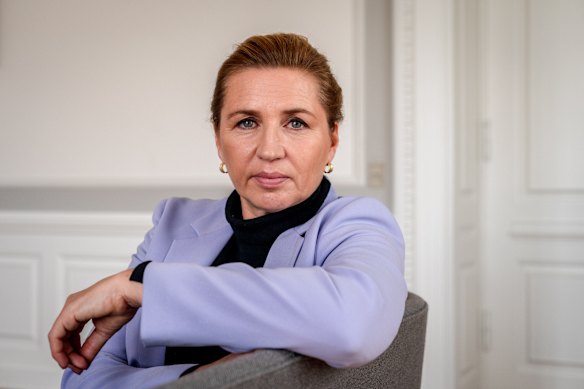

A snap election in Denmark is about to test popular support for a leader who has taken a hard line on European security and migration while staring down the United States in a dispute over Greenland.
Danish Prime Minister Mette Frederiksen will take the country to the polls on March 24 in an early election framed by her robust rejection of US President Donald Trump and his claim to the Arctic territory.
But the outcome depends on whether she can sustain a recent burst in support in the opinion polls after her party, the Social Democrats, suffered a backlash from voters in local government elections in December.
Frederiksen could have waited months to call the election, which must be held by October 31, but named Greenland as an issue that justified going to the polls early.
“This will be a decisive election because it will be in the next four years that we as Danes and as Europeans will really have to stand on our own feet,” she said.
“We must define our relationship with the United States, and we must rearm to ensure peace on our continent.”
In an address to parliament, she argued the “world is not waiting” for Denmark to decide its future at the election.
“As everyone knows, the conflict over Greenland is not over yet,” she added.
The early election was the subject of rumour in Copenhagen this week before Frederiksen announced the date on Thursday morning, local time (about 10pm, AEDT).
The election will be watched across Europe because Frederiksen and the other major parties in her coalition government are among the strongest supporters of Ukraine.
That contrasts with Hungarian Prime Minister Viktor Orban, who is blaming Ukraine for energy shortages in Hungary and turning this into a major campaign issue for the election due on April 12.
Orban is counting on support from Trump to help him stay in power, gaining the president’s official endorsement as well as a supportive visit from US Secretary of State Marco Rubio earlier this month.
Venstre, the second-largest party in Denmark, gains a chance at this election to increase its sway with a free-market agenda under leader Troels Lund Poulsen, currently the junior partner in the coalition government with Frederiksen. Poulsen is deputy prime minister and defence minister.
Another key figure, Lars Løkke Rasmussen, is a former prime minister whose party, the Moderates, forms the third leg of the current coalition government. He is the current foreign minister and led talks over Greenland, matching the hard line against the US.
There are 179 seats in the Danish parliament and the Social Democrats hold 50, making them the biggest party. Venstre, also known as the Liberal Party, have 23, and the Moderates hold 12.
The Danish Democrats, a right-wing party, have 16 seats, and the Green Left Party have 15 seats.
Frederiksen has a background in the union movement and was a progressive campaigner in her university years, but has moved the Social Democrats towards a tougher stance against migration in recent years.
Get a note directly from our foreign correspondents on what’s making headlines around the world. Sign up for our weekly What in the World newsletter.
 David Crowe is Europe correspondent for The Sydney Morning Herald and The Age.Connect via X or email.
From our partners
Disclaimer : This story is auto aggregated by a computer programme and has not been created or edited by DOWNTHENEWS. Publisher: www.smh.com.au