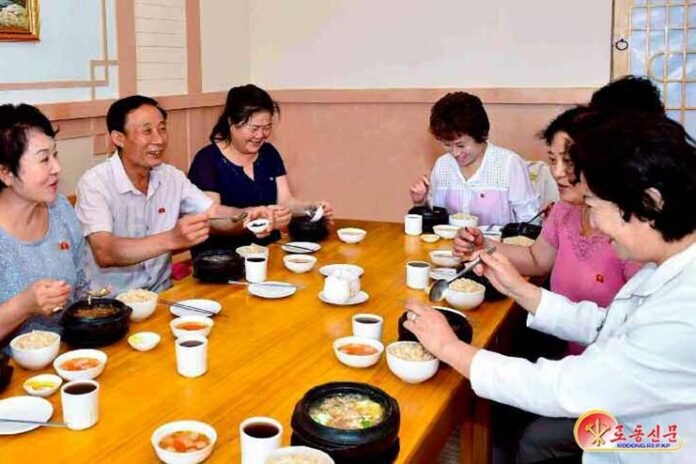
North Koreans dined out in record numbers during the Kim Jong Il birthday holiday (Feb. 16) and Lunar New Year (Feb. 17), as restaurants in major cities filled with families celebrating the back-to-back holidays — but the dining boom is throwing the country’s deepening wealth divide into sharp relief.
Multiple sources in North Korea told Daily NK recently that downtown restaurants in major cities such as Pyongyang, Pyongsong in North Pyongan province, and Sinuiju in North Pyongan province were bustling with families during the recent holidays.
Casual dining with friends and family has recently been catching on in North Korea as more restaurants and other urban amenities have appeared.
Notably, North Korea’s long-standing emphasis on the virtues of modesty and frugality has given way to the urge to flaunt one’s wealth, which sources identified as another factor behind the development of dining-out culture.
A meal most can’t afford
But the rise in eating out is also seen as a keen example of the divide between those who are successful and those who are struggling. Small-time business owners and day laborers can hardly afford the steep prices charged by the country’s restaurants.
“A bowl of noodles with a slice of meat on top will set you back 70,000 North Korean won (around $8) at a downtown restaurant. That adds up to 200,000 won (around $23) for a family of three, so only the affluent are in a position to dine out,” a source in North Pyongan province, who requested anonymity for security reasons, said.
A source in South Pyongan province agreed. “When you step into a restaurant, you can immediately see who has money to spare. Plenty of folks don’t even dare stepping inside the door, but even among diners, wealth is immediately apparent from the level of spending.”
In short, the emerging restaurant culture in North Korea is out of reach of ordinary market vendors and day laborers. Scenes of families dining out over the holidays have had the unfortunate effect of reinforcing the class divide.
“The government’s old story about a society in which everybody prospers no longer holds water. Restaurant patronage over the holidays reflects more than a mere change in spending habits — it encapsulates how the narrative of equality in North Korean society is divorced from reality,” said a source in Pyongyang.
A Note to Readers
Daily NK operates networks of sources inside North Korea who document events in real-time and transmit information through secure channels. Unlike reporting based on state media, satellite imagery, or defector accounts from years past, our journalism comes directly from people currently living under the regime.
We verify reports through multiple independent sources and cross-reference details before publication. Our sources remain anonymous because contact with foreign media is treated as a capital offense in North Korea—discovery means imprisonment or execution.
This network-based approach allows Daily NK to report on developments other outlets cannot access: market trends, policy implementation, public sentiment, and daily realities that never appear in official narratives. Maintaining these secure communication channels and protecting source identities requires specialized protocols and constant vigilance.
Daily NK serves as a bridge between North Koreans and the outside world, documenting what’s happening inside one of the world’s most closed societies.
Disclaimer : This story is auto aggregated by a computer programme and has not been created or edited by DOWNTHENEWS. Publisher: dailynk.com