
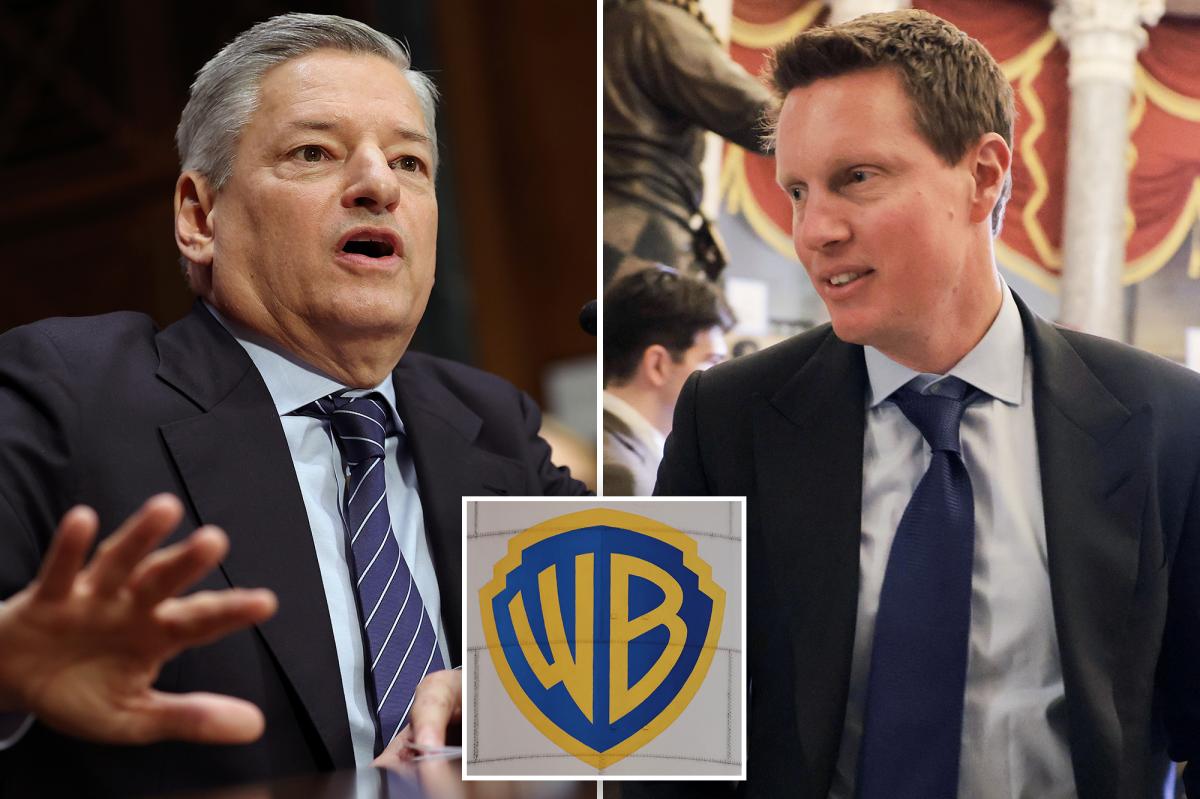
We all know that Paramount Skydance finally won the bidding war for Warner Bros. Discovery. But who was the real winner in this takeover tussle of the century?
The epic, six-month tango between some of the largest players in media for the owner of the Warner Bros. studio, HBO Max streamer and CNN came to a suitably stunning finish late Thursday – although regular readers of this column probably weren’t too surprised.
Let’s start with Netflix and its co-CEO Ted Sarandos, the architect of the streaming giant’s thwarted bid to snare WBD. Until just days ago, he had remained the official frontrunner. Ted can best be described as both a winner and a loser.
He’s a winner here for the simple reason that he walked away, albeit after lots of drama. That’s because Netflix didn’t need to do this deal. Shares of Netflix soared more than 10% after I posted on my X feed that Netflix was going to cave.
Deals like this aren’t how Netflix became one of the biggest and most successful media companies ever created. It has grown organically. Yet Sarandos spent months cobbling together mountains of debt while inviting regulatory scrutiny. By dropping out, Sarandos can go back to building his business.
Now here’s why Sarandos is a loser: He went there. Why this seasoned media mogul thought all this was a good deal for shareholders (he lost $200 billion in market value during negotiations) – and why he thought he had a shot with the Trump antitrust cops in combining the No. 1 and No. 3 streamers – is still a mystery.
It’s also still unclear if the feds have completely dropped their early Section 2 Sherman Act monopoly inquiry into Netflix’s already powerful size and its ability to squeeze consumers.
Then there’s David Zaslav, the CEO of Warner Bros. Discovery. He’s a clear winner. I’ve known Zas for years, when he toiled through the infrastructure of NBCUniversal, then decamped as CEO of Discovery Inc.
He got his big break running a bona fide media conglomerate in 2022 when AT&T spun out Warner Media and his mentor, the legendary John Malone, arranged a new company combining it with Discovery and making Zas its CEO. He got off to a rocky start, taking heat for cost cuts because of all the debt involved, and for not delivering on results.
But slowly, Zas began to rebuild what is now Warner Bros. Discovery. In 2025, his company was poised for something big, but you wouldn’t know it from its stock price. Then magic happened: first, an unsolicited bid by Paramount Skydance at $18 a share when his stock was at around $12.
Then he went to work dangling WBD in front of a who’s who of media and tech companies He got plenty of interest until there were just two, Netflix and Paramount Skydance. Zas wanted at least $30 a share, and people laughed. Earlier this week, he got his number plus a buck as Paramount Skydance swooped in with a $31 a share, $80.5 billion offer.
Paramount Skydance chief David Ellison is also a winner, and not just for pulling off the defining media deal of his generation. He also displayed the wisdom to put one of the best media dealmakers in the business, Gerry Cardinale, in charge of his pursuit of WBD.
Ellison is the son of tech billionaire Larry Ellison, who provided financial backing for the deal, so it’s tempting to write him off as a lucky sperm kid. I’m here to tell you he’s smart and insightful and knows what he doesn’t know. He started with a small indie film producer, saw the depressed values in media and snapped up Paramount, with its studio, low-ranked streamer and once-prominent CBS unit.
Now, Ellison sits on top of one of the biggest media companies in the world. He snared what looked like a white whale by playing the long game: lawsuits challenging WBD’s initial decision to sell to Netflix, hostile bids and plenty of acrimony. Yes, there’s lots of debt in this deal, and there will be cost cutting. But as I see it Ellison really didn’t overpay at the end.
People thought he would use his dad’s money to win by throwing $34 a share at Zas but he stopped at $31. The reason: Gerry Cardinale, the best bidding-war banker in the business. He also listened to his GC, Makan Delharim, and pops and didn’t overpay. Cardinale & Co., saw the regulatory shoals faced by Netflix, and knew the investor sentiment had begun because of the Netflix funny-money promises with a cable spinoff.
If Ellison is a winner, so is Cardinale, and the people he had around him.
Elsewhere, another winner is PSKY’s reliably smart and accessible flack, Melissa Zuckerman; another loser: Netflix board member and partisan Democrat Susan Rice who irritated the White House with some dumb comments about Trump at the worst possible time.
But if those are the latest scores, indications are that the hard part may be what comes next, as this new media giant, whatever it’s called, weighs painful cost cuts and rejiggering to stay competitive. Stay tuned for the next crop of winners and losers.
Disclaimer : This story is auto aggregated by a computer programme and has not been created or edited by DOWNTHENEWS. Publisher: nypost.com



