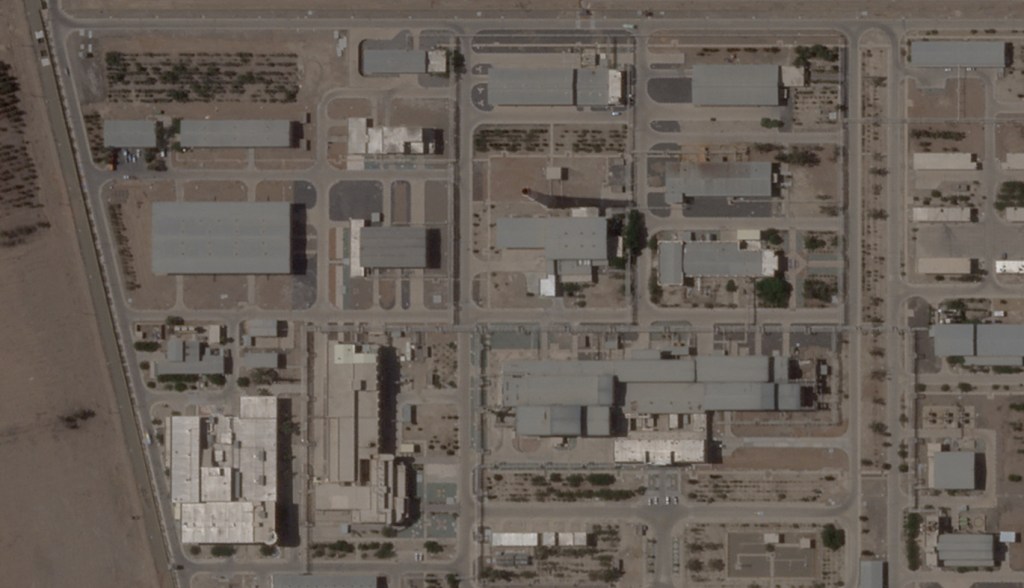
Iran has prevented international inspectors from reaching three nuclear facilities struck by the US this past June, leaving the outside world unable to determine how much near-weapons-grade uranium the Islamic Republic posesses, according to a confidential report.
The International Atomic Energy Agency (IAEA) stressed to member states that it “cannot verify whether Iran has suspended all enrichment-related activities,” nor can it provide “any information on the current size, composition or whereabouts of the stockpile of enriched uranium in Iran,” according to the Associated Press.
That “loss of continuity of knowledge over all previously declared nuclear material at affected facilities in Iran needs to be addressed with the utmost urgency,” added the IAEA, which noted that Iran’s stonewalling was in direct violation of its legal obligation under the Treaty on the Non-Proliferation of Nuclear Weapons.
Iran suspended all cooperation with the IAEA after its 12-day war with Israel in June 2025 — during which the US dropped at least six “bunker buster” bombs on nuclear sites at Fordow, Isfahan and Natanz.
In the absence of access to those three sites, the nuclear agency has been forced to rely on commercially available satellite imagery.
Observation of the Isfahan facility, some 215 miles southeast of Tehran, showed “regular vehicular activity” around the entrance to a tunnel complex used to store enriched material and that appears to have averted destruction in June, the report said, adding that it was unclear whether the site “contains nuclear material or is operational.”
The IAEA also noted that prior to the American and Israeli strikes, Iran said it was setting up another enrichment plant at Isfahan, though the agency does not know its precise location or whether it is functioning.
Activity was also observed at Fordow and Natanz, the former of which is buried 300 feet inside a mountain, but “without access to these facilities it is not possible for the Agency to confirm the nature and the purpose of the activities,” the IAEA acknowledged.

Iran has given inspectors access to its other nuclear facilities “at least once” since June 2025, with the exception of a power plant at Karun that is under construction, the watchdog noted.
Tehran has long maintained its nuclear program is for peaceful purposes, but the US, UN and other Western nations have confirmed an organized atomic weapons program existed through at least 2003.
According to the IAEA, Iran maintains a stockpile of 972 pounds of uranium enriched up to 60% purity — a short, technical step away from weapons-grade levels of 90%.
IAEA director general Rafael Grossi warned in an October interview that stockpile could allow Iran to build as many as 10 nuclear bombs, though he added that does not mean Tehran has such weapons.
US and Iranian officials wrapped up a fresh round of indirect talks in Switzerland Thursday, as President Trump’s deadline to reach an agreement on the future of Tehran’s nuclear program looms as soon as this weekend.
Secretary of State Marco Rubio is scheduled to visit Israel on Monday and Tuesday to discuss Iran and other regional issues with Israeli Prime Minister Benjamin Netanyahu.
With Post wires
Disclaimer : This story is auto aggregated by a computer programme and has not been created or edited by DOWNTHENEWS. Publisher: nypost.com