If you are going to score well and be rewarded when you do hit the ball well, you absolutely need to control distance on your longer putts. You need to be able to roll your first putt within two to three feet so you have a stress-free second putt.
The ideal situation is for your next putt to be so close that you have an easy tap-in. This is one of the biggest differences between professional and recreational golfers.
Here’s how you can improve your distance control and consistently roll your first putt close and reduce three-putts.
1. Center contact
All of golf starts with good technique and solid contact in the center of the face. If you strike the ball off-center, both distance and direction tend to become inconsistent and unpredictable.
You can practice on the putting green this with a simple two-tee drill. Place a tee on either side of your golf ball and practice stroking the putter through without contacting either tee. If you hit a tee, you are missing the center of the putter face.
2. Proper path
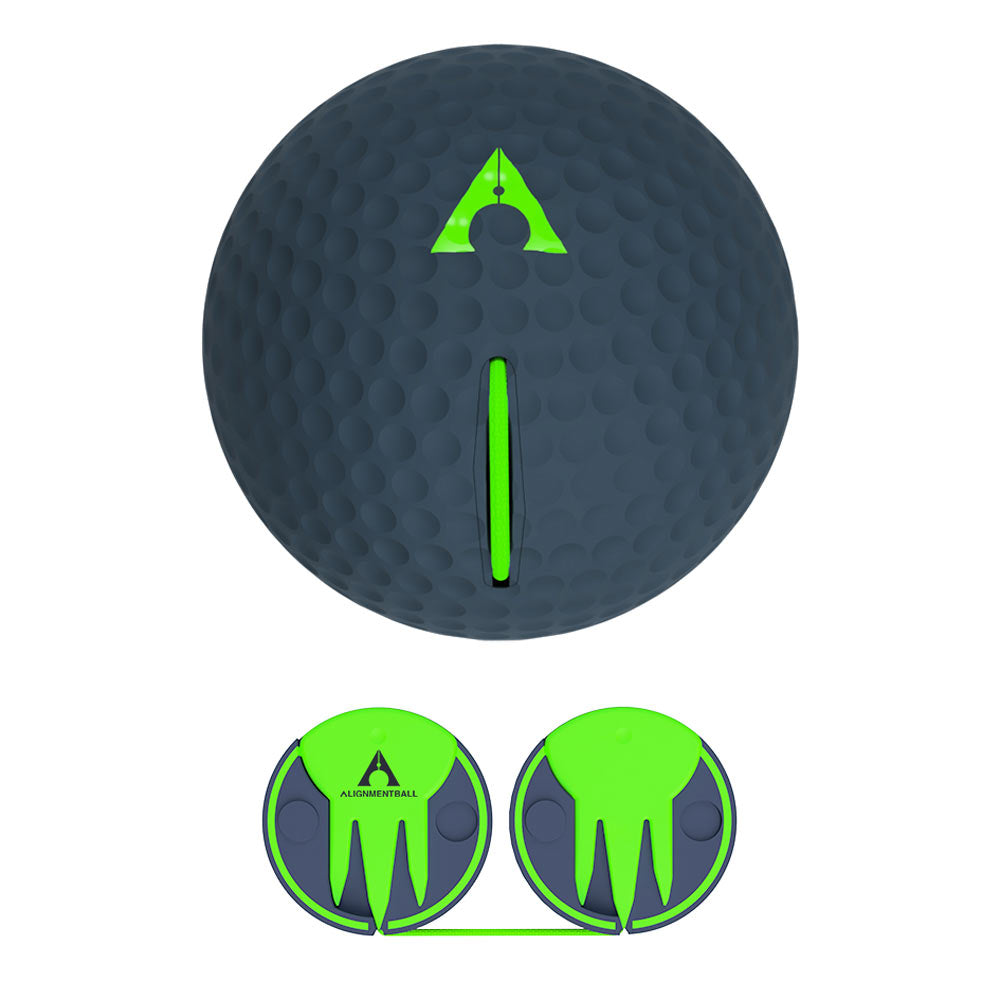
A sound path has a direct influence on distance control. There are many excellent putting training aids you can use to monitor this. Arc boards and alignment aids are especially helpful for improving your path. One of my favorite training aids is the alignment ball, which I use in both practice and teaching.
Alignment Ball
Close to 20 feet of retractable cable! The Alignment Ball will help you work on start line easily and quickly on the putting green. Built in spokes make setup easy and efficient.
Either straight putts or breaking putts, this retractable string can do it all!
Carrying Case Included.
User Guide
View Product
3. Fewer moving parts
An absolute must for good putting and distance control is keeping your body as still as possible. Your head, knees and lower body should remain very steady. Even the smallest amount of unnecessary movement can alter distance and direction.
Watch skilled putters on television and notice how little their lower bodies move. Then watch most recreational golfers and you will see a surprising number of moving parts. Make a conscious effort to minimize movement so you can rely on one primary factor — stroke size — to control distance, rather than several competing variables.
4. Proper stroke size
The length of your backstroke is the key factor in controlling distance. A shorter backstroke naturally produces less speed, while a longer backstroke generates more speed and therefore more distance.
If you take the putter back the correct length and allow it to swing through freely, the ball should roll the proper distance. This means you need to become very precise with small adjustments to your stroke length.
5. Be even
Ideally, your stroke should be balanced and consistent. The length of the stroke should be relatively even going back and through. Small variations are acceptable, but overall the motion should feel symmetrical.
Your rhythm should also remain steady. You should not need to consciously accelerate or decelerate if you have properly regulated your stroke size.
Finally, maintain consistent grip pressure. The exact pressure is your preference, but it should not change significantly during the stroke. Consistent grip pressure is another excellent way to promote steady rhythm.
6. Practice, practice, practice
There are many effective drills for improving distance control. Focused practice can go a long way toward mastering this skill.
Add dedicated putting time to your routine. This does not mean rolling a few putts for 10 minutes before a round. It means intentionally committing time to improvement. A simple drill is going back and forth between two holes with the goal of two-putting or better a certain number of times in a row.
Distance control is one of the areas where a small investment of time can pay tremendous dividends.v
Disclaimer : This story is auto aggregated by a computer programme and has not been created or edited by DOWNTHENEWS. Publisher: golf.com